


(Note: I will be doing a live later today re: SOTU. Stay tuned to the substack app for more information)
Four years ago today, I was snowmobiling. It was cold, clear, one of those days where the world feels still and uncomplicated. My friends and I were hanging in the house we rented. That’s when I saw it: Russia had launched the full-scale invasion of Ukraine.
I remember the immediate pit in my stomach. This wasn’t a skirmish. This wasn’t another incremental land grab in Donbas. This was tanks rolling, missiles flying, helicopters crossing borders. It was the war many of us had warned about. And my first thought—after the shock—was simple: I hope Ukraine makes them pay. I remember seeing that one of the first Russian helicopters had been shot down and actually feeling a flicker of excitement. Not because I celebrate death. But because it meant this wouldn’t be a parade. There would be a price.
At the time, I was in Congress, serving as the ranking member on the Europe Subcommittee of Foreign Affairs. I was briefed by the CIA alongside another member. The assessment we were given was blunt: Ukraine would likely crumble. Kyiv could fall in days. The Russian army was bigger, better equipped, and positioned on multiple fronts. The assumption in much of the intelligence community was that this would be fast.
To the administration’s credit, they did something historically important in the lead-up. They declassified and publicized intelligence in real time. They exposed Russia’s false flag plans before they could be executed. They stripped away the fog that Moscow traditionally uses to justify aggression. That mattered. It denied Russia the element of surprise and shaped global opinion before the first missiles hit.
And then the war began in earnest. Russia surged forward and occupied a massive swath of territory. Columns moved toward Kyiv. The world held its breath.
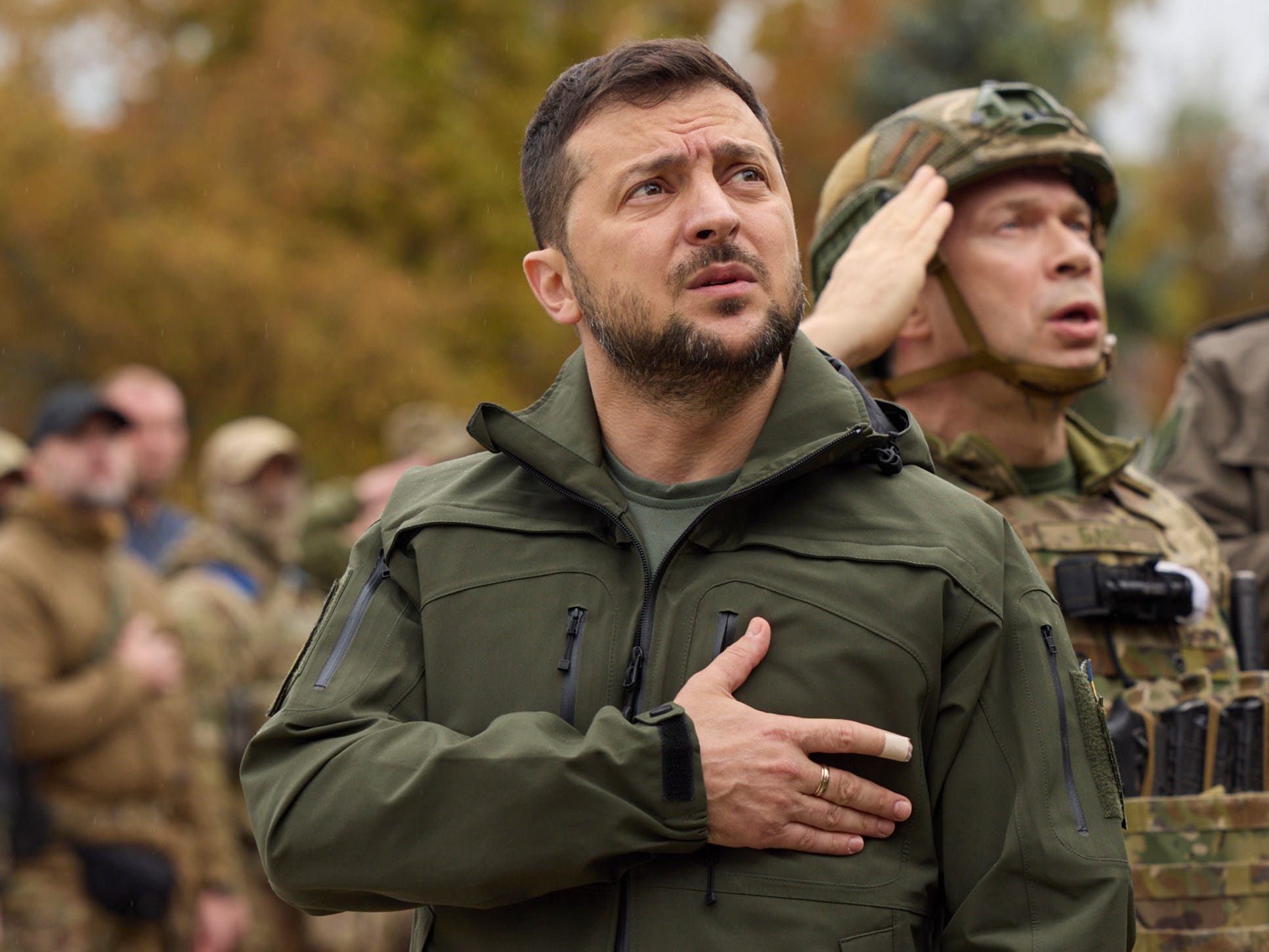
But Ukraine did not crumble. And ZELENSKY STAYED. This was such a different example of what the world experienced in Afghanistan, when the government and military melted away just six month prior.
Instead, Ukrainian forces dug in. They ambushed armored columns. They weaponized agility and morale. They turned what Russia thought would be a decapitation strike into a grinding, humiliating retreat. Eventually, they pushed Russia out of Kyiv and forced the fight back east. The narrative shifted from “how long can Ukraine last?” to “how did Russia miscalculate this badly?”
Consider this: the entire Russian Black Sea Fleet—a fleet NATO planners have worried about for decades—has effectively been neutralized. Pinned into port. Unable to enforce the kind of maritime blockade that was supposed to choke Ukraine’s economy and starve it into submission. A country without a traditional blue-water navy managed to drive back one of the world’s most feared fleets using ingenuity, drones, and asymmetric warfare. That alone should be studied in every military academy for the next fifty years.
Russia has now lost over a million men killed and wounded by many estimates. A million. And for what? Marginal territorial gains in the east that come at staggering cost. If the United States had, four years into Iraq, occupied only 23 percent of the country while losing a million service members, no serious person would have called that winning. And that was with our military projecting power halfway across the globe. Russia is fighting next door. Their logistics should be easier. Their supply lines shorter. Their cultural familiarity greater.
And yet they are bogged down. Exhausted. Economically strained. Their once-feared military exposed as corrupt, brittle, and hollowed out.
Meanwhile, Ukraine has become something extraordinary.
They have become the global leader in drone innovation and battlefield adaptation. They turned garages and tech startups into weapons labs. They fused civilian tech culture with military necessity. They created a decentralized, rapidly iterating war machine that is rewriting modern warfare in real time. This isn’t just resilience. It’s transformation.
But as Ukraine has adapted and endured, we in the United States have wavered.
We should be leading. Instead, we have hesitated. We have allowed partisan politics and fatigue (and a sundowning old man) to cloud what should be obvious. Supporting Ukraine is not charity. It is one of the most cost-effective investments in global stability we could possibly make. For a fraction of our defense budget, Ukraine has degraded one of our chief geopolitical adversaries without a single American service member in combat.
And yet there are voices now arguing for abandonment. For “moving on.” For pretending that a dictator’s aggression can simply be accommodated.
We should help because it’s strategically smart. We should help because it weakens authoritarian expansion. But we should also help because it is right.
The Ukrainian people have shown something that humbles you. They fight not because it is easy, but because it is necessary. They fight for their homes, their language, their families, their future. They fight in freezing trenches and shattered cities. They bury their dead and return to the line. They adapt. They innovate. They refuse to surrender their sovereignty to a regime that believes might makes right.
Four years ago, I hoped they would make Russia pay. They have done far more than that. They have reshaped the battlefield. They have shattered myths about Russian invincibility. They have shown that courage, creativity, and national will can blunt even the largest invading force.
Anniversaries are moments to reflect. Four years in, Ukraine still stands. Kyiv still flies its own flag. The Black Sea Fleet hides in port. Russian forces grind forward in inches, not miles, at catastrophic cost.
History will remember this chapter. It will remember who stood firm and who wavered. It will remember the nation that was told it would fall in days—and instead rewrote the rules of modern war.
And it will remember the spirit of a people who decided that freedom was worth the price.
“And yet there are voices now arguing for abandonment. For “moving on.” “
Adam, be specific. Name these pathetic Repuglican traitors to democracy.
Thank you for the article, Adam they say Ukraine 🇺🇦 is winning the war. I hope they do! Slava Ukraine 🇺🇦.