


Donald Trump spent the aftermath of the 2020 election searching for ways to change a result he didn’t like. Six years later, he is starting much earlier.
Rather than waiting until November 3 to decide whether he trusts the midterm elections, he is trying to change who controls them before any votes are cast.
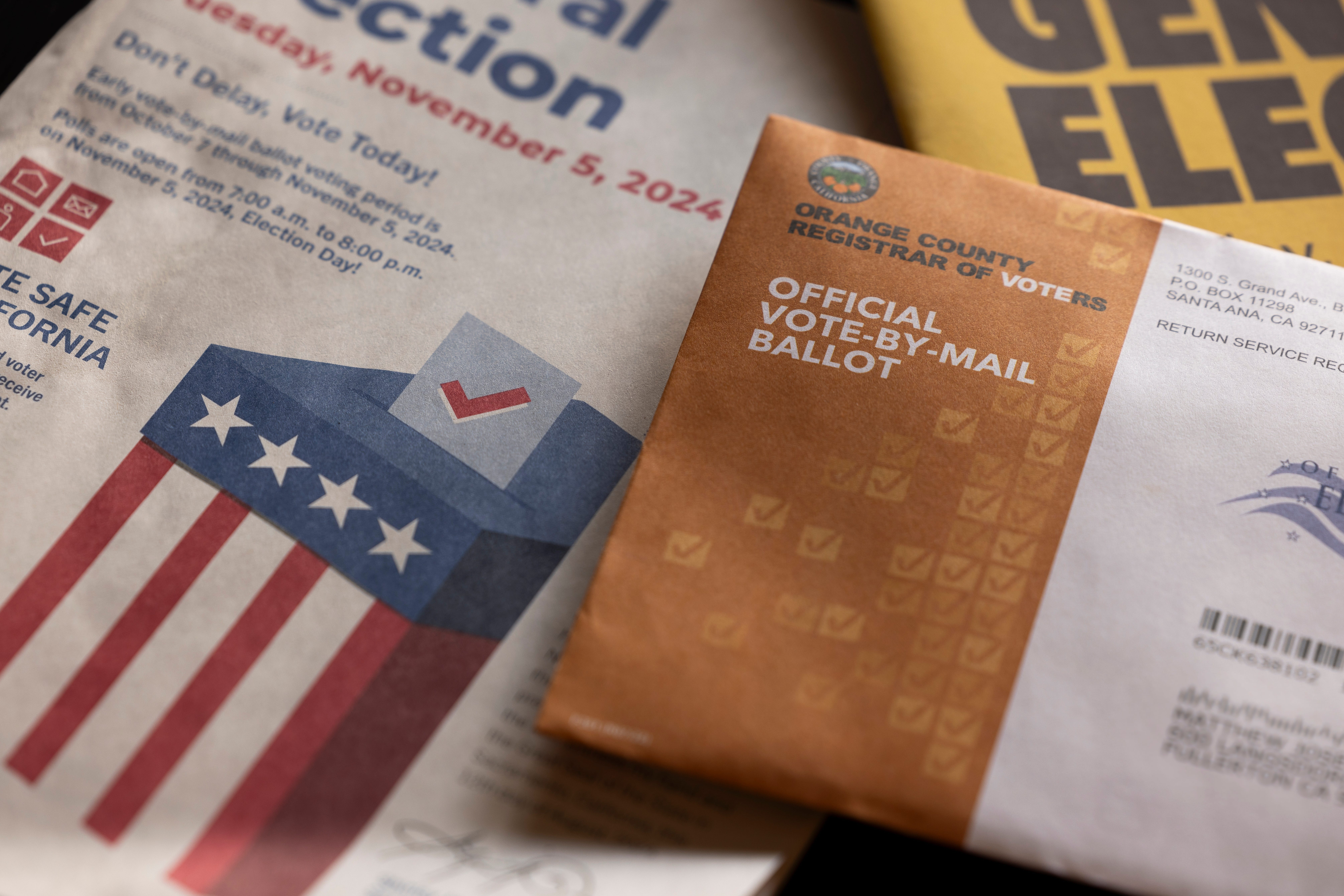
Yesterday, the Trump administration asked the Supreme Court to fully implement an executive order that would give the executive branch an extraordinary role in running elections. The order directs the Department of Homeland Security to create a “State Citizenship List” of people the federal government considers eligible to vote. It tells the Justice Department to investigate and possibly prosecute election officials who issue ballots to people the administration deems ineligible. It also tells the Postal Service not to transmit mail ballots unless voters appear on an approved list.
This can sound technical because it involves databases, voter lists and mail-ballot rules. But this is what it’s all about: Trump wants more control over the midterm elections and he’s trying to find ways to get it.
He wants the federal government to decide who is eligible to receive a mail ballot. And if state election officials disagree, his administration wants the power to investigate them and possibly prosecute them.
Changing How You Read the News: Here’s Why It Matters
Americans aren’t just disagreeing; we’re being shown completely different stories.
Every day, news outlets decide what to publish. In polarized media environments, audience demographics can split coverage. If you rely on only one side of the media spectrum, you could miss stories entirely, not because it isn’t credible, but because it doesn’t align with certain editorial priorities.
That’s why I’m often asked where I go to do research for my reporting. One of the main research tools I use is called Ground News. Ground News shows me how stories are being covered from different political perspectives, and it highlights “blindspots” where only left-wing or right-wing media is covering a story.
That kind of visibility is rare right now, and it changes how you understand the news. I’ve worked out a deal with them; if you want that level of insight every day, head to GroundNews.com/AdamK and subscribe to get 40% off the Vantage plan, the one I use.
Ground News is subscriber-funded, so they don’t rely on ads that could introduce bias. By subscribing, you support both our channel and their independent team working to keep the media transparent.
States normally run elections, including registering voters and distributing and counting ballots. Congress can pass national election laws, but the president can’t make the rules on his own.
Congress has considered some of the election rules Trump wants. The House passed the SAVE America Act, which would impose new proof-of-citizenship requirements and tighter rules on mail voting, but the Senate hasn’t. Trump is now trying to get through executive action what he hasn’t been able to get through Congress.
Trump has been unusually candid about this. In February, he told Dan Bongino, “We should take over the voting, the voting, in at least 15 places. The Republicans ought to nationalize the voting.” In an earlier Truth Social post, he claimed states are merely “an ‘agent’ for the Federal Government” in counting votes and “must do what the Federal Government, as represented by the President of the United States, tells them” to do.
I was in the Capitol on January 6, and one thing has become clearer with time: January 6 didn’t begin when the mob arrived. It began when Trump decided that election results certified by the states were legitimate only if they declared him the winner.
After losing in 2020, he pressured state officials to change the outcome. On January 2, 2021, he asked Georgia Secretary of State Brad Raffensperger to “find 11,780 votes,” exactly enough to reverse his loss there. His allies organized competing slates of electors claiming Trump had won states that had certified Biden as the winner. Trump pressured the Justice Department and Mike Pence, looking for some way to use federal power to undo decisions the states had already made.
What Trump attempted after the 2020 election, he is now attempting before the 2026 election. Then, he looked for ways to use federal power to overturn state-certified results. Now he wants the federal government to have a say in deciding who can vote and to put pressure on the people who run elections.
The administration says it is trying to stop noncitizens from voting. Trump is using a very small problem to justify a much larger federal role in elections. Reuters examined federal prosecutions for noncitizen voting and found only 129 people charged since Congress made it a crime in 1996. None of those cases involved an alleged coordinated scheme to influence an election. Many resulted from confusion, administrative mistakes or bad information from government employees.
But that hasn’t stopped the administration from pushing deeper into state election systems. The Justice Department has sued more than two dozen states for detailed voter rolls containing information such as birth dates and partial Social Security numbers. As of last week, it had lost 21 straight cases. The administration has threatened to withhold some disaster funds from states that refuse to use a federal citizenship database, and Justice Department officials have warned election administrators they could face criminal charges if they knowingly allow noncitizens to remain on voter rolls.
There’s a problem when you give the federal government too much power over elections: It makes mistakes. One of the federal systems Trump wants states to rely on has mistakenly labeled some naturalized American citizens as noncitizens. If the states act on bad information, lawful voters could be removed from the rolls.
Even if Trump loses this case, the effort could still help him politically. If Republicans lose the House or Senate in November, he can point to months of investigations and fights with the states and say the election had been troubled all along. He can point to all of this as “proof” that the elections were somehow tainted and that he had been right to warn us about them ahead of time.
So far, Trump has been losing in court. A federal judge blocked Trump’s order, and an appeals court has kept that block in place. The administration has also failed repeatedly to make states turn over voter information. In June, the Supreme Court rejected another effort to set a national rule for mail ballots.
There is good reason to think Trump may not get everything he wants. State officials have refused to hand over some of the voter information Trump wants and have challenged his demands in court. Judges appointed by presidents of both parties have blocked parts of his plan. Even Senate Majority Leader John Thune rejected Trump’s call to nationalize voting.
The lesson Trump seems to have taken from 2020 is not that he went too far. It is that he started too late. After the 2020 election, Trump searched frantically for officials who would help him undo his loss. This time, he is trying to get his own administration into the election process before voters have even decided the outcome.
I watched our system come dangerously close to breaking after the 2020 election. It held because enough people in positions of responsibility eventually said no. Trump is testing those same boundaries again before the midterms. The answer has to be no again.
“Trump” himself is too stupid to suggest this, other than superficially. It’s Miller, Bannon, Vought and the Project 2025 crew doing the machinations. Trump is a drooping figure head.
But will he take "no" for an answer? And what will the Supreme Court do?