

*NOTE: I want to take a moment to honor the life and legacy of the ineffable Dolly Parton, who our nation lost yesterday at 80 years old. Her lifelong philanthropy and reputation for kindness and generosity will be the focus of our Good News Sunday article this weekend, where we will do our best to capture her unique ability to bring Americans together for a good cause. Rest in Peace, Dolly.
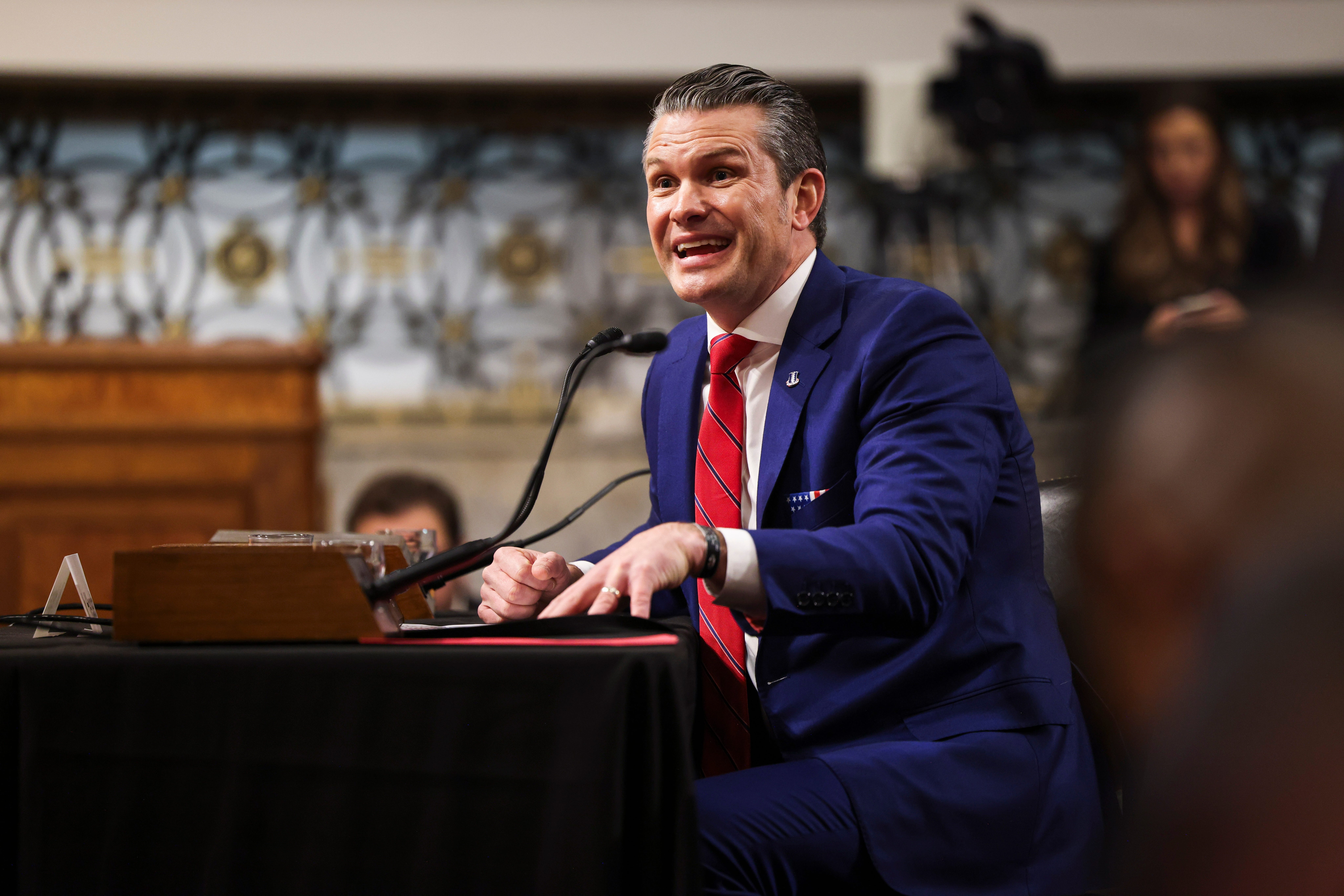
Pete Hegseth has become very good at firing generals. He is far less adept at replacing them.
The Army spent nearly four decades with General Randy George in its ranks, ultimately under his guidance as its chief of staff for the last three years. Hegseth ended his career in a 15-second phone call.
Gen. George had served in the Army since the 1980s, fighting in the Gulf War and deploying repeatedly to Iraq and Afghanistan. Over the course of his career, he commanded at every level from battalion to corps. By the time he became the Army’s top officer, he had spent decades making decisions in combat and observing how calls from Washington affected soldiers in the field.
In April, Hegseth fired Gen. George without offering a public explanation. Four months later, the Army still has no permanent chief of staff. General Christopher LaNeve is filling that role while also serving as vice chief, and his nomination for the top job appears to lack enough Republican support to clear the Senate. There is a vacuum of responsibility at the Pentagon, and Hegseth is at the source of this irresponsible unraveling.
Hegseth did not stop with Gen. George. The New York Times reported that Hegseth has forced out at least three officers who might have succeeded him and removed or driven out roughly half a dozen other senior Army leaders. The service had ten active-duty four-star generals when Hegseth took office. Now it has only five.
Cutting the number of four-star generals might sound like a way to trim Pentagon bureaucracy. But these officers have seen plans developed at headquarters fall apart once troops had to carry them out in combat. Part of their job is to keep the Army from making the same mistakes again.
The experience Hegseth has removed cannot be replaced with a few promotions and the lessons learned cannot be retaught overnight. General James Mingus, the former vice chief, deployed to Iraq and Afghanistan 12 times. General Christopher Donahue spent much of his career in special operations, helped build the Army’s partnership with Ukraine after Russia’s invasion, and became the last American soldier to leave Kabul. Hegseth pushed out Gen. Mingus last October from his post as the Army’s vice chief of staff without clear rationale. He also reduced Gen. Donahue’s command from four stars to three, effectively forcing his retirement unless another four-star job opened.
Civilian control of the military gives Hegseth the authority to remove generals. President Harry Truman fired Gen. Douglas MacArthur after he publicly challenged the administration’s policy in Korea. Truman also told the country why he did it. If Gen. George was unfit to serve, Hegseth should say why. He should also have had a permanent replacement ready before firing the Army’s top officer in the middle of a war. Four months later, he has done neither, and his actions have left our troops under heavy fire.
The Army command responsible for transforming and training ground forces has been without a permanent leader since Hegseth fired General David Hodne in April. That command oversees the training and equipping of Patriot missile crews, who are now defending American bases from Iranian attacks. On July 17, an Iranian missile struck troop housing in Jordan, killing three American soldiers. Iran is learning how to maneuver missiles around our defenses while the command responsible for helping our soldiers adapt sits without a permanent commander.
Hegseth says he wants a “leaner, more lethal force” but American troops are under fire and some of the Army’s most important leadership jobs remain empty. The firings will also change how the officers who remain will behave. When officers see respected generals fired without explanation while Hegseth’s former aide is put in charge, they understand that disagreeing with the secretary may hurt their careers. After enough unexplained firings, officers will start deciding for themselves which advice is safe to give him. They may tell Hegseth what they think he wants to hear, even when they think he’s wrong.
At some point, one of those colonels will sit in a room where Hegseth is wrong. That officer will have to decide whether to say so. The soldiers who receive the order may never know that someone in the room had doubts and kept quiet.
Hegseth is a man who doesn't know anything about leading our military. Only someone who has poor self-esteem eliminates those he perceives as a threat while a good leader surrounds himself/herself with competent individuals with outstanding knowledge and talent. With what he has done to senior military thus far is a crime and just underscores what a weak leader he is. I guess it follows that he is weak because his boss is a weak leader who is threatened by competency.
Here is Austin, Tex-Ass, the very large bat colony has petitioned that we stop using the term "bat-shit crazy" to describe Trump, Kegsbreath, and other members of the Gang of Criminals (aka The Cabinet).
They suggest using "Trump-shit crazy" in the future, but indicated that they would also accept "Kegsbreath-crazy."
Thank you for your attention to this matter.