


NOTE: Most articles I write, I do a brief discussion video for paid subscribers following the article, to reiterate or expand on whatever was written. Today, I did the same, but it’s much longer than usual. I talk quite a bit about personal decisions and why it is so important to live each day understanding you may not get a chance to make it right later. As such, I have decided to open this up for everyone regardless of your paid or unpaid status. I would ask that you consider becoming a paid subscriber, so that we can, together, continue to make a positive impact on the nation. The next generation deserves a country better than the one we inherited. Thanks for fighting in my brigade—AK
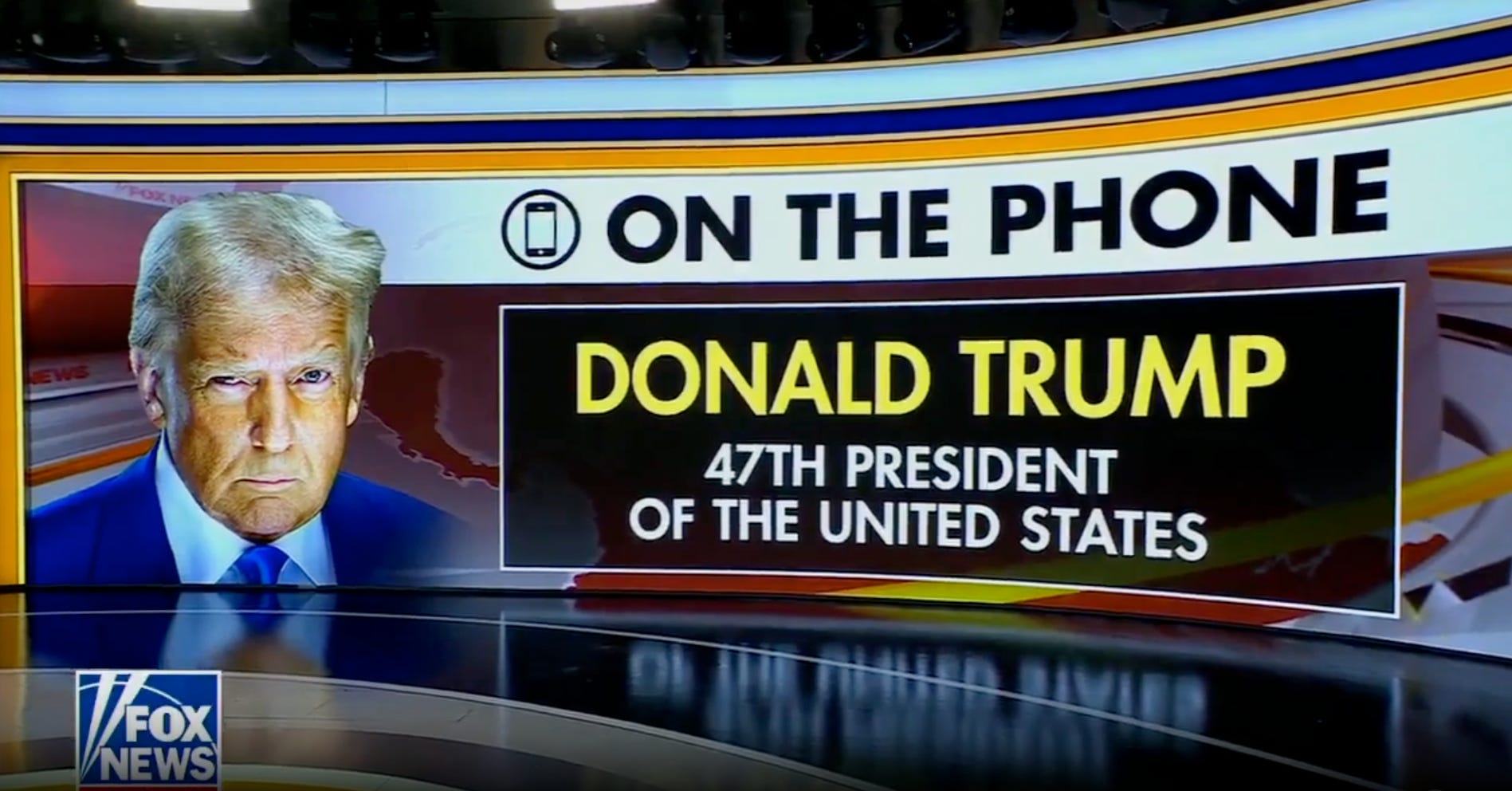
The flags were at half-staff. Lindsey Graham’s Senate desk was empty. His body had not yet been buried. On Fox & Friends Monday morning, a photograph of the South Carolina senator filled the screen while the hosts spoke in the softened voices television reserves for sudden death. Then Donald Trump came on the telephone, and within minutes Graham’s memorial had become what nearly every event becomes in Trump’s presence: a vehicle for Trump. It also raised questions about his mental acuity.
Trump called Graham a “nice man” and a “great guy.” He recalled that Graham loved golf, though he made sure to note that his late friend was no Jack Nicklaus or Tiger Woods. Then the president wandered away from the dead senator and into the usual thicket: the filibuster, voter ID, mail ballots, “Trump Derangement Syndrome,” Spencer Pratt, Steve Hilton, and California elections. The cohost Lawrence Jones repeatedly tried to pull him back. “Mr. President, Mr. President,” he pleaded. When Jones asked whether Graham had sounded different during their final phone call, Trump ignored the question and continued talking about supposedly dishonest elections.
The moment was grotesque not because Trump failed to deliver a polished eulogy. Grief can make anyone ramble. It was grotesque because Graham seemed almost incidental to his own remembrance. Even death could not make Trump curious about another human being. A question about Graham’s final hours became an accusation about ballots. A tribute to a loyal friend became another airing of grievances.
Then came the detail that explained the whole relationship. Trump rated Graham a “99 instead of a 100” because Graham had briefly broken with him after January 6. Graham’s offense was saying, after a mob attacked the Capitol, “Count me out. Enough is enough.” According to Trump, Graham called 40 minutes later and regretted it. Whether that recollection is accurate matters less than Trump’s need to tell it. Five years later, with Graham suddenly dead, Trump was still keeping score.
In Trump’s world, every relationship eventually becomes a referendum on Donald Trump. Christopher Lasch wrote that “for the narcissist, the world is a mirror.” On Monday, Lindsey Graham’s death became one more reflective surface. Trump looked at Graham and saw Graham’s loyalty to him, Graham’s usefulness to him, and Graham’s one moment of disobedience toward him. The senator’s life was reduced to a performance review conducted by the only person Trump regards as qualified to judge it.
This was not the first time Trump had converted a supporter’s death into a monologue about himself and his grievances. At Charlie Kirk’s memorial last year, Trump interrupted his tribute with talk of tariffs, autism, the 2020 election, and his enemies. When he recalled that Kirk wanted the best for his opponents, Trump could not let the contrast pass. “That’s where I disagreed with Charlie,” he said. “I hate my opponent.” Even another man’s virtues became material for Trump’s self-portrait.
I do not say this lightly. I spent years in the Republican Party and served in Congress, and I know how easy it is to turn politicians into cartoons after they disappoint us. Graham’s life cannot be reduced entirely to his submission to Trump. He served in the Air Force, helped raise his younger sister after their parents died, built friendships across the aisle and remained a forceful advocate for Ukraine until his final days. He had just returned from Kyiv, where Volodymyr Zelenskyy called him a defender of freedom. Those things deserve to be remembered.
But his submission to Trump also deserves to be remembered, because it became one of the defining stories of the modern Republican Party. Graham once called Trump a “wrecking ball,” a “demagogue,” a “race-baiting, xenophobic, religious bigot,” and “unfit for office.” He warned that if Republicans nominated Trump, “we will get destroyed—and we will deserve it.” He was right about the man and wrong about the party’s response. Rather than reject Trump, much of the GOP copied Graham’s later example: flatter him, excuse him, gain access, and tell yourself that proximity permits influence.
Graham was unusually candid about the bargain. He said his goal was “to try to be relevant.” Being called frequently by a president, he admitted, was flattering and created opportunities—as well as pressure. The opportunities were real. Graham influenced Trump on judges, Iran, Israel, and Ukraine. He may have believed that swallowing his objections was the price of steering a dangerous man toward what he thought were better decisions.
That is how political parties become courts. In a party, loyalty is supposed to run toward principles, voters, and the Constitution. In a court, loyalty runs upward toward the ruler, while favor runs downward in unpredictable drops. Anne Applebaum, a brilliant expert on authoritarianism, has written about the educated and ambitious people who enable authoritarian movements not because they are hypnotized, but because collaboration offers status, access, revenge, or the chance to shape power from within. They imagine they are using the leader. Usually the leader is using them.
Graham gave Trump credibility with traditional Republicans, defended him on television, advanced his nominees and returned to his side after January 6. Yet, for Trump, none of that erased the forty minutes during which Graham appeared to possess a boundary. The lesson to every Republican watching was clear: Loyalty can never be completed. There is no account you can settle, no principle you can surrender that purchases independence later. The leader remembers the one point you withheld.
Monday’s call was disturbing for another reason. Trump could not hold the thread of a simple, solemn conversation. He lost his train of thought. His sentences doubled back. He began saying “Trump derange,” restarted the phrase, and moved from Graham to the filibuster to celebrity candidates to mail ballots while the hosts repeatedly tried to orient him. No responsible person can diagnose cognitive illness from a television clip, and age by itself is not disqualifying. But the presidency requires the ability to listen, follow a question, distinguish one subject from another and recognize the emotional meaning of a moment. It is reasonable—and necessary—to judge what we can see and hear.
Republicans spent years demanding scrutiny of aging Democratic leaders. They should apply the same standard now. Trump’s defenders call every broken sentence “the weave,” every confusion a joke, and every failure of concentration proof that outsiders cannot appreciate his genius. Real loyalty includes telling hard truths. Pretending there is nothing to see helps neither the president nor the country.
The truly upsetting part of Monday morning is not simply that Donald Trump delivered an appalling tribute. It is that he couldn’t stop being Donald Trump long enough to remember someone else. Even in a moment that called for gratitude, humility and empathy, he returned to the only subject that has ever fully held his attention: himself. That may be the clearest measure of his presidency. He has spent years demanding loyalty from everyone around him. But when the moment came to offer something in return—gratitude, generosity, even simple remembrance—he could think only about himself.
Free video…usually reserved for paid subscribers. I get pretty personal in this one. Have a wonderful day and thanks for following!
Adam, you act surprised. This is Trump. It is always about him. It’s always about him. One of his serfs died and it really is only about how it affects him. Nothing’s changed. You know the definition of crazy is doing the same thing over and over again and expecting a different result. Just a reminder that we cannot change the man he is what he is and I cannot wait for the day when he is no longer in the news or in my feed or part of the political landscape. Keep up the good work.
I would HAPPILY deliver tRump’s eulogy