


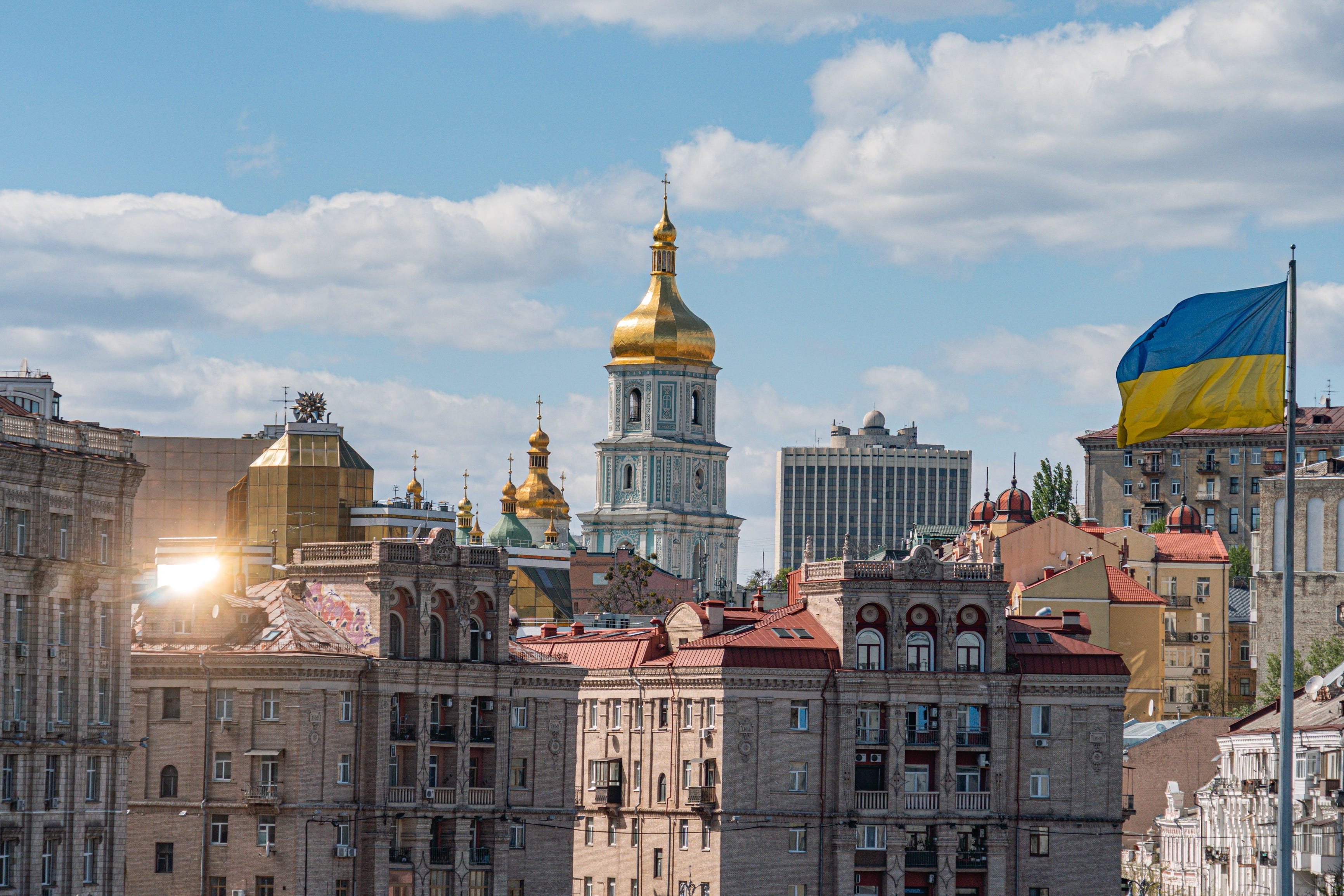
Hey everyone, happy Sunday. I’m writing to you this week from Ukraine.
I won’t say much about the details of the trip itself yet, for reasons I think you’ll understand. But I wanted to write this particular column because being on the ground in this country changes what you notice. And what I’ve been thinking about, in a week that had plenty of bad news, is something that gives me hope.
First, let’s be honest about one thing: the war is particularly hard right now. NATO Secretary General Mark Rutte said this week that the number of civilians being killed in Ukraine is at its highest level since the spring of 2022 and warned that delays in getting aid to the front are costing lives.
But here’s what’s also true and deserves to be discussed.
Do you remember what everyone said at the beginning? When Russia rolled across the border in February of 2022, the confident prediction from a lot of serious people was that Kyiv would fall in three days. That the capital would be taken, the government would collapse, and the West, after some strongly worded statements, would shrug and move on. That was the expectation by many of the “smart” people in DC, at least.
It’s now been more than four and a half years and Kyiv still stands. And the coalition that was supposed to lose interest by the summer of 2022 is still here, despite some internal disagreements, and still standing for freedom against Russia’s illegal invasion.
This past Monday, defense leaders from around the world gathered again for what’s called the Ukraine Defense Contact Group. It’s a coalition of more than fifty nations organized to keep Ukraine armed and defended.
To be clear, this was not a ceremonial reunion. NATO Secretary General Mark Rutte announced that over the past year alone, allies have committed more than 10 billion dollars in military support and weapons purchases for Ukraine, including three and a half billion from the European Union. More than half of all NATO member states have now joined the specific initiative that’s rushing air defense and interceptors to Ukrainian cities. Ukraine’s own defense minister called it the clearest demonstration of partner unity he’s seen.
In a world where governments and political movements rise and fall in months, think about how easy it would have been for this to fall apart. Coalitions are fragile things. They’re often held together by nothing more than the shared conviction of many different countries with many different domestic pressures and competing political priorities.
The smart, cynical bet is always that they crack. Maybe slowly at first, when one member gets tired or distracted. Then someone decides the cost isn’t worth it, and the whole thing unravels overnight.
Vladimir Putin is betting on exactly that. His entire strategy now rests on the idea that if he just makes this ugly enough and long enough, the free world will look away.
And for four and a half years, the free world has refused to give him that. Not without argument, and not without moments where the aid moved too slowly and people paid for the delay. But it has refused, again and again, to do the one thing he’s counting on.
Meeting after meeting, pledge after pledge, more than fifty democracies keep deciding that a country they could have abandoned is worth defending. That is not a small thing. In a world that too often rewards walking away, it might be one of the more remarkable acts of collective determination I can point to.
I’ve spent my whole adult life believing that American strength, and the strength of our alliances, is not charity or naivety. It’s the single most effective thing free nations have ever built to keep the worst people in the world from deciding how everyone else has to live.
Standing on the ground here, that belief doesn’t feel abstract. You can see what’s at stake, and you can see the people who are counting on the rest of the world not to lose its nerve.
Here’s why I put this in a column about good news, and why I think it belongs here even in a hard week.
It would be the easiest thing in the world to look at the headlines out of this country and conclude that decency loses, that the cynics are always right, that when things get hard enough people always find a reason to abandon what they know is right.
This coalition is the counterexample. It’s proof, still today, that a lot of different people who don’t agree on much can agree on something that matters and honor that agreement even when it’s costly.
The Ukrainians are not asking the world to fight for them. The ones I have spoken to are clear-eyed and hopeful and ready to keep fighting for their country as long as it takes. Truly inspiring.
They’re asking the world not to look away, not to get bored, not to decide their freedom is somebody else’s problem. And more than fifty nations have answered that they won’t.
Putin bet everything on the opposite. He’s still losing that bet.
So that’s my good news this Sunday, sent from a country that was supposed to disappear and didn’t. The doubters said the West would lose interest. It hasn’t. And as long as it doesn’t, there’s every reason to hope this ends the right way.
Slava Ukraini!
— Adam
You are so courageous and honest in your perseverance for truth! I admire you so much! Be safe and blessing from Tennessee this Sunday morning!
We need more folks like you!
Thank you for going there and helping Americans understand what is really at stake in Ukraine : not just the war between David and Goliath but between two visions of the world. Freedom and democracy against dictatorship and oligarchy. Human dignity against corruption and oppression.