

Video for paid subscribers follows article
Let me say upfront: I opposed this war. I still do. But we’re in it now, and we are going to live with the consequences for a long time. Which is exactly why what I’m about to describe keeps me up at night — not just as a policy matter, but as a basic question of American credibility.
Because a president who cannot keep his own story straight for 72 hours is not a president who is winning anything. He’s a president who is telling the enemy exactly what he’s willing and unwilling to do, second by second, in real time.
Part One: The Most Expensive Twitter Argument in American History
Let’s discuss the “I”= information, in the DIME model of foreign policy. Diplomatic, Information, Military, Economic.
Here is a rough timeline of Donald Trump’s public statements on the Iran war, and I want you to hold them in your head all at once:
The strikes launched February 28. Within days, Trump told CBS News he thought the war was “very complete, pretty much.” Then he went to a Republican event in Miami and said “we’ve already won in many ways, but we haven’t won enough.” Then, on March 6, he posted on Truth Social demanding nothing short of “UNCONDITIONAL SURRENDER.” Then, a week after that, Hegseth promised “our most intense day of strikes inside Iran yet.” Then Trump paused energy plant strikes for 10 days — then extended the pause — while simultaneously saying negotiations were going “perfectly.” Then on March 23, he told reporters in the Oval Office that Iranian leaders were “all gone” and “nobody knows who to talk to” — and then, in the same breath, said “but we’re actually talking to the right people, and they want to make a deal so badly.”
Then, as of this weekend, he declared that regime change had already been achieved. “We’ve had regime change,” he told reporters aboard Air Force One. “We’re dealing with different people than anybody’s dealt with before. It’s a whole different group of people.”
Just one problem: his own administration had spent weeks insisting regime change was not the goal. Rubio said “we’re not into the regime change business.” Vance said the same. Then Trump called for it. Then backed off. Then declared it accomplished.
This is not strategy. This is a man arguing with himself on the world stage, and the world is watching every word.
There is a reason presidents in the middle of military conflicts traditionally go quiet on specifics. The mystery is the message. When adversaries don’t know your red lines, they’re less likely to test them. When they don’t know your timeline, they can’t outlast it. When they can’t predict your next move, they have to hedge against everything. That uncertainty is itself a form of power.
Trump has burned all of it. Iran knows he will blink on energy strikes and extend deadlines. Iran knows he is looking for a way out. Iran knows he considers Ghalibaf “reasonable” — which is a hell of a gift to hand the man you’re supposed to be pressuring. Iran’s Revolutionary Guard responded to one of Trump’s Truth Social posts by saying flatly: “Iran will determine when the war ends.” That’s not defiance. That’s confidence. And they earned that confidence by watching our president narrate his own uncertainty in real time.
A president who keeps his words close doesn’t look weak — he looks dangerous. Because no one knows what he’ll do. The moment you start explaining yourself, justifying yourself, contradicting yourself, you’ve handed the other side a map. Trump didn’t hand them a map. He handed them GPS with live traffic updates.
I would rather be wrong about this war and have it end well. But the messaging out of this White House has made a bad situation meaningfully worse. And the people who will pay for it are the men and women in uniform whose locations, thanks to our president’s mouth and his ally’s intelligence leaks, are not as secret as they should be.
Part Two: What Does Russia Have on This Man?
Let me tell you what happened this weekend — and I want you to sit with it, because the Republican Party’s silence on this is one of the most disqualifying things I have witnessed in my lifetime.
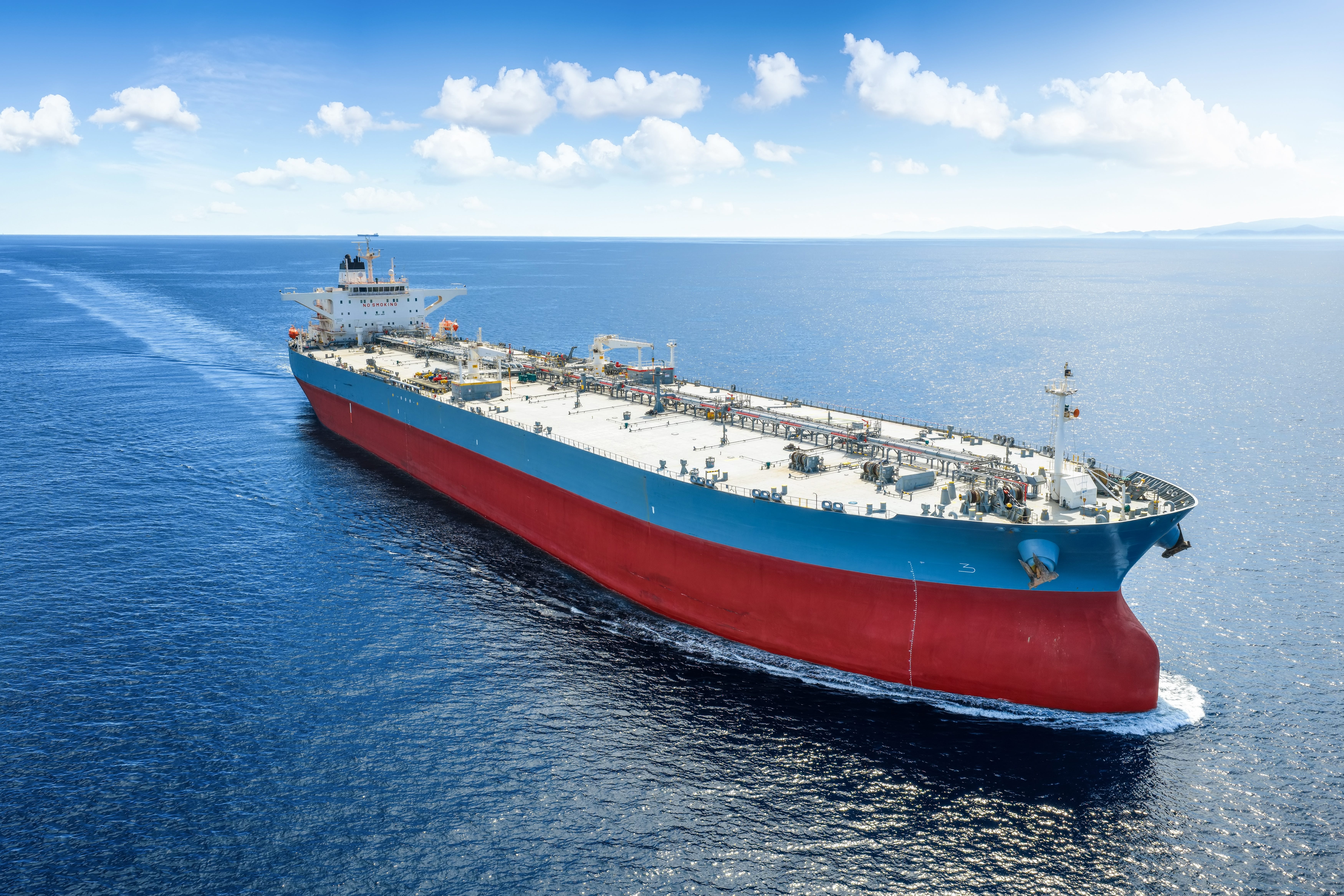
Trump had imposed an oil blockade on Cuba. Hard line. “Cuba is an extraordinary threat.” The whole thing. Then this weekend, a Russian government-owned oil tanker called the Anatoly Kolodkin — a vessel that is sanctioned by the United States, the European Union, and the United Kingdom — sailed toward Cuba carrying roughly 730,000 barrels of oil. And Trump waved it through.
“If a country wants to send some oil into Cuba right now, I have no problem, whether it’s Russia or not,” he told reporters on Air Force One. Kremlin spokesman Dmitry Peskov confirmed that Russia had “raised the issue in advance during contacts with American counterparts.” Meaning Trump and Putin’s people talked about it. And Trump said yes.
He dismissed the idea that helping Russia break his own blockade was any kind of problem. “He loses one boatload of oil, that’s all it is,” Trump said of Putin.
One boatload. Okay.
Now let me tell you the other thing that’s been happening, the thing Trump has nothing to say about.
Since the war began on February 28, Russia has been providing Iran with real-time targeting intelligence — the locations of American warships, aircraft, and military assets across the Middle East. U.S. officials confirmed this to the Washington Post on March 6. One official described it as “a pretty comprehensive effort.” Iran’s attacks have since struck American radar and command-and-control assets with a precision that analysts say reflects outside intelligence assistance. Six U.S. troops were killed in an Iranian drone strike in Kuwait. An American E-3 Sentry surveillance aircraft was badly damaged at Prince Sultan Air Base in Saudi Arabia. Images of the wreckage circulated online.
When Trump was asked about Russia providing targeting intelligence to Iran — intelligence that is getting American service members killed — he called it “an easy problem compared to what we’re doing here” and added that it was “a stupid question.”
Russia is feeding Iran the coordinates of our forces. American personnel are dying and being injured as a result. And the President of the United States thinks the question is stupid.
This is the same president who, when Russia was providing targeting help that got Americans hurt, waved a Russian oil tanker through an American blockade. The Kremlin was “pleased,” Peskov said. Of course they were.
I am not given to conspiracy theories. I don’t know what happened in that Moscow hotel room. I don’t know what’s in those financial records. But I know what I see. And what I see is a president who will bomb Iran, Venezuela, Yemen — who will pick fights with Canada and Denmark and Australia — but who will not say one hard word about Vladimir Putin under any circumstances. Not when Russia helps Iran target our troops. Not when Russia undermines our own foreign policy in our own hemisphere. Not one word.
And here’s the question I keep waiting for a single Republican congressman to ask: Why?
Not in a Fox News greenroom. Not off the record. On the floor of the House or the Senate, on the record, in public: Why is this president constitutionally incapable of confronting Russia about anything?
The silence from the GOP is its own answer, and it is not a flattering one. These are men and women who spent years talking about American strength, about not appeasing adversaries, about the deep state and deep corruption. And they sit there, mute, while Russia helps kill American soldiers and our president thanks them for it with oil deliveries to Cuba.
Someone should ask the question. Loudly. With their name attached to it.
Because the rest of us already know there’s a question that needs answering.
Video for paid subscribers:
