


Note: video for paid subscribers follows article.
A woman came forward with an accusation no decent person can readily dismiss. Graham Platner denied it. Democratic voters hesitated. Party leaders counted votes, deadlines, replacement rules, the cost of delay. Then, very quickly, the conclusion arrived: whatever Platner believed he could still prove, he could not credibly ask voters to give him power while this accusation hung over the race. That was the right outcome.
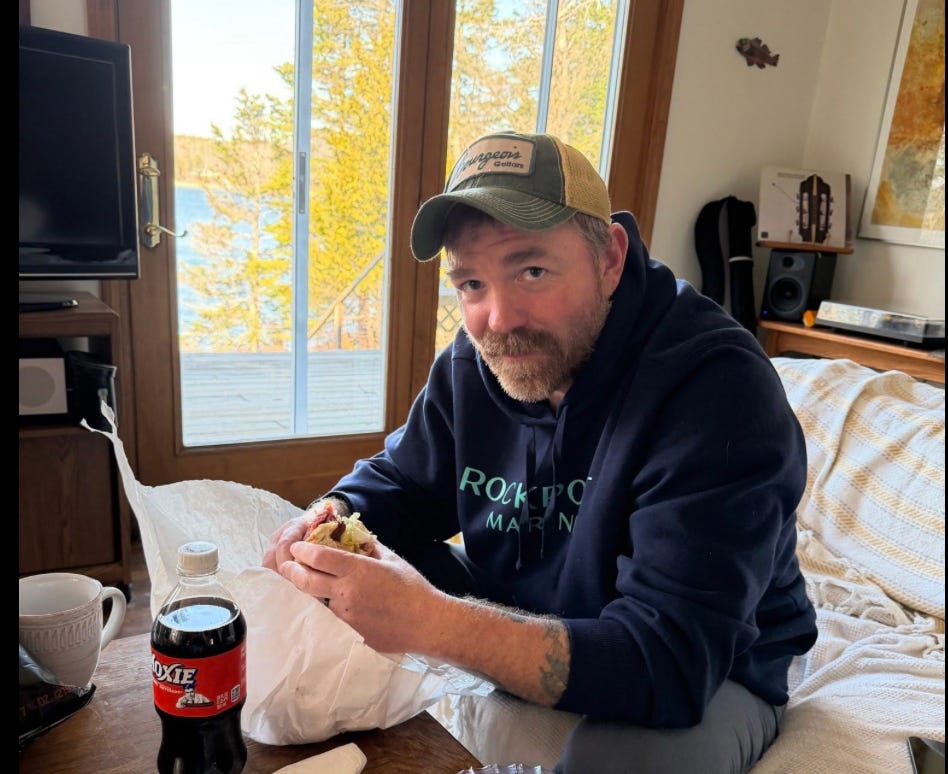
Platner, the Democratic nominee for Senate in Maine, suspended his campaign after being accused of sexual assault by a former romantic partner, an allegation he denies. Democratic support collapsed around him. Endorsements were rescinded. Pressure mounted. Within days, he was gone.
That does not prove Democrats are pure. They are not. It does not prove every accusation is true. Some are not. It does not mean due process is irrelevant. It is essential.
Running for office isn’t the same thing as standing trial. No one is entitled to be a senator. Political parties must decide who they are willing to ask voters to trust, and character ought to be part of that decision.
Over the last decade, the difference between the parties has become impossible to ignore. Democrats have often imposed political consequences long before legal guilt was established.
Al Franken resigned from the Senate after multiple women accused him of misconduct and Democratic senators publicly called for him to step down. Some later regretted how quickly they moved, but the fact remains: his own party pushed him out.
Andrew Cuomo was one of the most powerful Democrats in America when he resigned as governor of New York after a state investigation found he sexually harassed women.
Eric Swalwell suspended his campaign for California governor after reports of sexual assault and misconduct allegations, which he denied.
Again, the important point is not that the allegations were adjudicated in court. It is that Democratic institutions decided the candidacy could not continue under that cloud.
Now compare that with the Republican Party under Donald Trump. Trump was recorded in 2005 boasting in crude terms about forcing himself on women. He survived. He faced numerous accusations. He survived. In 2023, a civil jury found him liable for sexually abusing and defaming E. Jean Carroll and awarded her $5 million. He survived that too, returned to power, and remains the defining figure of the Republican Party.
It is not that Democrats never fail. Bill Clinton is the obvious counterexample, and it would be dishonest to pretend otherwise. Democrats defended him for years in ways that look worse with time. The Clinton years taught a generation of partisans how to rationalize misconduct when power was at stake. Republicans learned that lesson too well.
Nor is it true that Republicans never abandon anyone. Roy Moore lost in Alabama after allegations involving teenage girls. Tony Gonzales, a Republican congressman from Texas, announced he would step down amid an expulsion threat after misconduct allegations and an admitted affair with an aide.
However, in one sense, Democrats have unilaterally disarmed. They continue to force their own candidates from office over serious allegations that Republicans increasingly dismiss as politically irrelevant. That creates an uneven playing field. But the answer isn’t for Democrats to lower their standards. It’s for Republicans to raise theirs again.
Those examples are real, but they don’t describe where today’s Republican Party is. Trump changed the incentives. Once Republicans decided that allegations, scandals, and even an adverse civil verdict wouldn’t disqualify him, it became much harder to argue that they should disqualify anyone else.
Once a party decides that the leader himself is immune, everyone beneath him learns the lesson. Pete Hegseth was confirmed as defense secretary despite a sexual assault allegation, which he denied, and a settlement that he told a senator was for $50,000.
Congressman Cory Mills has denied allegations against him while facing an ethics investigation and calls for expulsion; Trump has endorsed him for another term.
Inside the GOP, a person’s character is negotiable as long as the accused is useful. Republicans like to call this toughness. I think it’s something much less flattering. It’s the willingness to overlook almost anything as long as the person is on your side.
But this isn’t really about sex scandals. We’ve always had powerful men who believed the rules didn’t apply to them. The real question is what each party thinks should disqualify someone from holding office. Democrats have hardly been consistent, but they still seem willing, more often than not, to conclude that some behavior is beyond the pale. Republicans ask a different set of questions: Is this person loyal? Is he useful? Questions of character often come later, if they’re asked at all.
Political parties don’t just win elections; they teach values, whether they mean to or not. One thing the military teaches is that standards only matter if they apply to everyone. The minute the most important person gets a pass, the standard isn’t really a standard anymore. The same is true in politics. When Republicans dismiss allegations as hoaxes before the facts are known—or rally around someone because he’s politically useful—they’re telling voters what they’re willing to tolerate. An institution that cannot police its own eventually stops being an institution and becomes a protection racket.
Over the past decade, Democrats have usually told voters that allegations of serious sexual misconduct can end a political career. Republicans have increasingly taught something different: If you’re important enough to the party, almost nothing will.
Graham Platner should have dropped out. He did. Democrats were right to force the issue. The question is why Republicans so rarely do the same when the accused is one of theirs.
Video discussion for paid subscribers (I don’t mince words)
