

Video for paid subscribers follows free article
For years I’ve tried to avoid the easy question that floats around American politics. It’s the one people ask quietly in private conversations and loudly on cable news panels: what exactly does Russia have on Donald Trump? I’ve generally resisted going there because speculation is cheap and politics already has enough of it. Accusations without proof often become just another partisan talking point. But there comes a moment when a pattern becomes so obvious that refusing to even ask the question starts to feel dishonest. Today feels like one of those moments.
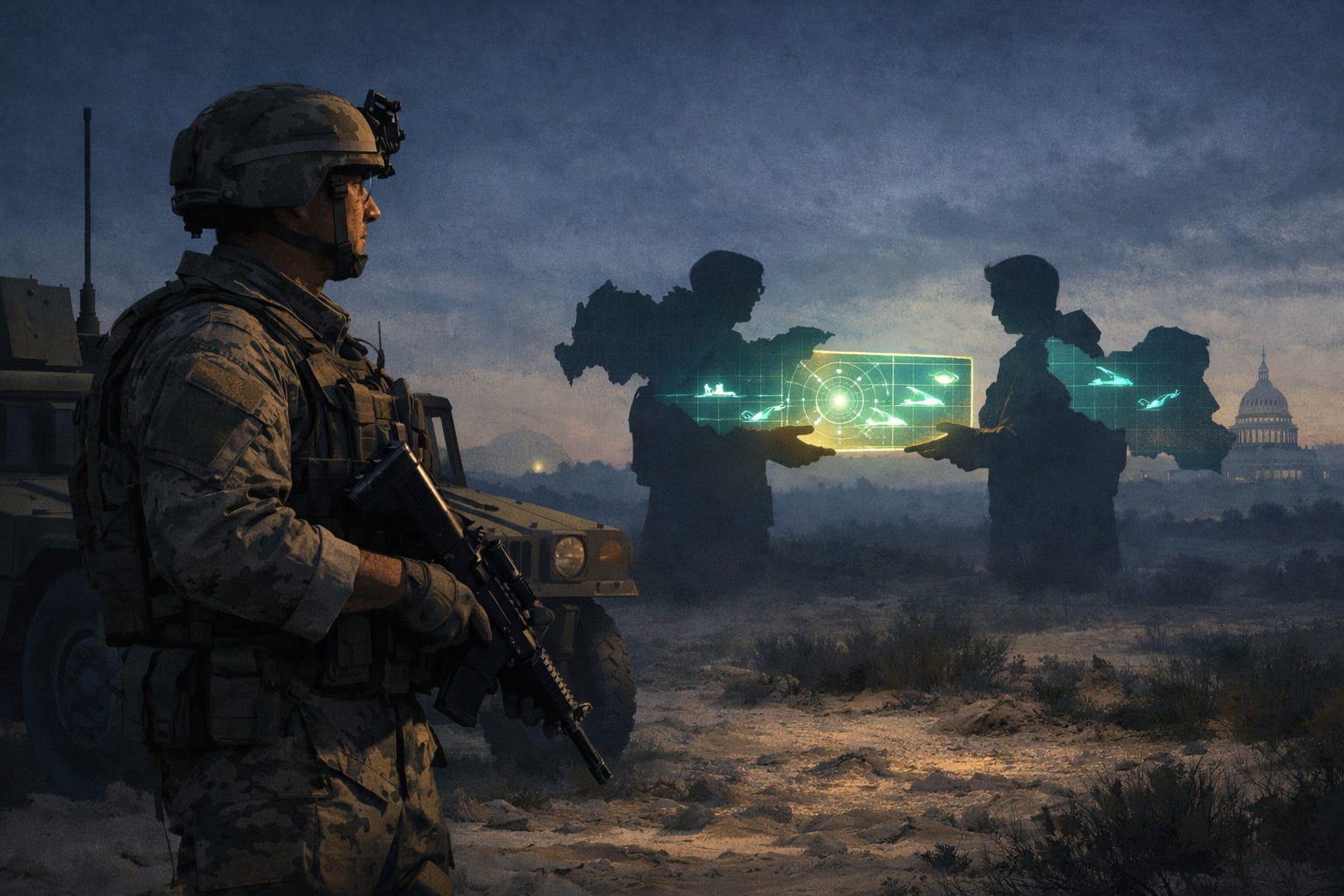
According to reporting from U.S. officials, Russia has been providing Iran with intelligence about the location of American military assets in the Middle East. That reportedly includes the positions of American ships and aircraft operating in the region. If that reporting is accurate, it means a hostile nuclear power is helping another hostile regime track American forces in the middle of an already volatile conflict. That is not some abstract geopolitical game. Those positions represent real Americans wearing the uniform. They represent the sons and daughters of families across the country who volunteered to serve and who depend on their government to protect them as they do their jobs.
What makes this moment even harder to understand is what happened at the same time. The same day these reports surfaced, the administration moved to ease restrictions that had been limiting Russian oil sales on global markets. The explanation was that it would stabilize energy supplies and help calm international markets. Maybe that calculation has an economic logic behind it, but it sends a strategic signal that is impossible to ignore. Russia is reportedly assisting a regime that has spent decades arming proxies against American troops, and the United States responds by making it easier for Russia to earn billions in oil revenue.
That contradiction is staggering. In any normal national security environment, a report that Russia was helping Iran identify American military targets would trigger a fierce bipartisan response. Congress would demand answers. Sanctions would tighten, not loosen. Intelligence agencies would be pushed to confirm what is happening and policymakers would act accordingly. Instead, the message Moscow hears is something entirely different. Russia can escalate its hostility toward the United States and still receive economic relief from Washington.
It forces a question that many Americans have been asking for years, sometimes out of frustration and sometimes out of genuine confusion. Why does Donald Trump consistently treat Vladimir Putin with a level of deference that he rarely shows to democratic allies? Over the past decade we have watched Russia interfere in American elections, wage cyber warfare against Western institutions, and invade Ukraine in a brutal war aimed at wiping a democratic country off the map. Each of those actions alone should have triggered sustained pressure from the United States. Instead, we repeatedly see hesitation and accommodation.
Now we may be looking at something even more alarming. If Russia is helping Iran track American military assets, that means Moscow is actively assisting a regime that has American blood on its hands. Iranian-backed militias have been responsible for the deaths of U.S. service members throughout the Middle East for years. When I flew missions in Iraq, everyone in uniform understood that Iranian support to militias was one of the reasons American troops faced constant danger. The idea that Russia would now help Iran in ways that could endanger American forces again should be a red line for any administration.
At the very same moment this is happening, Ukraine is offering something remarkable. After years of defending itself against Iranian-made Shahed drones used by Russia to terrorize Ukrainian cities, Ukraine has developed some of the most effective counter-drone tactics in the world. Ukrainian officials have offered to share those capabilities with the United States and our allies so we can better defend against the same technology. Think about the contrast in that moment. Ukraine, a country fighting for its survival against Russian aggression, is offering help to protect American forces. Russia, the aggressor in that war, is reportedly helping Iran gather intelligence that could put those same forces at risk.
Yet the policy signal coming out of Washington appears to reward Russia economically rather than punish it strategically. That leaves Americans wondering whether our leadership understands the basic alignment of friends and adversaries anymore. For decades the United States built alliances that made the democratic world stronger. We worked with partners who shared our interests and pushed back against regimes that threatened global stability. The current approach often seems to blur that line.
This is why the uncomfortable question keeps resurfacing. What does Russia have on Donald Trump? It is not a question people ask lightly, and it is not one that should be thrown around casually. But when the United States repeatedly responds to Russian aggression with restraint or accommodation, it becomes harder to ignore the pattern. The alternative explanation is that the President of the United States simply believes appeasing Moscow is a wise strategic approach. If that is the case, it is an approach that runs directly against decades of American national security thinking.
There is also a deeper issue at stake. The world watches how the United States responds to challenges. When adversaries see hesitation in the face of direct hostility, they interpret it as weakness. When allies see Washington reward the very powers that threaten them, they begin to question whether American leadership is still reliable. Strategic credibility is not something you can rebuild overnight once it erodes.
At some point the United States has to draw a line and make it clear that helping our enemies target American forces is unacceptable. Russia cannot simultaneously act against U.S. interests and expect economic concessions from the same government it is undermining. If these reports about Russian assistance to Iran are true, the response should be immediate and decisive. American troops deserve nothing less.
BYE FELECIA
Before wrapping up, one other piece of news deserves a brief mention. Kristi Noem has been removed as Secretary of Homeland Security. I served in Congress with Kristi, and the version of her that first arrived in Washington was someone I remember as pragmatic and relatively grounded. We disagreed on plenty of policy issues, but she was someone who approached politics as governing rather than performance.
Over time that version of Kristi seemed to disappear. Like many politicians in the Trump era, she appeared to conclude that survival in the modern Republican Party required constant political theater. The incentives shifted away from competence and toward outrage. The louder the performance, the more attention it received. Governing the Department of Homeland Security requires far more than political messaging. It requires serious leadership in areas that affect the safety of millions of Americans, not shooting them in the face.
It’s about time she is gone, and America will be slightly better for it. But ultimately lets remember something: Donald Trump owns everything everyone does. And eventually he will throw everyone under the bus. All they can do is bit for more time.
Later gator, you won’t be missed.
Video for paid subscribers:
