

Note: Video for paid subscribers follows article
Say this for Donald Trump: He sure knows how to rack up high-profile failures.
His name has been removed from the Kennedy Center. His Reflecting Pool renovation has become such a laughingstock that he took to surrounding the area with fencing and armed guards on the lookout for knife-wielding vandals, despite the fact that there’s no evidence anyone has caused damage to anything other than Trump’s ego.
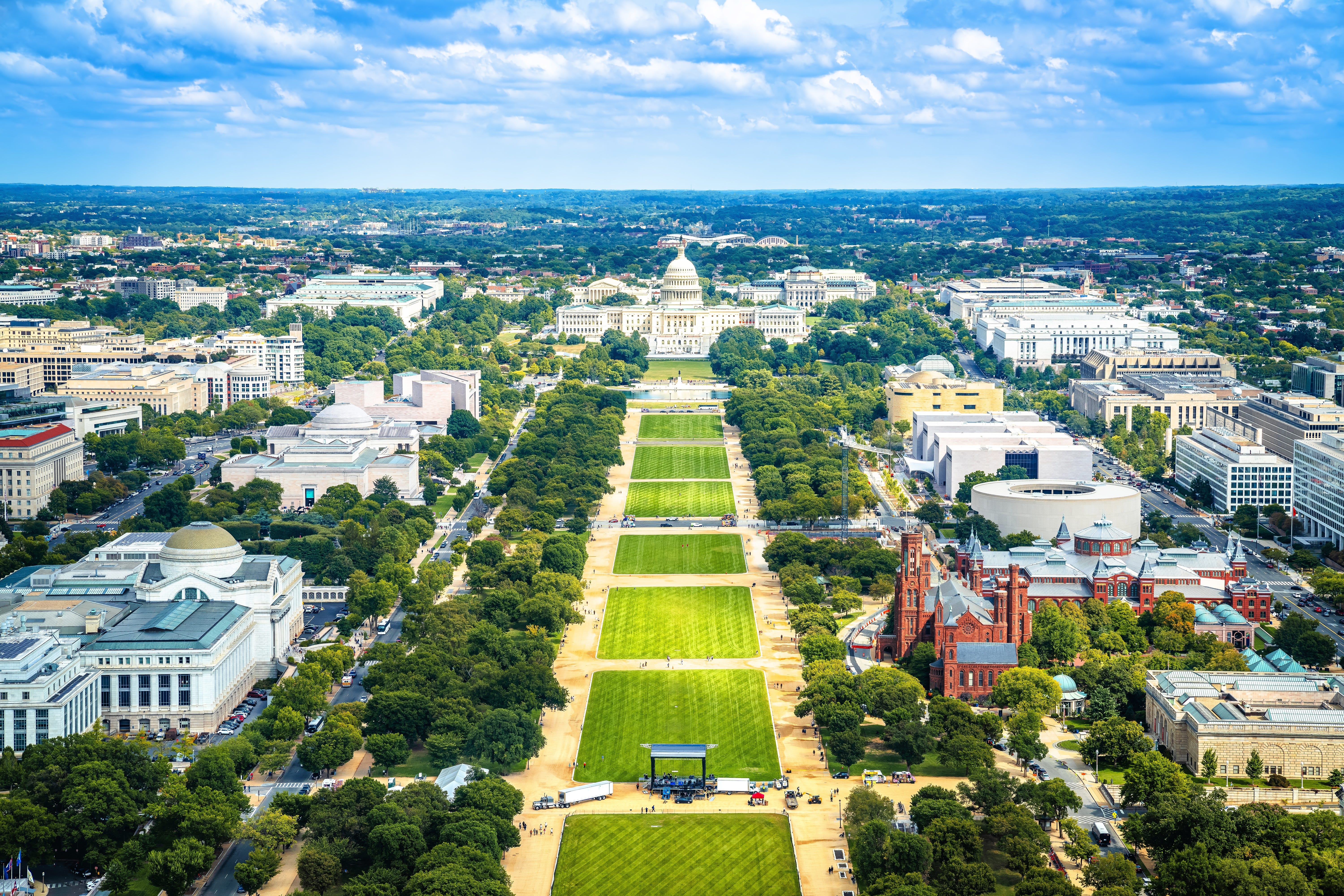
Then there’s Trump’s “Freedom 250” Great American State Fair, which began on the National Mall this past weekend. It’s off to a shaky start. Attendance was sparse. And rain forced the cancellation of a concert by ’90s rapper Vanilla Ice, the lone performer who didn’t bail on the event once he learned it was a Trump-backed boondoggle.
As usual, Trump posted through it.
Make no mistake, though: Trump’s plans to reshape both the federal government and the physical landscape of our nation’s capital are moving forward even as he suffers multiple embarrassments on the national stage.
Changing How You Read the News: Here’s Why It Matters
Americans aren’t just disagreeing; we’re being shown completely different stories.
Every day, news outlets decide what to publish. In polarized media environments, audience demographics can split coverage. If you rely on only one side of the media spectrum, you could miss stories entirely, not because it isn’t credible, but because it doesn’t align with certain editorial priorities.
That’s why I’m often asked where I go to do research for my reporting. One of the main research tools I use is called Ground News. Ground News shows me how stories are being covered from different political perspectives, and it highlights “blindspots” where only left-wing or right-wing media is covering a story.
That kind of visibility is rare right now, and it changes how you understand the news. I’ve worked out a deal with them; if you want that level of insight every day, head to GroundNews.com/AdamK and subscribe to get 40% off the Vantage plan, the one I use.
Ground News is subscriber-funded, so they don’t rely on ads that could introduce bias. By subscribing, you support both our channel and their independent team working to keep the media transparent.
On Monday, the Supreme Court, on a party-line 6-3 vote, sided in favor of the Trump administration over its decision to fire a Democratic member of the Federal Trade Commission without cause. The decision upends longstanding Supreme Court precedent that insulated about two dozen federal agencies from political pressure and influence. Basically, it was considered settled law that the president had to have a good reason other than partisanship to remove the leaders of these agencies. Now, Trump can install even more MAGA loyalists in even more government posts with significant influence over the economy and industry.
The FTC deals with consumer protection (think fraud and scams). Who might the dean of Trump University put in charge of that agency? The National Transportation Safety Board, which investigates plane crashes, train derailments, and other major accidents? Trump put a member of the cast of MTV’s The Real World in charge of the entire Department of Transportation. How about the Securities and Exchange Commission? One of Trump’s own appointees to the commission told The New York Times that, “at the SEC, independence is not a mere formality — it is the bedrock of expertise, stability, and predictability that our capital markets depend on.”
If “expertise, stability, predictability” were a Jeopardy! category, the answer would be “What are three things that Donald Trump is least known for?”
The court’s decision will reverberate long after Trump is dead and gone. It significantly changes the balance of power in the federal government in favor of the executive branch. The academic types who favor this “unitary executive” argue that a president is duly elected by the people, and that semi-autonomous federal agencies stand in the way of the people’s will.
Trump isn’t planning on stopping at the senior level of federal agencies. He will reach as far down into the bowels of the bureaucracy as he possibly can. An executive order Trump signed earlier this month would allow him to fire up to 10,000 civil service employees (time will tell if this move, too, survives legal challenges).
Unitary executive theory flies in the face of everything I was taught in civics class. Congress is the first branch created by the Constitution for a reason; it is closest to ordinary citizens. And let’s not forget that these agencies were created by Congress in the first place. The president’s job is to execute the law, and for close to a century, the court recognized that Congress designed these agencies to exercise some degree of independence as they deal with sensitive and technically complex economic challenges.
As with every other expansion of executive power under this presidency, Trump and his Supreme Court appointees are creating a government that would be unrecognizable to traditional conservatives, not to mention the Founders.
But Trump isn’t content to radically change the face of our government. He continues to obsessively occupy himself with radically changing the physical face of Washington, D.C., too. You’ve no doubt heard of the Triumphal Arch, which would be so tall that it will need red safety lights to alert pilots flying in and out of Reagan National Airport, and the notorious White House Ballroom. Trump has run roughshod over every conceivable limit on the enumerated powers of the presidency. And recently we learned that he’s been ransacking money that Congress appropriated for National Parks to pay for these pet projects.
His next target: a small strip of land in the capital where there’s currently a modest public golf course. Trump announced that on Sept. 1 he will move ahead with plans to demolish that course and build one that’s capable of hosting major PGA tournaments. The president claims this public course is “old and run down,” “dilapidated, worn out, and very dangerous and outdated.” (One reason might be that he’s been dumping dirt laced with toxic metals from the ballroom project there.)
The golf course project has all the hallmarks of Trump’s other construction projects. It was done unilaterally; his administration pulled out of a 50-year lease agreement that the National Park Service had reached with the nonprofit that runs the course. He has ignored a judge’s warning about razing the property and has already chosen an architect to design the new course, bypassing Congress and a commission that would have oversight over such plans.
No one other than Donald Trump wants golf courses or ballrooms or triumphal arches to be a national priority. What each of these projects and Trump’s effort to reshape the federal bureaucracy have in common is an inherently un-American desire to concentrate all power and glory in himself.
This presidency, as unpopular and ridiculous as it may often be, is nevertheless operating like a literal and metaphorical bulldozer to so many of the written and unwritten rules that have governed and guided our country for 250 years.
Video discussion for paid subscribers:
