

Note: video for paid subscribers follows article.
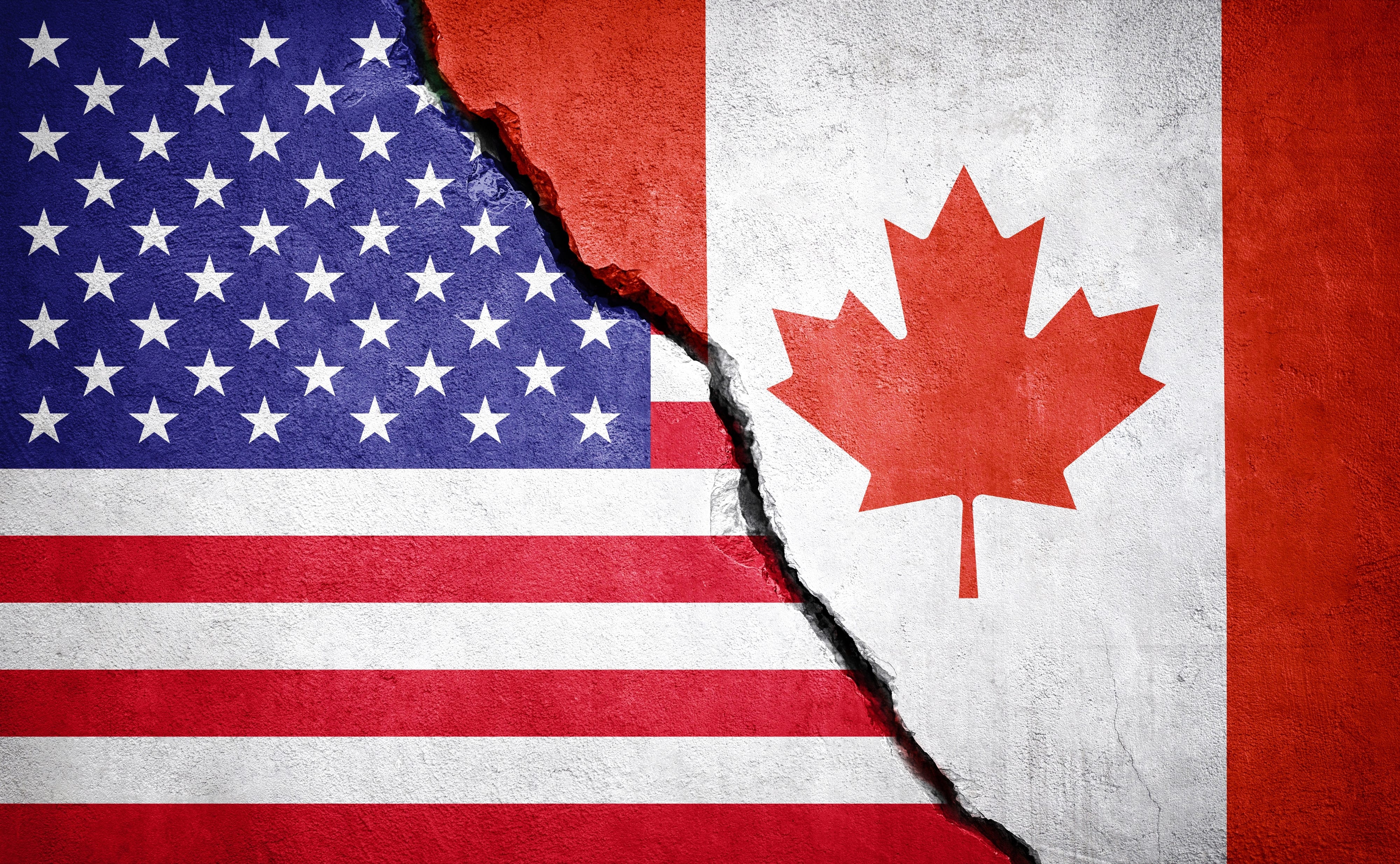
The Gordie Howe International Bridge is ready for traffic: six lanes across the Detroit River, with customs booths in place and new pavement connecting Michigan and Ontario. Officials from both countries were supposed to gather Friday for the ceremonial ribbon-cutting. Canada canceled. Donald Trump had threatened to block the bridge, imposed 50 percent tariffs on a wide range of Canadian goods and revived a 1930 tariff law to punish one of America’s closest trading partners. The bridge will open July 27, after the two governments hold separate ceremonies on opposite sides of the river.
Then Trump explained why he thought he could get away with it: “They need us to survive. Without us, there’s no way they can survive.” Trump sees Canada’s dependence on the American market and assumes Ottawa can’t afford to fight him. Its leaders absorb his insults because a rupture with the United States would be expensive. Trump interprets their restraint as weakness and keeps pressing.
I have no objection to presidents pushing allies. I spent years in Congress arguing that NATO members needed to spend more on defense, and many of them did. Alliances aren’t charitable organizations. Pressing an ally to meet its obligations is an essential part of managing an alliance. But suggesting that Russia should be free to attack countries that displease you is something else entirely. After enough threats, our allies begin planning around the possibility that we will not keep our word.
The merciless men behind your scam calls
A New York Times reporter met Shahbaz, a scammer who used fake bank alerts to make victims panic. When confronted, he just laughed—no guilt, no remorse.
That’s how these people think: you’re not a person to them—you’re just a name, address, and phone number scraped from a website. That’s how they find you.
Incogni deletes your exposed personal data from the web—the same data scammers buy to target victims. The less they can see about you, the safer you stay.
Try Incogni here and get 55% off your annual subscription with code ADAM. I use the service myself and I highly recommend it.
China has been harder for Trump to push around. He imposed tariffs and threatened more, but Beijing retaliated by restricting rare earths needed by American manufacturers. Trump backed away from triple-digit tariffs. After meeting Xi Jinping in May, he soft-pedaled Taiwan and called Xi a friend. Last week, after accusing China of interfering in American elections, he offered no punishment.
In the Oval Office last year, Trump berated Volodymyr Zelensky, telling the president of an invaded country that he was “gambling with World War Three.” Days earlier, he had called Zelensky a “dictator” and blamed Ukraine for a war Vladimir Putin started. Trump has never spoken to Putin that way. At Helsinki in 2018, he stood beside the Russian president and cast doubt on the judgment of American intelligence agencies about Russian election interference. This month, people close to the Kremlin told Reuters that Putin was likely to intensify the war despite Trump’s peace campaign. Trump has repeatedly directed more anger at Zelensky than at Putin, who ordered the invasion.
Trump’s defenders will point out that he has sometimes sanctioned Russia, threatened China and used military force elsewhere. They are right. Trump will start fights when he expects the other side to back down. Once the other side imposes a real cost, Trump looks for an exit and presents whatever he gets as a historic deal.
Consider the week in June 2018 when Trump left the Group of Seven summit in Canada. From Air Force One, he called Prime Minister Justin Trudeau “very dishonest and weak.” Soon afterward, Trump arrived in Singapore to meet Kim Jong Un, praised the North Korean dictator’s “great personality” and halted joint military exercises with South Korea because he considered them “very provocative.” Three months later, he told a rally that he and Kim “fell in love.”
Trump came home with photographs and letters. North Korea kept building nuclear weapons. Trump’s three meetings with Kim failed to produce denuclearization, and Kim recently ordered an “exponential” expansion of his nuclear forces. Trump kept demanding more money from Seoul while Kim kept building weapons.
I watched Trump do this to Republicans in Congress. He would attack someone, wait for the apology and then demand another concession. Each surrender taught him that the next threat would probably work. Fighting back deprives him of the submission he was looking for and raises the risk of another public fight. He has taken a few shots at me, but I never treated his approval as something I needed. I can’t prove why Trump has spent less time attacking me than he has some of his other Republican critics. It’s probably because I never asked to be welcomed back. I answered him, voted as I believed I should and accepted the consequences. I had already accepted that opposing him might cost me my seat. He didn’t have much left to threaten me with.
The economist Thomas Schelling wrote about coercion as bargaining: a threat works only when the other side believes the threatened cost and values whatever can still be preserved. Schelling understood that coercion works best when the other party still has something it is desperate to preserve. Trump applies that insight mostly to our friends. Canada wants commerce to flow, NATO governments want American troops to remain on the continent, and Ukraine needs American weapons. Allies are easier for Trump to pressure because they have more invested in the United States. They want trade, military cooperation and diplomatic ties to continue, and he knows they will hesitate before risking a break. Putin and Xi can retaliate, so Trump deals with them more carefully.
Alliances work because governments can plan years ahead, confident that the United States will honor its commitments even when administrations change or presidents become angry. When allies begin doubting Washington, they make other arrangements. They buy weapons from other countries and make plans that no longer assume the United States will be there. The United States has already begun reducing its military presence in parts of Eastern Europe while Russia remains a threat to the countries along its border.
On July 27, trucks will begin crossing the Gordie Howe Bridge. American and Canadian officials will have held separate ceremonies after Trump threatened to block the bridge. Canada will keep trading with the United States because the two economies are too closely tied to separate easily. Canadian officials now have another reason to reduce their country’s dependence on the United States.
Video for paid subscribers (I discuss a really interesting theory I have on why he attacks friends and lays off enemies. Hint: Dopamine and animals)
