


Note: video for paid subscribers follows article.
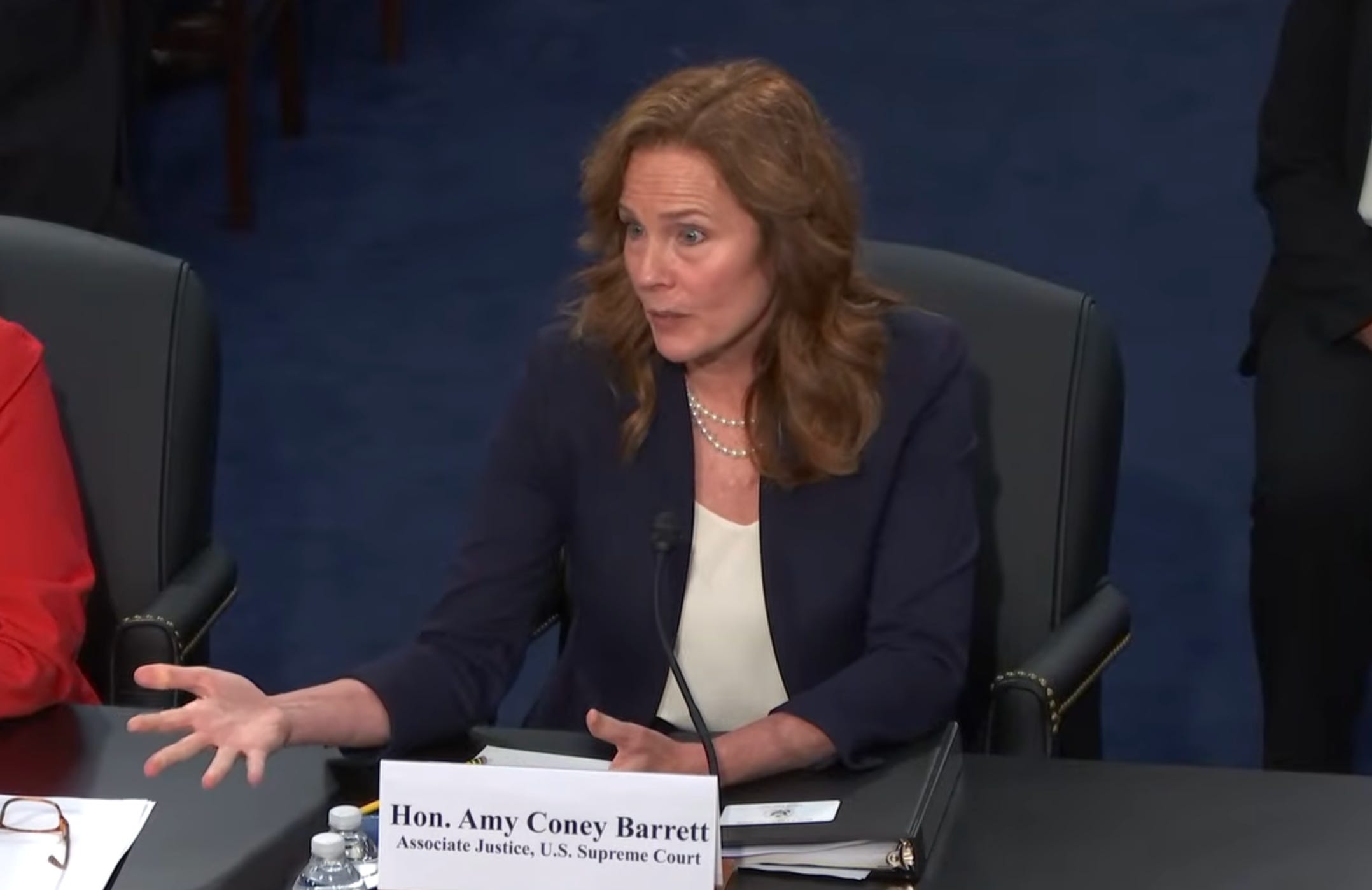
Two Supreme Court justices sat beneath the bright lights of a congressional hearing room on Tuesday and asked lawmakers for money, guards and protection for their families. Appearing before the House Appropriations Subcommittee on Financial Services and General Government, Justices Elena Kagan and Amy Coney Barrett described threats that no public servant should have to endure.
Kagan said some of those threats had come “very close.” The Supreme Court Police Department expects them to rise 38 percent this year, after increasing 25 percent last year. The Court is asking Congress for $228 million next year, including nearly $15 million to expand protection for the justices and their families. Congress should give them what they need. No judge should have to wonder whether a ruling will bring an armed stranger to the door.
But the hearing also exposed a deep hypocrisy about the modern Supreme Court.
When the justices need protection, Congress is a coequal branch with an indispensable constitutional role. When lawmakers ask Supreme Court justices about undisclosed gifts, conflicts of interest or enforceable ethics rules, Congress is often treated like an intruder.
The Supreme Court needs Congress to fund its police, maintain its building, pay its staff and protect its families. Yet when Congress asks whether the justices should follow enforceable ethics rules, disclose gifts fully or submit recusal decisions to meaningful review, the Court often behaves as though lawmakers have wandered into a room where they have no constitutional business. The contrast is especially striking after a term in which the Court strengthened presidential control over independent agencies: other public officials must answer to someone; the justices largely answer to themselves.
That posture is difficult to reconcile with the constitutional structure. Alexander Hamilton wrote that the judiciary had “no influence over either the sword or the purse.” Courts issue judgments, but they depend on the executive branch to enforce them and the legislative branch to finance the institution that produces them. Congress created the original six-member Supreme Court in 1789, has changed its size over time and still decides how the federal judiciary is organized and funded. Judicial independence was designed to prevent politicians from ordering judges how to rule. It was never designed to turn nine public officials into a separate constitutional aristocracy.
I served in Congress, and I still believe judicial independence is worth defending, especially now. Donald Trump has spent years attacking judges who rule against him, often in personal terms, while his movement increasingly treats any independent institution as legitimate only when it serves his interests. Chief Justice John Roberts was right to say that personal hostility toward judges is dangerous and “has got to stop.” Threats, swatting calls and assassination plots are attempts to replace legal arguments with fear.
Barrett’s testimony made the human cost of that intimidation difficult to dismiss. After threats intensified around the leak of the Court’s draft opinion overturning Roe v. Wade, her security detail sent her home with a bulletproof vest. She placed it on a table in her bedroom and turned to find her 12-year-old son asking what it was. “I didn’t expect that performing this service was going to put me in the position of explaining to my children what a bulletproof vest was,” she told Congress.
No child should have to ask that question because a parent serves on the Supreme Court. But defending the Court from intimidation does not require shielding it from accountability.
In recent years, Americans have learned about undisclosed luxury travel and other benefits provided to Justice Clarence Thomas by billionaire donor Harlan Crow. They have watched Justice Samuel Alito decline to recuse himself from election-related cases after flags associated with the effort to overturn the 2020 election flew outside his houses. Whatever the merits of each allegation, the Court has no credible process for determining what happened, applying a rule and showing the public that the matter was resolved by something more rigorous than a justice’s own assurances.
The Court finally adopted a code of conduct in 2023, but it created no outside enforcement mechanism. Its opening statement insisted that the justices had long followed the equivalent of “common law ethics rules” and suggested the real problem was public misunderstanding. Kagan later acknowledged the obvious weakness: “Rules usually have enforcement mechanisms attached to them, and this one—this set of rules—does not.” She proposed that respected judges could review possible violations. Her proposal would give the code the feature that separates a rule from a suggestion.
This should not become an ethics system designed to punish any individual justice. It should be a durable structure written for nine fallible human beings and their successors. Congress should require timely financial disclosure, establish a neutral process for reviewing recusal disputes and create an enforcement mechanism that does not allow lawmakers to reverse decisions or penalize judges for unpopular rulings. The goal is not congressional control of the Court but rather institutional accountability compatible with judicial independence.
This habit is not confined to the Court. Across the government, institutions have begun redefining independence as the right to reject scrutiny. President Trump calls oversight harassment. Members of Congress treat subpoenas as partisan warfare. Every branch has learned the same trick: invoke a legitimate constitutional protection, then stretch it until it becomes a shield against accountability.
The legal scholar Alexander Bickel called judicial review the “counter-majoritarian difficulty”: unelected judges can invalidate the work of elected officials. That power is essential when majorities violate the Constitution, but it also creates a permanent burden of legitimacy. The Court cannot command obedience with troops or sustain itself through taxation. Its authority ultimately rests on public acceptance that its judgments come from law rather than private relationships, political loyalties or personal convenience. Public confidence in the Court remains near a three-decade low.
Security officers can protect the justices’ bodies; they cannot repair that loss of trust.
Kagan and Barrett’s joint appearance offered a better model than the Court’s customary standoffishness. Two justices appointed by presidents of different parties sat before elected representatives and described what their institution needed. That is constitutional government: separate branches, each with its own authority, forced to deal with one another rather than pretend they can govern alone.
Congress should protect the justices from people who would answer law with violence. The justices, in turn, should protect the Court from the quieter danger of believing that independence means answering to no one. The Supreme Court needs Congress to guard its doors. It should stop acting as though Congress has no right to ask what happens inside.
Video discussion for paid subscribers:
