


Video for paid subscribers follows article
In the coming days, the Supreme Court will confront a question the Founders thought they had already answered: How much power should one person have?
The Court is about to decide several cases that could define the scope of Trump’s authority. One case concerns Trump’s effort to end birthright citizenship. Another involves the administration’s attempt to revoke legal protections from hundreds of thousands of immigrants. Others could expand presidential control over independent agencies and officials Congress deliberately insulated from political pressure.
Taken individually, these disputes may seem technical. Together, they point in the same direction: a presidency with fewer constraints and more power.
The question before the Court is larger than immigration, agency structure, or administrative law. It is whether the Constitution still imposes meaningful limits on the chief executive.
I spent most of my political life surrounded by conservatives who believed limiting government power was the central purpose of the Constitution. For decades, conservatives warned about the dangers of concentrated government power. They argued that the Constitution’s genius was its ability to restrain ambitious politicians. They preached fidelity to the text, celebrated checks and balances, and insisted that no person—not even a president—stood above the law.
Then Donald Trump came along.
Today, many of the same people who once spoke passionately about limited government are demanding a presidency with fewer constraints, broader authority, and greater immunity from constitutional limits. They are abandoning principles they claimed to cherish in order to accommodate an authoritarian who measures success by how much power he can accumulate.
The Founders were deeply suspicious of concentrated power. Having just fought a revolution against a king, they designed a system intended to prevent any single individual from dominating the government. Congress would make the laws. The president would execute them. The judiciary would interpret them. Each branch would serve as a check on the others. James Madison described the arrangement with characteristic clarity: “Ambition must be made to counteract ambition.”
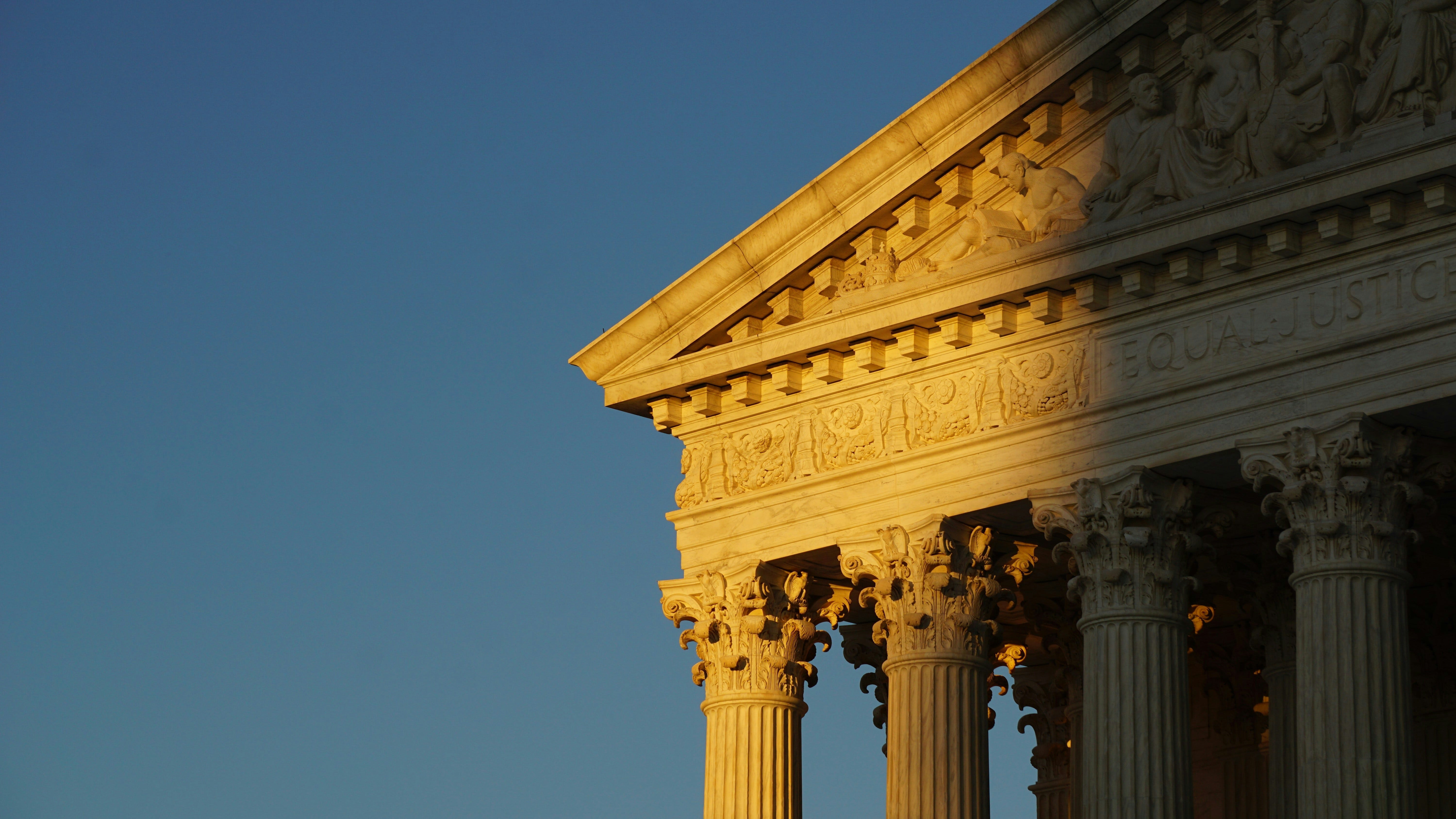
The system was never supposed to depend on the goodwill of elected officials. It was designed to restrain them. That is why the Supreme Court exists. It exists to preserve constitutional boundaries, especially when other institutions fail to do so.
And let’s be honest: Congress has already surrendered.
Many Republicans who once warned about executive overreach now treat Trump’s every demand as an article of faith. Oversight has disappeared and independent judgment has become politically dangerous.
The legislative branch has become increasingly reluctant to check the executive branch. That leaves the courts. If the judiciary is unwilling to scrutinize presidential power, then what exactly is the point of having a Supreme Court at all?
Unfortunately, the Court’s recent record offers little reassurance. Just two years ago, the Supreme Court held that presidents enjoy broad immunity from criminal prosecution for many official acts undertaken while in office. By doing so, the Court made it significantly more difficult to hold presidents accountable for abuses of power committed while in office.
Trump supporters celebrated the ruling as a victory for executive authority. I saw it as a warning sign. At a moment when the country needed a clear reaffirmation that no public official is beyond accountability, the Court expanded the protective shield around the presidency.
Consider the birthright citizenship case now before the Court. The text of the Fourteenth Amendment is explicit. Ratified in 1868 after the Civil War, it declares that “all persons born or naturalized in the United States, and subject to the jurisdiction thereof, are citizens of the United States.”
For generations, conservatives insisted that constitutional language meant what it said. Judges were not supposed to rewrite the document to reach preferred political outcomes.
I’m old enough to remember when constitutional conservatives existed. They were the people who argued that the Constitution meant what it said—even when the text got in the way of a policy outcome they liked.
Now many self-described conservatives are embracing precisely the opposite approach. Because Trump wants to end birthright citizenship, they suddenly discover ambiguities that previous generations somehow missed. Because Trump wants greater authority, constitutional limitations become obstacles to be explained away rather than principles to be defended.
This is not constitutional conservatism. It is personality-driven politics.
Birthright citizenship is only the most obvious example. Whether the issue is immigration protections, independent agencies, or the president’s authority over officials whose independence Congress deliberately protected, the question is ultimately the same: How much power should one person have?
For most of my life, conservatives had a straightforward answer: Not much.
Now, however, many Republicans are ready to abandon their constitutional principles because they support Donald Trump. That is precisely the mistake the Founders warned us not to make.
Trump has long displayed contempt for institutional constraints. Throughout his political career, he has viewed independent agencies, inspectors general, congressional oversight, and judicial review as irritants rather than essential components of constitutional government. When courts rule against him, he attacks judges. When officials resist him, he questions their legitimacy. When constitutional limits stand in his way, he treats them as negotiable. That instinct is fundamentally at odds with the American system.
The good news is that the Constitution was designed for moments like this. The Founders anticipated ambitious presidents. They anticipated timid legislators. They anticipated political movements willing to place loyalty to a leader above loyalty to principle. That is why they built a system of checks and balances.
The Supreme Court now has an opportunity to prove that the system still works. If the justices are willing to defend the Constitution when it is politically inconvenient, they will remind Americans of something we have nearly forgotten: no president is bigger than the republic.
Video for paid subscribers:
