


Video for paid subscribers follows article
Let me tell you what happened Monday morning, because I want you to feel the weight of it.
At 6:49 a.m. New York time, somebody — one entity or several, we don’t yet know — placed an extraordinary bet on the financial markets. According to exchange data compiled by Bloomberg, in a single 60-second window, roughly 6,200 Brent and West Texas Intermediate crude oil futures contracts changed hands, worth somewhere between $580 million and $1.5 billion depending on what you’re measuring. At the exact same moment, S&P 500 futures spiked upward. The trades were perfectly coordinated: sell oil, buy stocks. Bet on de-escalation. Bet on relief.
Fifteen minutes later, at 7:04 a.m., President Trump posted on Truth Social that the United States had been engaged in “VERY GOOD AND PRODUCTIVE CONVERSATIONS” with Iran and was postponing its threatened strikes on Iranian energy infrastructure. Oil prices cratered. The Dow surged more than a thousand points. Whoever made those trades just made a fortune — instantly, cleanly, and apparently legally, because there is currently no law in the United States prohibiting this specific form of insider trading on futures contracts.
One veteran portfolio manager summed it up to the Financial Times: “My gut from watching markets for the last 25 years is this is really abnormal. It’s Monday morning, there’s no important data today, there aren’t any Fed speakers you’d want to front run. It’s an unusually large trade for a day with no event risk. Somebody just got a lot richer.”
Senator Chris Murphy called it “mind-blowing corruption” and asked the obvious question that everyone with a functioning conscience was already thinking: “Who was it? Trump? A family member? A White House staffer?”
We’re Not Seeing the Same News…This Story Shows Why
Americans aren’t just disagreeing; we’re being shown completely different stories.
Take this one.
It involves DHS Secretary Kristi Noem using nearly $300,000 in taxpayer money for a Mount Rushmore ad – covering expenses including things like thousands of dollars for hair, makeup, and even a rented horse.
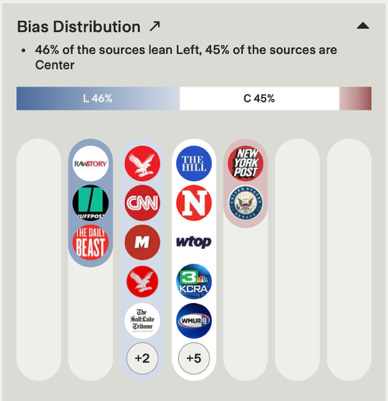
Here’s the key takeaway:
• 46% Left, 45% Center coverage
• Right-leaving outlets: Just 9%
• 84% high or very high factuality
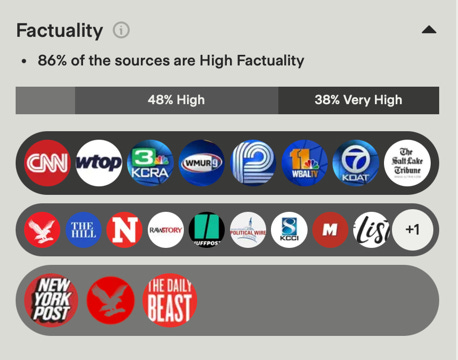
This isn’t just about the story. It’s about what’s missing.
If you rely on one side of the media spectrum, there’s a real chance you’d never see this story at all – not because it isn’t credible, but because it doesn’t fit certain editorial priorities. That’s the problem.
We don’t just disagree anymore; we’re often working from entirely different sets of information.
That’s why I use and recommend Ground News.
They’re a website and app designed to make reading the news easier and more data driven.
It doesn’t tell you what to think. It gives you the full picture of who’s reporting on them, who isn’t, and how reliable those sources are.
That kind of transparency is rare right now, and it makes a difference.
If you want that level of insight every day, head to GroundNews.com/AdamK and subscribe to get 40% off the Vantage plan, that’s the one I use.
Seeing the full picture shouldn’t be hard. Ground News makes it possible.
This Wasn’t the First Time. Not Even Close.
I was in Congress during the years when insider trading among members became a national scandal. We debated it, legislated around it, and eventually passed the STOCK Act in 2012. And yes — members of Congress had real advantages. You know a bill is coming. You know a defense contract is about to be awarded. You know a regulatory decision is weeks away. That information, acted upon, is an unfair edge.
But here’s the thing about congressional insider trading that people forget: there’s still friction. There are 435 members in the House, 100 in the Senate. Information leaks. Legislation falls apart. A bill you think will pass gets killed in committee. News spills. Whips miscalculate. The built-in uncertainty of democratic deliberation puts a natural ceiling on how perfectly you can time a trade based on what you know. The advantage is real, but it’s incomplete, probabilistic, and shared across hundreds of people.
Now contrast that with being the president of the United States.
One man. One Truth Social post. A market move so large and immediate it makes a congressional tip look like small-time nickel gambling. No deliberation required. No other votes needed. No leaks necessary. The president is the information. He decides when to threaten Iran, when to back off, when to announce a tariff, when to walk one back. Every one of those decisions is a potential billion-dollar trade opportunity for anyone who knows even five minutes in advance.
This isn’t a theoretical vulnerability. It’s a pattern.
Before the U.S. military action against Venezuelan President Nicolás Maduro earlier this year, a Polymarket trader placed over $400,000 betting that the U.S. would take military action — in the hours before it happened. On Polymarket, eight newly created accounts collectively bet nearly $70,000 on a U.S.-Iran ceasefire being reached before March 31, positioning for nearly $820,000 in profit if the deal went through. A separate cluster of six newly created accounts in February made roughly $1 million by correctly betting that the U.S. would strike Iran before February 28th.
The pattern of what analysts call “wallet splitting” — dividing bets across dozens of freshly created anonymous accounts to avoid detection — appears again and again in the data. One account, tracked by on-chain analysts, went from its very first trade to an $85,000 profit by betting correctly on the exact timing of the first Iran strike, then immediately pivoted to betting on a ceasefire.
CNN reported that one bettor has made $1 million from war bets on Polymarket, with a prescient track record stretching back to Israeli strikes on Iran in October 2024. One trader. A million dollars. Correct, over and over, on the exact timing of classified national security decisions.
Nobel Prize-winning economist Paul Krugman wrote Tuesday that we have another word for exploiting classified national security information for private profit. That word is treason.
Then the White House Shrugged
This is the part that tells you everything you need to know.
When asked about the $580 million in oil futures trades — placed in the pre-market quiet of a Monday morning with no economic data on the calendar, no Fed speakers scheduled, no publicly available reason to move — the White House issued a non-denial denial. A spokesperson said the administration does not “tolerate any administration official illegally profiteering off of insider knowledge” and called the reports “baseless and irresponsible.”
Not: we are launching an investigation. Not: we are cooperating with regulators. Not: we are as disturbed by this as the American people.
Just: move along. Nothing to see here.
I want you to sit with that for a moment. If this had happened during a Democratic administration — if someone had placed a half-billion-dollar bet on oil futures fifteen minutes before President Obama announced a foreign policy pivot — the right-wing media machine would have burned down the republic demanding answers. The SEC and CFTC would have been dragged before Congress the same week. Special prosecutors would have been mentioned by the third news cycle.
Instead, the White House shrugged. And the press secretary moved on.
When the people who should be most outraged by this aren’t outraged — when the administration that would be most threatened by an investigation is the administration conducting the non-investigation — that tells you something. It doesn’t prove guilt. But it confirms the thing that people who have worked around power already know: when the powerful are caught with their hands in the till, they don’t get embarrassed. They get quiet. And then they dare you to do something about it.
Who Loses? You Do.
Let me be clear about something that tends to get lost in the abstraction of “markets” and “futures contracts” and “notional value.”
Money isn’t invented. It moves.
When someone makes $500 million on a perfectly timed oil trade, that money came from somewhere. It came from the pension funds that were on the wrong side of the trade. It came from the retirement accounts of teachers and firefighters and nurses who are invested in the S&P through their 401(k)s, their IRAs, the funds their union manages on their behalf. It came from ordinary people playing by the rules — buying diversified index funds, trusting that the market is a level playing field, doing what every financial advisor told them to do.
Those people didn’t get a Truth Social post fifteen minutes early. They didn’t have a seat at the table. They just paid the bill.
This is the moral rot at the core of what’s happening. It’s not just illegal. It’s a systematic wealth transfer from the people who follow the rules to the people who make them. Every time it happens, the game gets a little more rigged. Every time it happens with impunity, the message gets a little clearer: the rules are for suckers.
I’ve studied enough history to know that the powerful have always found ways to exploit their position. The robber barons of the early 20th century — Carnegie, Rockefeller, Morgan — were ruthless in their consolidation of industrial power. They crushed labor, bought politicians, and monopolized entire sectors of the American economy. The Progressive Era corrected them. The New Deal corrected their successors. The SEC was created precisely because the financial elite of the 1920s had turned the stock market into a private casino.
But here’s what’s different now. The robber barons were operating in an industrial economy where the levers of exploitation were still somewhat visible — factory conditions, railroad rates, oil prices. What we’re watching today is the instantaneous, algorithmic, leveraged extraction of wealth from financial markets based on the president’s foreknowledge of his own announcements. The scale of a single trade can exceed what the robber barons extracted over a decade. And it can happen before the market opens on a Monday morning, invisibly, through anonymous cryptocurrency wallets and opaque futures accounts.
The robber baron next to a serial killer is not an overstatement. It’s a description of velocity, scale, and impunity.
History also tells us that these moments don’t last forever. Every era of unchecked plutocratic excess eventually generates a correction — in law, in regulation, in political will. The Progressive Era. The New Deal. The post-Enron reforms. The post-2008 Dodd-Frank framework. The pattern is consistent: the powerful push until something breaks loudly enough that the public demands a reckoning, and then the law catches up.
That correction is coming here too. Senator Murphy’s BETS OFF Act — which would ban prediction market contracts on government actions, terrorism, war, and assassination — is a start. The bipartisan “Prediction Markets are Gambling Act” is another pressure point. State bans are piling up. Even some of the platforms themselves, now sensing congressional peril, are scrambling to institute new rules that they should have built from the beginning.
But let me be honest with you: the damage being done right now is real and it’s cumulative. Every pension fund that gets fleeced by a suspiciously timed futures trade loses a little ground it won’t recover. Every ordinary investor who watches the game get more obviously rigged pulls back a little more from the market participation that funds the broader economy. Every time the White House shrugs, the norm erodes a little further.
Regulation needs to happen now. Not after the next scandal. Not after the next $1.5 billion bet. Now.
What we need is simple, even if getting there isn’t: a flat prohibition on futures and derivatives trading by the president, vice president, their immediate families, White House staff, and cabinet officials — with robust criminal penalties, not slap-on-the-wrist civil fines. This should include an outright ban for congress and senate as well. We need the prediction markets to be treated as what they are: highly leveraged financial instruments that create direct incentives for the people in power to manage public events for private gain. We need the CFTC and SEC to have actual independence from the executive branch — not Trump-appointed commissioners who have a financial interest in looking the other way.
And we need the press, the Congress, and the public to keep asking the question Chris Murphy asked Monday morning, and not let the White House shrug serve as a satisfying answer.
I spent years working in an institution where the rules were imperfect but the accountability was real — where you knew that if you crossed certain lines, someone would eventually make you answer for it. That accountability, imperfect as it was, was the whole point. It’s what made the institution legitimate.
What’s happening right now in the prediction markets and the futures pits isn’t just corruption. It’s the active dismantling of the premise that the rules apply to everyone. And if we let that premise die without a fight, we won’t just lose our markets. We’ll lose the basic social contract that makes a functioning democratic society possible.
The game is rigged. We know it. They know we know it.
The question is whether we do anything about it.
Video for paid subscribers:
