


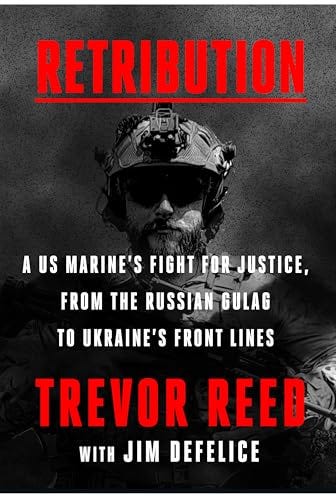
Buy Retribution HERE or wherever you purchase books.
Some books talk about global politics. Others show what people actually lose when politics turn cruel. Retribution does both—and it does so with a level of honesty that most stories never quite reach.
I know Trevor Reed. He’s a good friend. When he was wrongfully imprisoned in Russia, I was one of the early members of Congress to speak out for his release. I wrote him while he was still locked away. I watched his family fight—relentlessly—against a system that treats human beings as bargaining chips. Reading Retribution wasn’t just reading a memoir for me. It brought back a reality that too many Americans still don’t fully see.
If you want to understand modern Russia—not as an abstract adversary, but as a system that operates through fear, corruption, and cruelty—this book is a clear place to start. And if you want to understand Ukraine beyond maps and headlines, Retribution puts you there, alongside people who chose to stand and fight, including Americans who volunteered knowing full well what they were risking.
Trevor’s description of the Russian prison system is direct and unfiltered. There’s no dramatization, no exaggeration—just the daily grind of a system designed to break people physically and mentally. The gulag isn’t a historical reference point here. It’s real, functioning, and deliberately brutal. Any illusion about Russian “rule of law” disappears quickly when you see how easily laws are bent to serve power and profit, and how casually human suffering is treated along the way.
What makes Retribution stand out, though, is that it doesn’t end with Trevor coming home. Most people would have tried to move on after surviving something like that. Trevor didn’t. Instead, he made the decision to go to Ukraine—not out of recklessness, and not for attention, but because he understood exactly what Russian aggression looks like when you’re on the receiving end of it.
His account of fighting alongside Ukrainians and foreign volunteers cuts through the noise. These aren’t people chasing headlines or ideology. They’re people giving up comfort, safety, and sometimes their futures, because they believe some fights matter. When Trevor is eventually wounded by a landmine, the message is unmistakable: volunteers go without guarantees, without insurance, and often without much support. They go because conscience pulls harder than fear.
The book also gives overdue attention to the families left behind. Retribution shows the exhausting, bipartisan, often invisible work required to keep a wrongfully detained American from being forgotten. Trevor’s case wasn’t unique—and the book makes that painfully clear. Too many families are still fighting similar battles, largely out of public view.
What I respect most about this book is that it doesn’t soften the edges. Russia’s brutality is shown as it is. War is presented without romance. The psychological toll of injustice isn’t wrapped up neatly. Trevor doesn’t ask for sympathy. He offers his experience, honestly and without varnish.
If you’re looking to understand why Ukraine matters, how modern Russia actually operates, and why some Americans feel compelled to step forward when institutions fail them, I strongly recommend Retribution. Not as a political statement—but as a human one.
Trevor and I will be sitting down soon for an interview to talk through all of this—his imprisonment, his release, and his decision to go to Ukraine when most people only watch the war through a screen. It’s a conversation worth having. And this is a book worth reading before you hear it.
Buy Retribution HERE or wherever you purchase books.
Looking forward to the Interview with Trevor Reed.
Thank you, Adam. A family member is a POW in Russian custody right now - has been for over a year. We received two letters, months apart, through the Red Cross. He was alive as of September 2025.