

Note: video for paid subscribers follows article.
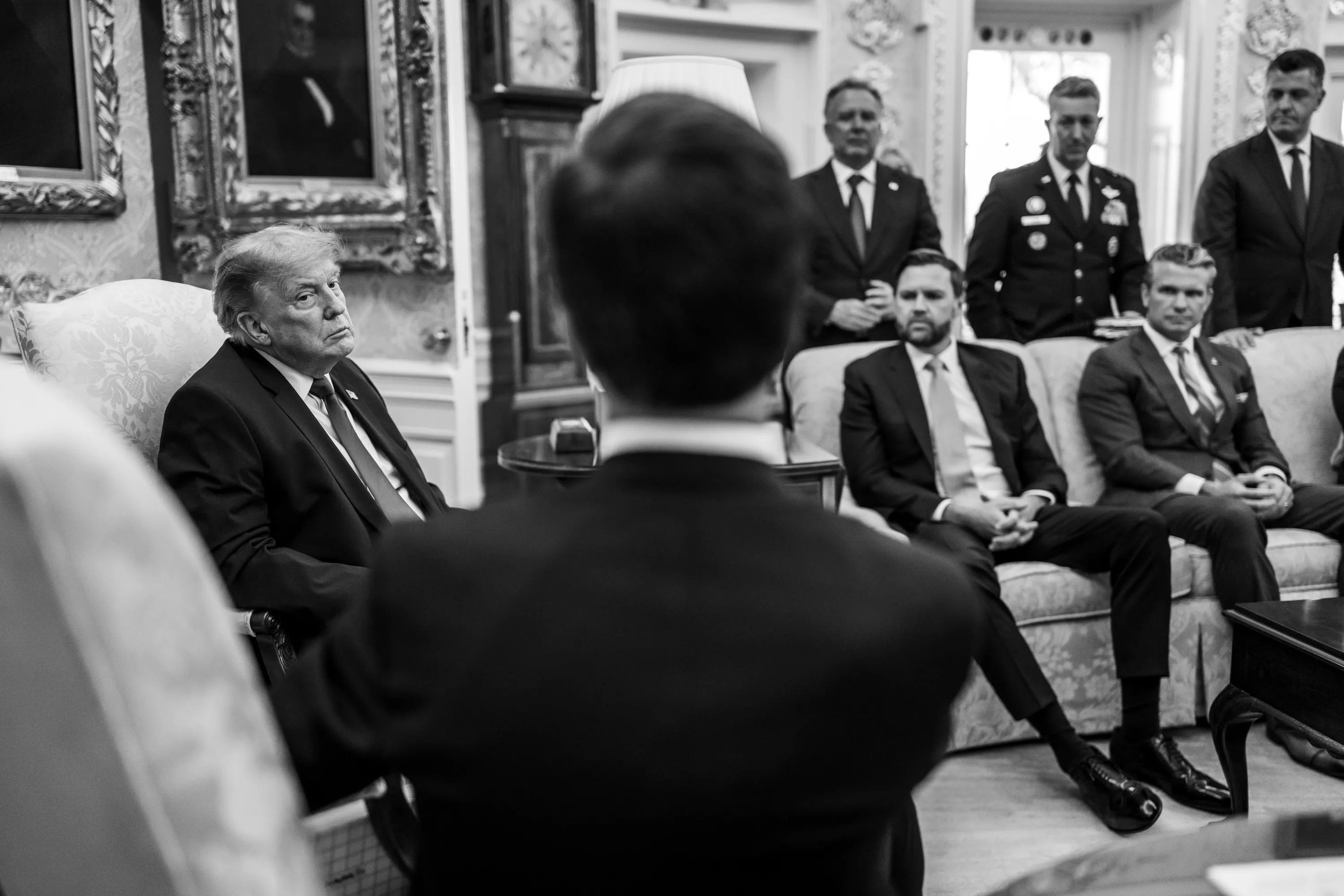
The smoke still hung over the Persian Gulf when the meaning of the war changed again. On the bridges of American destroyers and inside operations centers across the Middle East, officers watched radar screens, intelligence feeds, and encrypted messages, trying to answer the oldest question in warfare: What happens next? Allies searched for signals from Washington. Markets braced for another shock. Then, standing beside NATO’s secretary general in Ankara, Donald Trump declared that the ceasefire with Iran was “over.”
Not paused. Over.
Only two days earlier, Trump had said the United States would either reach a deal with Iran or “finish the job.” Weeks before that, he had pointed to diplomatic progress. Before that came threats. Before that came assurances that strength alone would bring clarity.
The episode captured something larger than Iran. It captured the defining habit of Trump’s presidency: presidential rhetoric supersedes fact-based reality.
Got scam calls? The worst part hasn’t happened yet.
When scammers get hold of your data, they don’t just take your money. They sell what’s left — your name, address, phone number, the names of people close to you — to the next buyer.
Congress put a number on it: four breaches alone have cost Americans $20 billion. But the financial loss is round one. That same data is what anyone who means you harm uses to find you and your home.
Incogni removes your data from those databases before round two. Get 55% off annual plans with code ADAM
Diplomacy is difficult. No serious person should imagine that peace agreements in the Middle East enforce themselves. The deeper story is that Trump has long treated reality itself as something that can be altered through declaration. Success is announced before it is achieved. Problems are solved because he says they are solved. Setbacks disappear because they are renamed victories. The declaration comes first; reality is expected to catch up. Often it does not.
In foreign policy, the cost is measured in credibility. Allies do not merely count America’s aircraft carriers or missiles. They ask whether American commitments will mean the same thing tomorrow that they mean today.
Adversaries study something different. They look for the distance between rhetoric and resolve. They try to determine whether American policy reflects a considered strategy or the emotional rhythm of one man.
That is why temperament matters. It is not a Mister Congeniality contest. It’s a legitimate national-security issue.
I learned in the military that good leaders revise plans when facts change. Every commander understands that reality gets a vote. There is nothing weak about adapting to new information. But there is a profound difference between adjusting to events and attempting to overpower events through proclamation. Trump has almost always preferred the latter.
Remember his acceptance speech at the 2016 Republican National Convention, when he declared, “I alone can fix it.” He has always viewed institutions as impediments, experts as obstacles, and personal confidence as a substitute for the slow, frustrating work of democratic government. It revealed an assumption that has shaped Trump’s political life: When institutions get in the way, trust the man, not the institution.
The Constitution was written on the assumption that power would be constrained by institutions, not by one man’s confidence in himself. That is why Trump’s most revealing habit is not simply exaggeration. It is his belief that presidential speech is itself an act of power.
When he insisted throughout 2020 and beyond that he had won the election “by a landslide,” he was not making a legal argument. Courts rejected his claims. Republican election officials rejected his claims. His own attorney general rejected his claims. Yet millions of Americans accepted the declaration because, for Trump, saying he won became a substitute for winning. Mike Pence later said Trump demanded that he choose between Trump and the Constitution.
The same instinct appears throughout his public life. During the pandemic, Trump repeatedly predicted that COVID would “disappear…like a miracle.” The virus ignored presidential optimism.
During the campaign, he promised he could end Russia’s war against Ukraine in 24 hours. Years later, the war continues while he keeps saying that peace is “very close.” The details differ, but the governing assumption is the same: Confidence is treated as a substitute for accomplishment.
Even Trump’s famous emphasis on wealth follows the pattern. For decades he has insisted that he is enormously successful, that everyone wants to make deals with him, that foreign leaders respect him, that his instincts are unmatched. The important point is not whether every boast is accurate. It is that Trump has always acted as though declaring something publicly helps make it true.
That approach may work in branding. It does not work in governing.
The military historian Eliot Cohen once observed that the essence of strategic leadership is maintaining “a constant, unequal dialogue with reality.” Reality is stubborn. It refuses to cooperate with slogans. Eventually events expose the difference between declarations and achievements.
That is why the 2020 election remains the most dangerous example. Once a president convinces millions of citizens that reality depends upon his personal declarations, facts themselves become negotiable. Losing becomes impossible because defeat can always be renamed fraud. Failure becomes temporary because blame can always be reassigned. Loyalty gradually replaces evidence as the test of truth.
The problem isn’t that Trump projects confidence. It’s that he often mistakes confidence for proof.
The presidency cannot function that way because a president’s words are themselves instruments of national power. They reassure allies, deter adversaries, calm markets, and shape expectations around the world. Every sentence carries strategic weight precisely because other nations assume those words reflect careful deliberation rather than personal impulse.
Iran is merely the latest example. Tomorrow it may be NATO, Ukraine, trade, the economy, immigration, or another constitutional confrontation. The specific controversy changes, but the governing philosophy does not. Presidential declarations become substitutes for sustained leadership. Institutions become secondary to personality. Puffed-up confidence replaces discipline.
America has survived mistaken policies before, and it will survive more in the future. What it cannot safely normalize is the idea that governing consists of announcing success rather than achieving it. Eventually allies stop trusting promises, adversaries stop fearing warnings, and citizens begin to wonder whether presidential statements describe reality or merely attempt to create it.
That is the danger of the “everything is final until it isn’t” presidency. Eventually nobody knows what is actually final—not our allies, not our adversaries, not Congress, not the markets, perhaps not even the officials inside the administration trying to translate presidential impulse into government policy.
The world is dangerous enough without America becoming unreliable on purpose.
Video discussion for paid subscribers (I discuss more an overall approach to foreign policy and war)
