


Note: video discussion for paid subscribers follows article.
Andy Beshear’s first letter to Mitch McConnell was dated July 8. The blue-and-gold seal of Kentucky sat above four short paragraphs asking the senator to explain his health and say whether he could continue serving. Beshear closed by wishing him “a safe and speedy recovery.” McConnell’s office did not answer the letter.
Last night, Beshear tried again. His second letter was tougher. He called on McConnell to “directly and verbally address the people of Kentucky” and prove that he could still serve—or resign. Beshear also wrote Senate Majority Leader John Thune and asked him to investigate McConnell’s condition if the senator remained unwilling to appear publicly.
Beshear finally said what the situation required. But he waited until one week before August 3, the deadline officials had identified for placing an election for the remainder of McConnell’s term on the November ballot.
The escalation came only after nearly three weeks of criticism of Beshear and continued silence from McConnell.
That timing matters. Beshear had been publicly asking McConnell to appear in a video or interview by the middle of July. Yet he stopped short of demanding McConnell’s resignation until the window for replacing him was nearly closed.
McConnell has been away from the Senate since June 14, when he fell at home and briefly lost consciousness. He later developed pneumonia and moved to a rehabilitation facility. The congressional physician’s office says he has not been medically cleared to leave rehabilitation and return to work. As of Monday, he had missed 38 Senate votes.
I have sympathy for McConnell’s condition. I also know from my years in the Air Force that an organization needs to know who can report for duty. McConnell’s staff can discuss bills and pass messages to other senators. They cannot speak for him indefinitely, and they cannot cast his vote.
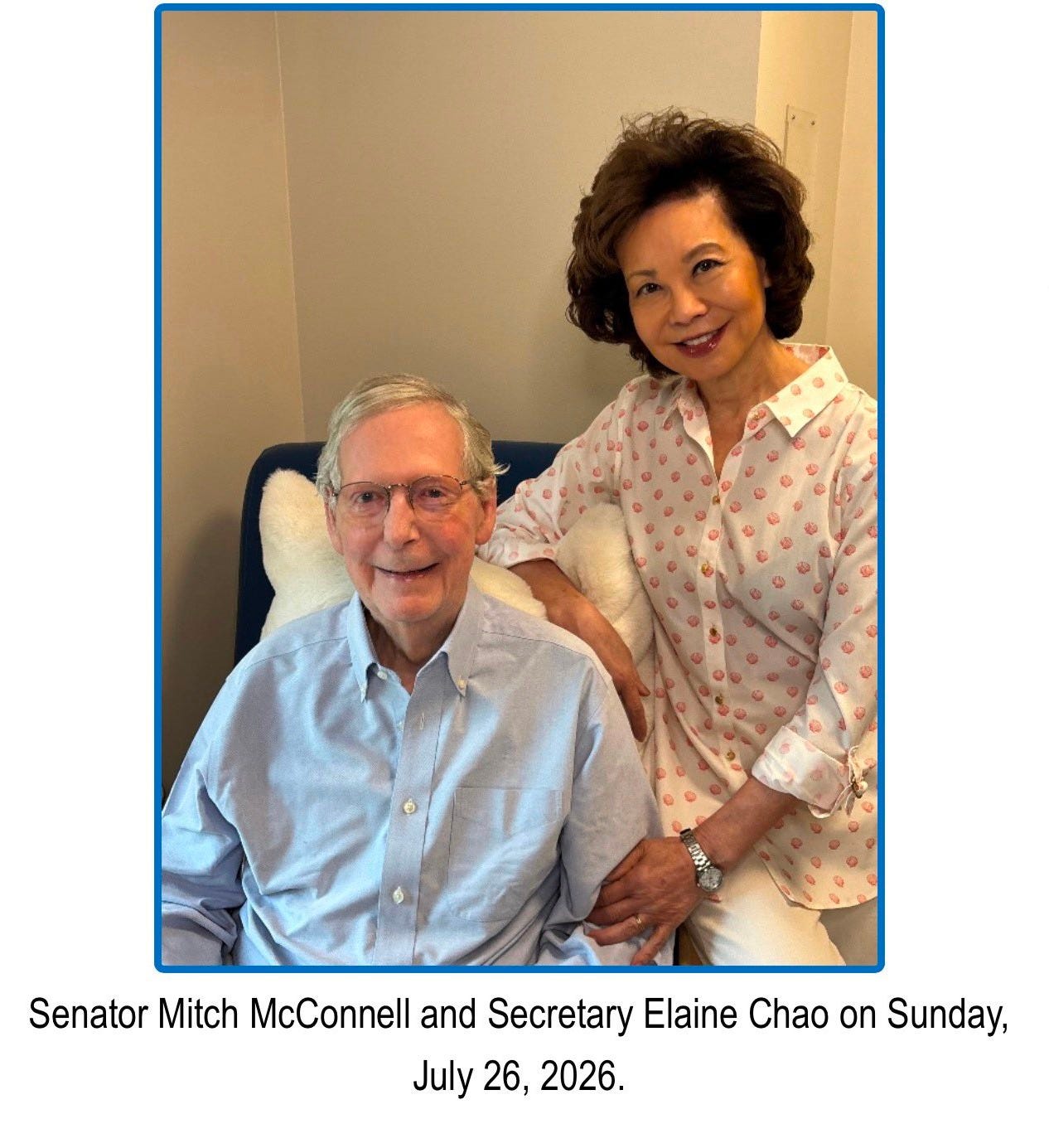
The latest medical statement explains why McConnell remains in rehabilitation. It does not show that he can speak publicly or carry out the work of a senator. His office has released two photographs and several written statements, but no video, interview or return date. McConnell says he intends to finish his term. Kentuckians still have not heard him say so in his own voice.
Beshear’s delay in sending the second letter remains hard to excuse because McConnell and Kentucky Republicans have never been this hesitant about protecting their own power.
Until 2021, Kentucky’s governor could appoint someone to fill a vacant Senate seat. After Beshear took office, McConnell and other Republicans backed a law requiring the governor to choose from three names submitted by the departing senator’s party. Beshear vetoed it. Republican legislators overrode him.
They removed the governor’s appointment power altogether in 2024. A vacancy now requires a special election, although the law does not clearly say how quickly one must be held. Beshear vetoed that measure too, and the Republican supermajority overrode him again.
Kentucky Republicans acted years before McConnell’s seat became vacant. They saw that Beshear might someday appoint a Democrat and changed the law before he had the chance. Beshear knew how little time the new system might leave him. Even so, his first letter asked politely for information and set no deadline.
Beshear has more reason for caution than most Democrats. He governs one of the country’s most Republican states and has won twice by keeping his distance from national Democratic politics. That helps explain his initial restraint. It does not erase the cost of waiting 19 days while the deadline for filling the seat drew closer.
Even so, McConnell is a useful comparison because he rarely waited for favorable conditions. He used the rules and the calendar in front of him. After Justice Antonin Scalia died in February 2016, McConnell refused to give Merrick Garland a hearing or a vote and held the seat open until Donald Trump became president.
Four years later, Justice Ruth Bader Ginsburg died 46 days before another presidential election. McConnell abandoned the standard he had used against Garland, pushed Amy Coney Barrett through the Senate and got her confirmed eight days before Election Day.
Legal scholar Mark Tushnet calls such tactics “constitutional hardball”: using legal powers in ways that violate political customs. McConnell did it repeatedly.
Beshear at least has a political reason for caution. The party’s leaders in Washington have no comparable excuse. The Democratic National Committee, charged with leading and coordinating the party’s political efforts nationwide, is a disaster. The committee is $2 million in debt and has asked vendors to postpone sending bills until after the midterms. And despite these financial struggles, some major donors have yet to hear from Chairman Ken Martin.
Making matters worse, confidence in Martin’s chairmanship is nearly zero. The New York Times reported that Martin has become increasingly erratic, even throwing his phone onto a junior aide’s desk during an angry outburst. And as the DNC’s struggles have grown, Martin has become increasingly insular, worried about leaks and criticism of his leadership.
Meanwhile, as Democrats squander the political gift of a wildly unpopular incumbent president, Trump controls a super PAC with about $400 million, and the Republican National Committee has nearly $130 million, giving the GOP a half-billion dollar advantage going into the midterms. The national Democratic Party has had years to prepare and somehow still looks unprepared.
Democrats should not copy McConnell’s blockade of Garland. The country deserves better. They should use the legal powers they have, build an agenda and organizations capable of competing with Republicans and stop being so cautious. Too often, they describe the danger clearly and respond only after Republicans have acted.
McConnell spent his career using deadlines to his advantage. Beshear nearly missed his. After a decade of telling voters and donors that Donald Trump is an existential threat, Democrats still act as though they have more time.
Video discussion for paid subscribers:
