


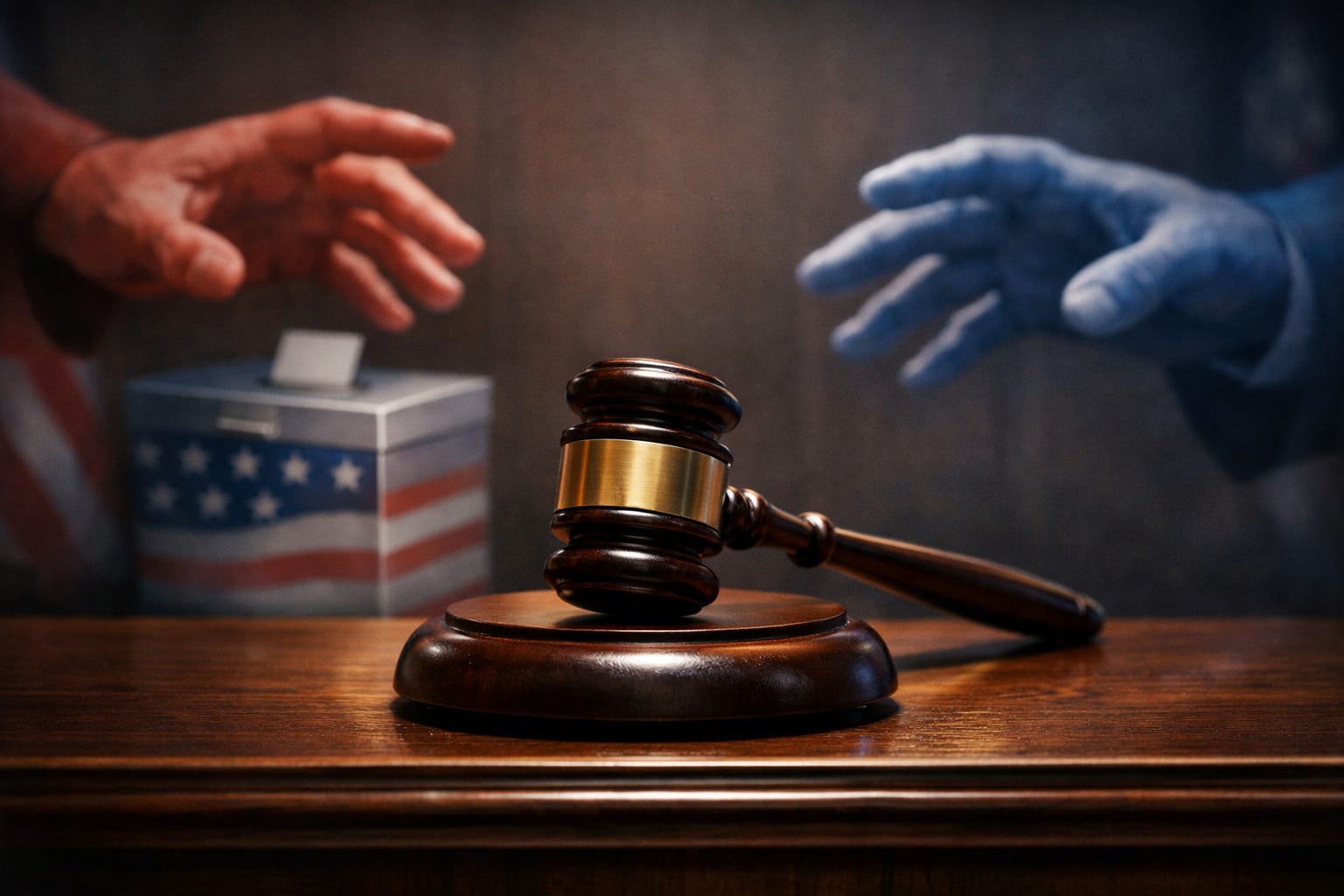
Video for paid members follows:
For years, those of us who believe in democracy have been sounding the alarm about election denial.
We watched as Donald Trump and his allies pushed the lie that the 2020 election was stolen. We watched as public officials repeated that lie even after courts, audits, and recounts confirmed the result. And we watched as some of those officials crossed the line from rhetoric into actual criminal conduct.
One of those officials was Tina Peters. Peters was the elected clerk of Mesa County, Colorado. She didn’t just talk about conspiracy theories. She abused her position. She allowed unauthorized individuals access to secure election equipment, shut off surveillance cameras, and helped enable sensitive election data to be copied and leaked online in an effort to prove the election had been stolen.
A jury heard the evidence. A judge heard the arguments. And the system worked exactly the way it’s supposed to. In 2024, Peters was convicted on multiple charges related to the breach of election systems and sentenced to nine years in prison. That sentence came after a trial by a jury of her peers and a decision by a judge who concluded that Peters had abused her office and showed no remorse for spreading conspiracy theories about the election.
Now comes the disturbing part. Colorado’s Democratic governor, Jared Polis, is publicly signaling that he is considering clemency for Peters because he believes the sentence may have been “harsh.”
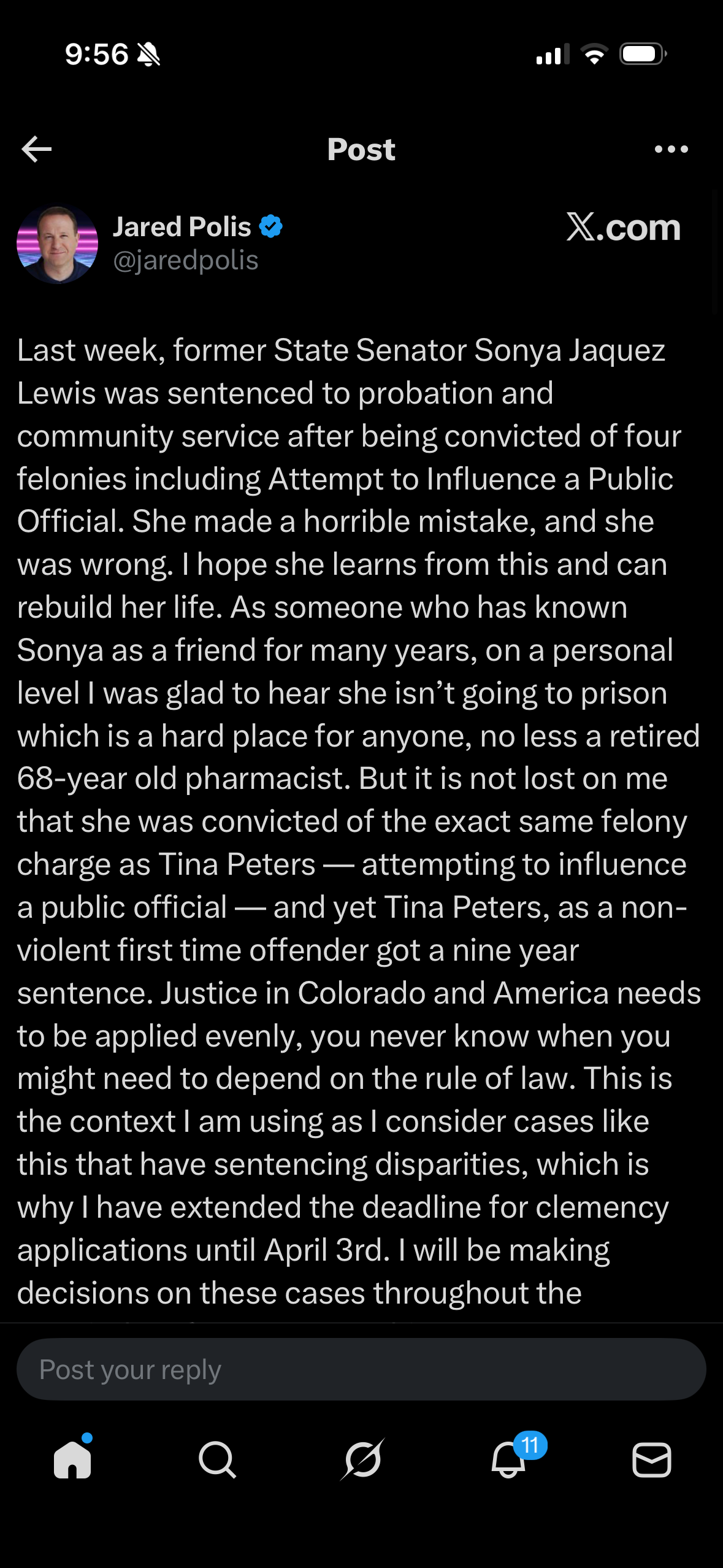
It’s not lost on me that Donald Trump has been making Tina Peters his personal cause. Threatening Colorado and Polis for the sentence…and now Polis appears to be ready to reward those threats.
Clemency exists for a reason. Mercy is part of justice. Governors have that power, and sometimes they should use it. But this case isn’t about mercy. It’s about the creeping normalization of election denial.
For years we have criticized Republicans who excuse or defend attacks on the democratic process. We have criticized politicians who undermine courts, juries, and the rule of law because they don’t like the outcome. So what message does it send when Democrats start doing the same thing? Because here’s the truth: the justice system already weighed this case.
A jury examined the evidence. A judge imposed a sentence. And the crimes here were not hypothetical or symbolic. They involved breaching secure election systems and undermining public confidence in the machinery of democracy itself.
Could someone else have received a different sentence in a different case? Of course. Sentencing varies all the time. Crimes are different. Facts are different. Judges make judgment calls. But that is precisely why we rely on courts and juries.
If politicians start second-guessing verdicts every time a case becomes politically inconvenient, the entire system collapses. That’s exactly the behavior we’ve been condemning for years. When Trump demanded that January 6 rioters be pardoned, we said the justice system should run its course. When MAGA politicians attacked judges and juries who convicted Trump allies, we said the rule of law must stand. Those principles don’t change depending on who’s asking for mercy.
The problem with election denial isn’t just that it’s wrong. It’s that it erodes trust in the institutions that keep democracy functioning. Courts. Elections. Juries. The peaceful transfer of power.
If we start signaling that those consequences can simply be waved away by politicians, we are reinforcing the exact dynamic that created this crisis in the first place. The people who tried to undermine elections need to know something very simple: there are consequences. That doesn’t make us vindictive. It makes us serious about democracy.
And if we aren’t willing to stand by the verdicts of juries and the rulings of judges in cases like this, then we shouldn’t be surprised when the next election denier decides the system doesn’t matter either.
Because the moment we start excusing attacks on democracy—no matter which party does it—is the moment we start becoming the thing we warned everyone about.
Video discussion for paid members;
