
Hello everyone,
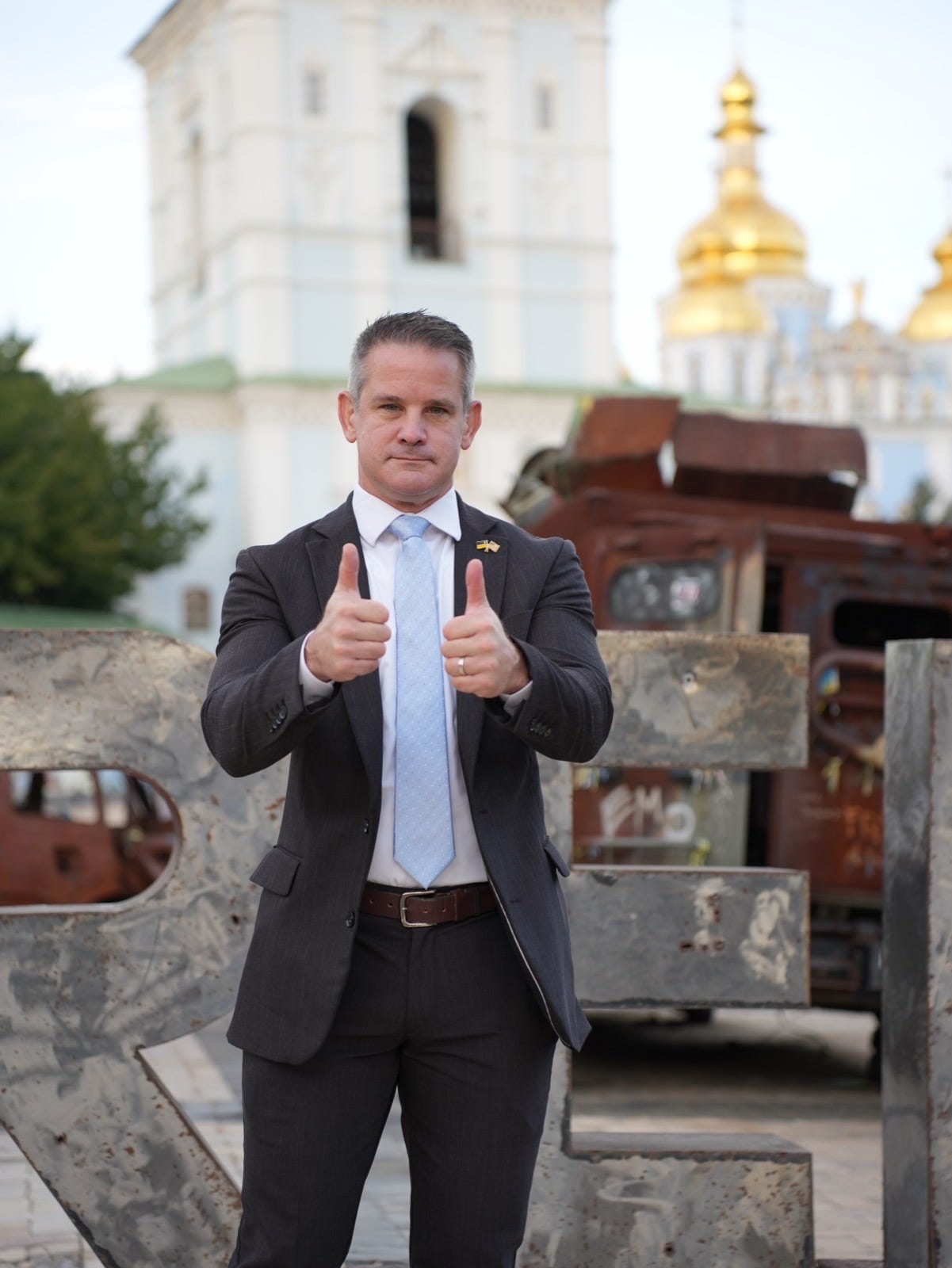
As you probably know by now, I was in Ukraine for the last several days. I shared some initial dispatches on the trip, but I want today’s article to go much deeper on what I saw and what it all means.
Getting to Ukraine isn’t easy because you can’t just hop on a flight into an active war zone. I ping ponged from Munich to Warsaw then a bus and a train. Basically two whole days to just get to Kyiv. Then we took a convoy of twenty vans running seven hours to Kharkiv before turning around and doing the reverse all over again to get back home.
So why, you might ask, would I go through all that?
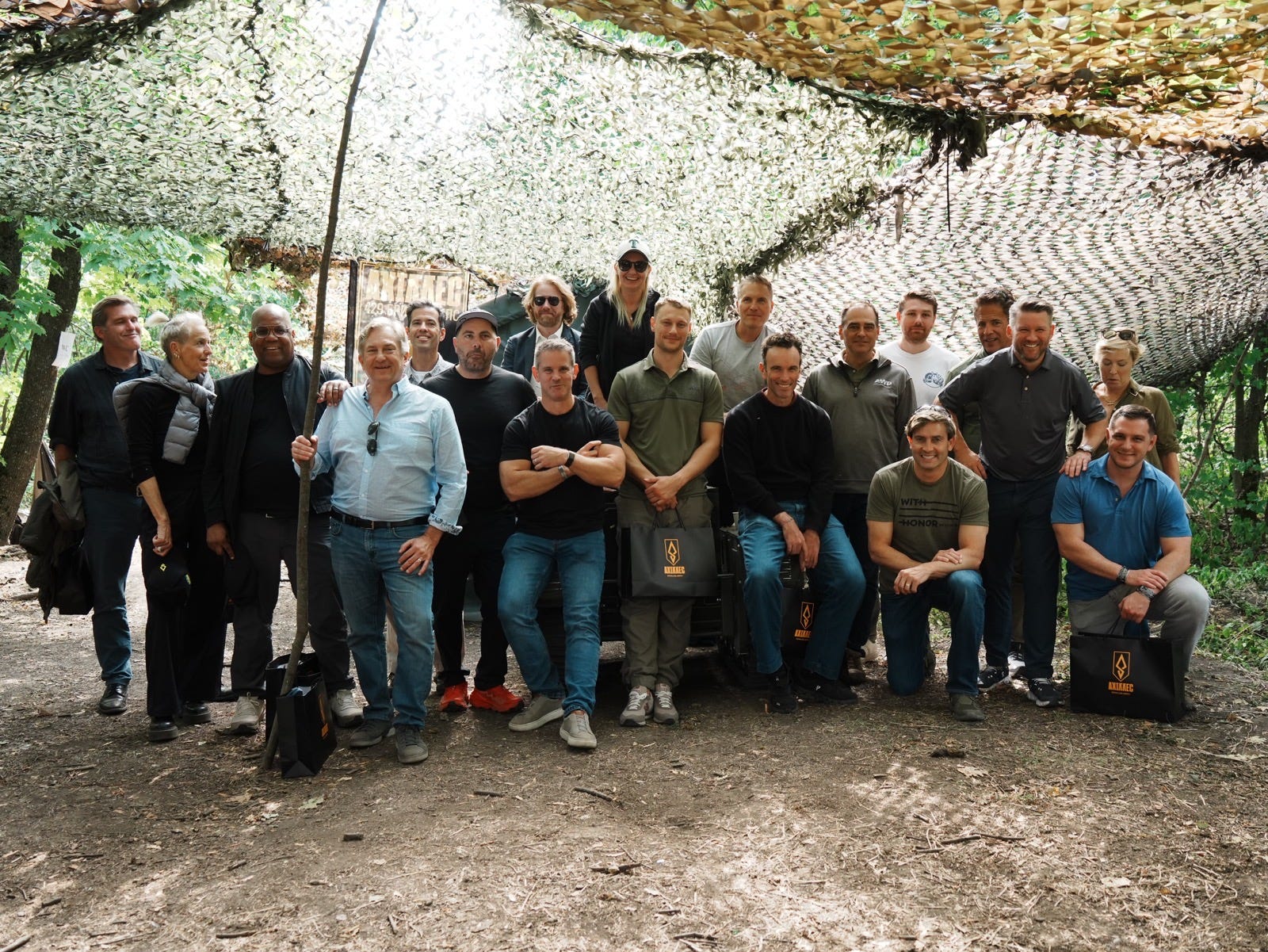
The trip was organized by an organization called With Honor, which exists to fight polarization in Congress by supporting principled veterans of both parties. They work alongside a bipartisan group in the House and the Senate to move legislation on national security, national service, and veterans’ affairs and care deeply about the future of Ukraine.
The centerpiece of the trip was the Yalta European Strategy conference, a gathering of world leaders and thinkers. The truth is, it mattered that Americans showed up. There’s a perception right now, pushed from the very top of our own government, that America is done with Ukraine. Going there in person was a way of saying that millions of Americans still care about and stand with Ukraine.
There’s another reason too, and it’s more personal. I’ve been to war. But I want to be honest with you: my war was a very different war than this one. You cannot understand the battlefield picture of this conflict until you’ve seen it all around you. What I saw in Ukraine confirms exactly where the future of warfare is heading and that the US needs to get onboard immediately.
We met with leaders from Ukraine’s F-16 program. We toured a drone manufacturer and got a rundown of what they’re building, and I’m telling you, the innovation is staggering. Let me give you one example.
They’ve developed a totally unique air defense with drones. A fighter drone goes up, carries an interceptor drone toward an incoming threat, releases it onto the target, and then a human operator takes over visually to finish the intercept.
Instead of firing a multimillion-dollar Patriot interceptor at a cheap incoming drone, you knock it down with something a fraction of the cost. This is the exact kind of technology Ukraine offered to share with the United States before our war with Iran, and we turned it down. If we’d listened, it would have saved lives, and it would have meant we weren’t burning through our most precious missiles to stop threats a drone could have handled.
This is the future of warfare, and the truth is that the United States and most of the world are behind on it. Ukraine is ahead because they’ve had no choice but to be.
The Harsh Reality of War in Ukraine
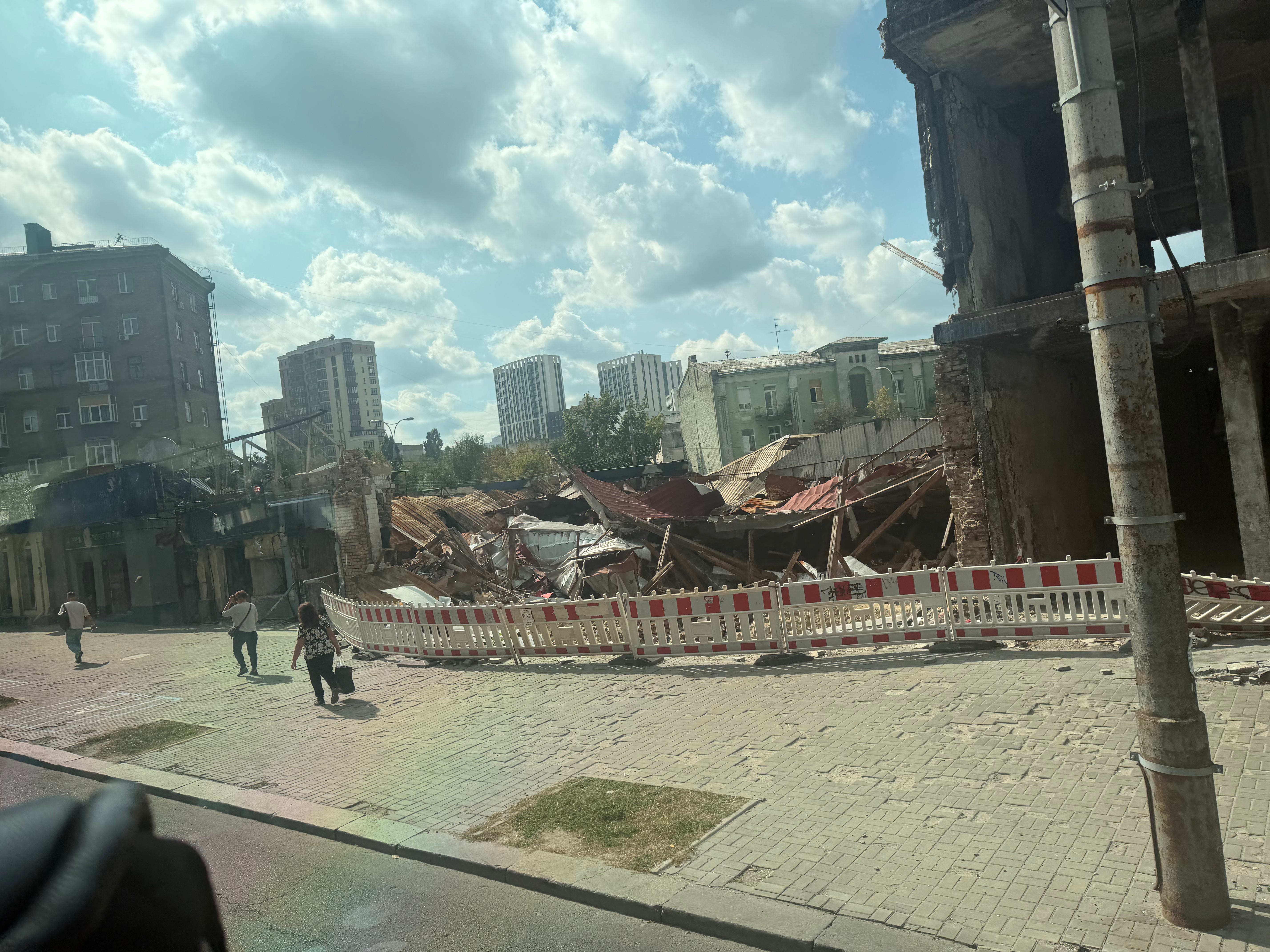
I want you to really understand what daily life looks like there now. Until fairly recently, Kyiv might absorb a few attacks in a night. Now it’s constant. In the time I was there, I personally heard something like four impacts over the course of a few hours outside, plus anti-aircraft fire going up to meet what was coming down. A gas station was struck. Civilian targets, with no military value at all, were hit over and over.
In Kharkiv we met with medical units and drone units, and I saw a demonstration of the range of what these systems do, everything from carrying supplies to carrying munitions. The medical side of their innovations truly stunned me.
In the American military we live by “the golden hour.” If you’re wounded, we move heaven and earth to stabilize you and get you to a hospital, often in under an hour by whatever means necessary. In Ukraine, on parts of that front, a wounded soldier might have to hold on for a month before evacuation is even possible. So they’ve adapted.
They fly drones out to wounded troops carrying medicine and supplies. They run telemedicine, a doctor on a video call walking someone through what to do. They’re using unmanned ground vehicles, some for offense, some to drive in and carry a wounded person out so that a rescue doesn’t turn into multiple casualties.
It’s hard for the American mind to comprehend the realities that Ukrainian soldiers face on the front lines. A wounded soldier, stuck in a position for a month, kept alive by a doctor’s face on a screen and a drone dropping supplies. The physical toll is obvious. The mental toll of that month is almost unimaginable. And they endure it, and they innovate through it, because the alternative is losing their country.
The numbers are the same they’ve always been. Ukraine is badly outnumbered on personnel compared to Russia. So they win with innovation and grit. They invent something new, and for five or six months it devastates the Russians. Then Russia studies it, adapts, and counters, which we’re now seeing especially in air defense and in faster jet-powered Shahed drones. It’s a brutal, relentless cycle of adaptation, and the Ukrainians are extraordinary at it. But you cannot out-invent a much larger enemy forever without help.
And that brings me home, to us.
The United States Has Come Up Short

There was a time, not that long ago, when standing with Ukraine was a bipartisan issue. I think of the leaders in my old party who understood, in their bones, that American strength meant standing against Russian aggression. That consensus has been deliberately blown up. This administration has stepped back from the fight, treated our support as a favor to be bargained away rather than a strategic necessity, and left the Ukrainians guessing about whether the arsenal of democracy still has their back. When we don’t send what we’ve promised, people die.
Leaving Kharkiv, because I was in a van convoy, I took the road. Others from the conference took the train back out, a train we could have been on. That train was hit by a strike that landed about ten minutes before it crossed the border. I could have been on that train. Everyone made it, thank God.
But I’ll be straight with you. I wasn’t personally afraid in the moment, but it was the most real danger I’ve been in since I was at war in Iraq and Afghanistan. And the difference is, I got to come home to my own bed. The people of Ukraine wake up to that every single day, and they have for four and a half years, with the air raid sirens going off hour after hour without safe harbor.
Now let me tell you what makes my blood boil, and why I can’t write about Ukrainian courage without being perfectly honest about the stark contrast with the Trump family.
While Ukrainians are keeping wounded soldiers alive by drone and this administration slow-walks the weapons that would keep Ukrainian children from being pulled out of bed by sirens, we learned this week that a Russian oligarch close to Vladimir Putin secretly bankrolled Donald Trump Jr.’s wedding.

According to ProPublica, a man named Umar Kremlev, whom Putin personally recognized with a state honor, paid hundreds of thousands of dollars for Trump Jr.’s lavish Bahamas celebration. He rented one of the private islands. He paid for the fireworks. His team helped plan it. And a large group of fellow Russians attended the intimate, roughly fifty-person wedding that Trump Jr. said “was really small, like, just really close friends.”
A retired FBI counterintelligence official put it plainly: “if I’m paying for your wedding, at some point you’re going to owe me something.” This should be unthinkable for the son of a president, especially when Kremlev is connected to an organization facing sanctions for its alleged role in abducting Ukrainian children from occupied territory.
This is who Putin is. A man who bombs gas stations and apartment blocks, who steals children, and a man who sends the same drones I heard overhead to terrorize civilians night after night. And rather than stand against him, Trump and his allies are stepping back from Ukraine while a member of Putin’s circle picks up the tab for a Trump family party. The corruption is staggering.
What Tomorrow’s Success Requires for Ukraine Today
So, I travelled halfway around the world into an active war zone. Now what? Great question.
I think it’s clear we as Americans owe a debt of gratitude to Ukraine for their steadfast defense of freedom and the fight they’ve taken directly to Russia. The isolationist crowd would have you believe that America has no business intervening in overseas conflicts. But we know what happens in Ukraine will have effects around the world for decades to come. It is not just the right thing to do, it is in America’s interest to support Ukraine.
So, beyond what we can do as individuals, here’s my ask of our leaders in Washington:
First, recommit to Ukraine. Send what we promised. America’s word means something. And people die when we don’t follow through.
Second, protect the idea that free nations stand together against tyrants, because that alliance is the only thing that has ever reliably kept the tyrants in check.
Finally, reject Putin, plainly and without hedging, and reject the leaders here at home who keep making excuses for him.
That’s the least we can do.
I saw spirit in Ukraine that I won’t forget. I saw resolve in people living under a sky that poses a threat every night. And I saw a level of military readiness and invention that, frankly, we should have humility to learn from. The Ukrainians are holding the line for all of us. The least we can do is refuse to drop our end of the agreement.
Slava Ukraini!
— Adam