


Hey everyone, happy Sunday.
While I reserve Sundays for good news, I’m going to start somewhere a little heavy. But stay with me…we’ll get to the good part.
We are, by almost every measure, the most disconnected we have ever been. The Surgeon General called loneliness an epidemic. Teenagers report fewer close friends than any cohort in the survey’s history. Adults spend more time alone than they did twenty years ago, more time on screens, less time in the rooms where strangers become neighbors and neighbors become something closer than that. Church attendance is down. The Rotary Clubs that used to anchor small towns all over this country have quietly closed their doors.
This is, unfortunately, the structural reality underneath a lot of what we argue about on cable news. When people don’t know their neighbors, they get most of their information about other Americans from sources designed to make them afraid of those Americans. When the only people you see all week are the ones who already agree with you, the ones who don’t agree start looking less like fellow citizens and more like a threat. A country that has forgotten how to be in the same room together is a country that will struggle to do almost anything together.
I think this is going to be one of the defining problems the next generation has to solve. We built a world that is extraordinary at connecting people across distance and catastrophically bad at connecting them across the street. Something is going to have to give.
Here is what was happening while we were arguing about all of that.
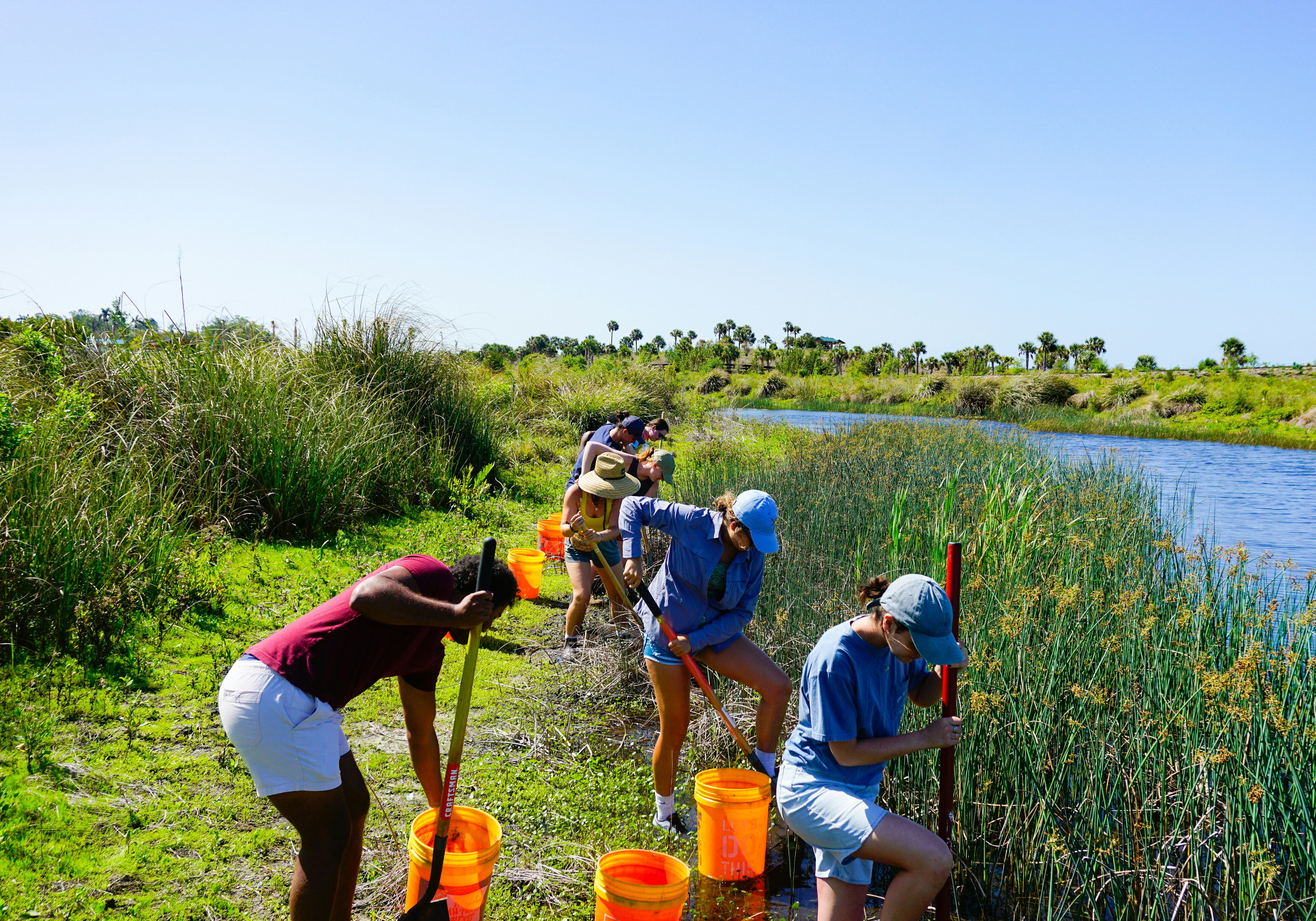
AmeriCorps and the Census Bureau put out a study in late 2024 — the most comprehensive look we have at civic engagement in America — and the headline number is the kind of thing that should have been on every front page. Between 2022 and 2023, formal volunteering in the United States grew by 22 percent. It is the largest expansion of formal volunteering on record since the Census Bureau started tracking it back in 2002.
75.7 million Americans — almost 30 percent of adults — formally volunteered through an organization. They gave just under five billion hours of their time.
And the informal number, the one that nobody tracks but that arguably matters more, is even better. 54.2 percent of Americans said they helped a neighbor in the past year — sat with their kids, drove them somewhere, picked up groceries, lent a tool, watched the house while they were gone. That number is higher than it was before the pandemic. Not recovered. Higher. Whatever the screens and the suspicion did to us, they did not break that.
Who did this? It wasn’t a federal program. It wasn’t a billionaire. Nobody passed a law that said “go volunteer.”
It was a woman in Asheville who organized her block after Helene. It was a guy in Tulsa who started showing up at the food bank on Saturdays because his church started a shift. It was the kid who finally said yes when his coach asked him to come back and coach the next team up. It was Gen X, quietly leading every other generation in volunteer hours. It was a country that has plenty of reasons to give up on itself and is, in this specific way, refusing to.
I don’t want to oversell it. We have a long way to go. The lodges that closed haven’t reopened. The phones haven’t gotten less addictive. But the trend points the right direction.
Here’s what I take from this. The story we tell ourselves about who we are right now — atomized, hostile, glued to phones, incapable of doing anything together — is part of the story, but it isn’t all of it. Underneath all that, in 75 million different ways, people are still choosing to do the thing the algorithms can’t do for them. They’re showing up.
I have spent a lot of years now writing and talking about what is broken in this country. Some of it really is broken. But this is the part that isn’t, and the part that won’t be, as long as people keep choosing it. The civic muscle in America did not atrophy as much as we thought. It got out of practice. And it is, slowly, getting back into shape.
And that, my friends, is good news for your Sunday.
— Adam
The number is real and the warmth is earned. But notice what the framing quietly does. It takes a recovery and calls it a reawakening.
Helped a neighbor in the past year. Picked up groceries. Lent a tool. This is not the civic muscle. This is the reflex of being a primate near other primates. It survived because it costs almost nothing and produces an immediate face in front of you. It was never in danger.
The thing that actually died is the thing you mention and then walk past. The Rotary lodge. The union hall. The church with a Saturday shift. Those were not acts of kindness. They were structures. They put you in a room, on a schedule, with people you did not choose, around a task that outlasted your mood. They generated obligation. And obligation is the only thing that ever turned a stranger into a fellow citizen.
A 22 percent jump in formal volunteering from 2022 to 2023 is a bounce off a pandemic floor. Read it next to the membership data and the shape is clear. People are doing more discrete acts of help and belonging to fewer durable institutions.
You can build informal kindness alone. You cannot build trust alone. Trust is a byproduct of repeated, structured, non-optional contact, and that is precisely the thing the chart still shows falling.
Take a look at high trust societies…
So the good news is smaller than the headline. The muscle did not get out of practice. A different muscle never weakened, and we are mistaking it for the one that did.
Let’s recognize the progress and begin to rebuild trust.
Johan 🐌
i'll happily take that good news. thanks Adam! it's small facts like these that give rise to personal agency & transformational hope 🙏🏻❤️🔥🙏🏻
🧚🏽♂️LINK FAIRY EDIT: check out Prof. Gulika Reddy's talk "Teaching Transformative Hope to Advance Social Change" to learn about harnessing knowledge to motivate activism https://youtu.be/zwfQorVqFmM