



Video for paid subscribers follows article
On Saturday night, a 31-year-old teacher from California named Cole Allen walked up to a security checkpoint at the Washington Hilton with a pump-action shotgun and a .38 pistol and tried to run the check. He never made it past the terrace level. Hundreds of federal agents stood between him and the ballroom. A Secret Service agent fired five rounds, Allen went down, and he was in custody before most of the room knew what had happened. The Acting Attorney General put it plainly the next day: “Law enforcement did not fail. They did exactly what they were trained to do.”
That is the story. The system worked. The screening worked. The agents worked. A man was stopped a floor above the people he was trying to reach.
But that is not the story the White House wants you to tell. Within hours, the press secretary was on television blaming “eleven years of demonization.” The President himself pointed at Democrats and said hate speech “much more so is very dangerous.” Jimmy Kimmel was singled out by name for a joke. The message, barely coded, was this: if you keep criticizing him, the next one is on you. And if it happens again, you will be held to account.
I want to talk to anyone who is feeling that pressure right now, because I have felt it.
I Know What This Feels Like
When I served on the January 6th Select Committee, my office got death threats so consistently that I started releasing the voicemails publicly because there was nothing else useful to do with them. Someone mailed a letter to my house promising to execute me, my wife, and our five-month-old son. We hired round-the-clock security. I held my baby at night and listened for sounds in the yard. I know exactly what it feels like to be told, by people who claim to love this country, that you and your family deserve to die for the crime of telling the truth about a politician.
So when I tell you not to be intimidated, I am not speaking from a podium. I am speaking from the other side of it.
Here is what I learned in that house, with that detail outside, with that letter: the threats are the point. They are not a side effect of speaking up. They are the tool used to make you stop. The whole machine — the voicemails, the letters, the press secretaries on television, the President at the lectern naming critics by name — runs on the assumption that ordinary Americans will eventually decide it isn’t worth it. That criticizing power is too expensive. That the safest thing is to go quiet.
It is your right to speak. It is your responsibility to speak. And the cost of not speaking is a country none of us recognize.
Winston Churchill, who knew something about being targeted, said it best: “Courage is what it takes to stand up and speak; courage is also what it takes to sit down and listen.” He did not ask the British people to stop questioning him in the darkest hours of the war. He asked them to keep faith — and he kept his.
Franklin Roosevelt, looking out at a country flattened by depression and watching fascism rise across the ocean, told Americans that “the only thing we have to fear is fear itself — nameless, unreasoning, unjustified terror.” That was leadership. Not a plea for sympathy. Not a demand that critics fall in line. A call to courage.
George Patton: “Courage is fear holding on a minute longer.” Eisenhower: “What counts is not the size of the dog in the fight, but the size of the fight in the dog.” These were men who walked through actual war. They did not flinch, they did not whine, and they did not turn near misses into tools to silence the people they served.
Presidents Who Knew Better
Look at how American presidents have actually behaved when someone tried to kill them.
In 1835, Andrew Jackson was attacked on the Capitol steps by a man with two pistols. Both misfired. Jackson, in his sixties, beat the would-be assassin with his cane until aides pulled him off. He went back to work. He did not ask Henry Clay to lower the temperature.
In 1912, Theodore Roosevelt was shot in the chest just before a campaign rally in Milwaukee. The bullet was slowed by a folded fifty-page speech and a steel eyeglass case in his pocket. Bleeding into his shirt, Roosevelt walked to the podium and spoke for ninety minutes. “It takes more than that to kill a Bull Moose,” he told the crowd. He did not blame his rivals. He did not claim “the rhetoric” had pulled the trigger. He gave the speech.
In 1933, an assassin opened fire on president-elect Franklin Roosevelt in Miami, missing him but mortally wounding the mayor of Chicago beside him. Roosevelt held the dying man in his car on the way to the hospital, spoke calmly to reporters, and got back to work. No new restrictions on speech. No campaign of grievance. He had a depression to fight.
In 1950, Puerto Rican nationalists tried to storm Blair House to kill Harry Truman. A White House police officer died defending him. That same afternoon, Truman kept his scheduled appearance at Arlington Cemetery. A president, he said, has to expect those things.
Gerald Ford was the target of two assassination attempts in seventeen days in 1975. He kept his schedule. He kept his humor. He did not turn the country against itself.
And in 1981, when Ronald Reagan was shot outside a Washington hotel, he walked into the operating room, looked at the surgeons and said, “I hope you’re all Republicans.” To Nancy: “Honey, I forgot to duck.” He recovered, returned to work, and treated the whole episode as a story to tell, not a wound to weaponize.
That is leadership. That is the spine of a free people. Not a fundraising email. Not a list of comedians to fire. Not a $400 million ballroom.
The Difference Is the Whole Point
Notice what those presidents did not do. They did not call for restrictions on speech. They did not blame their political opponents for the actions of an unstable individual. They did not retreat into self-pity. They did not seize on a near miss as permission to consolidate power, settle scores, or remodel the residence into a personal monument.
Compare that to what we are watching now. A president who, after a man was stopped a floor above him by the very system designed to protect him, used the moment to attack reporters, comedians, and political opponents by name. A press secretary who told the country that years of criticism — protected by the First Amendment, exercised by tens of millions of Americans — “helped legitimize this violence.” A White House that bulldozed the East Wing for a ballroom while telling the country it is too dangerous to speak.
Real strength does not need silence to feel safe. Real leadership does not require the suspension of the First Amendment to function. Greatness, the kind those old presidents possessed in spades, is unbothered by the noise of a free people.
They Are Trying to Make You Flinch
If you are being told this week that your words pulled a trigger — that your jokes are dangerous, that your op-eds and your social posts and your protest signs are accomplices to violence — understand exactly what is happening. You are being asked to surrender your voice for the comfort of a man who will not extend you the same courtesy in return. You are being warned that if another disturbed person picks up a weapon, the blame will be parceled out to you. That is not an appeal to civility. That is a threat.
I lived inside that threat. So did my wife. So did my infant son. We did not stop talking, and the country did not collapse, and the people who sent those letters did not get the country they were trying to scare us into.
You will not, either.
Speak. Vote. Write. Argue. Make jokes. File the lawsuit. Run for office. Hold every politician of every party to a standard so high they have to climb to meet it. That is what makes America great — not deference, not fear, not a gilded ballroom built atop a fainting couch. The country was forged by people who refused to be intimidated by power. The least we can do, in their honor, is refuse to be intimidated now.
Don’t ever quit. EVER.
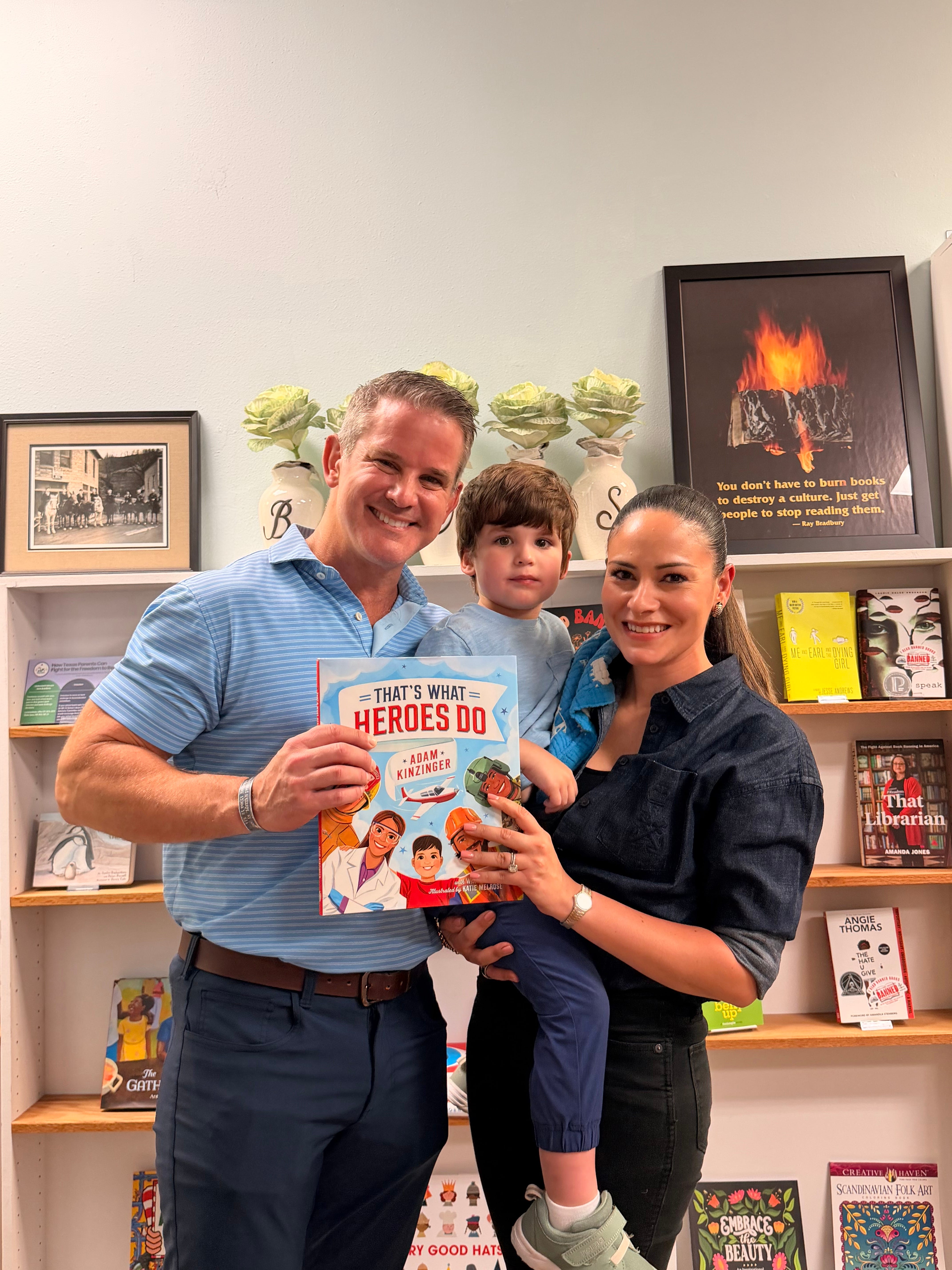
Quick aside—yesterday I had my first book signing for my new children’s book That’s What Heroes Do, and I’m still thinking about it. Seeing so many of you show up at Village Books in The Woodlands meant more than I expected. I had a chance to meet families, talk with kids who are just starting to understand what courage and service look like, and hear your stories. It was genuinely inspiring.
You never quite know how something like a children’s book will land—whether it connects, whether it resonates—but yesterday answered that for me. It did. And that’s because of you. You can pre-order your book HERE
Video for paid subscribers:
