

Video for paid subscribers follows article
In May of 2018, Donald Trump withdrew the United States from the Iran nuclear deal. He called it the worst agreement ever negotiated. He signed the withdrawal order with a flourish, surrounded by cameras, and promised the world that his approach — maximum pressure, American strength, the art of the deal — would produce something far better.
This week, after four months of war, $30 billion spent, thirteen American service members killed, historic inflation, and a missile stockpile that will take years to replenish, the United States signed a new agreement with Iran. The nuclear questions that were unresolved in the original deal remain unresolved. Iran is receiving $25 billion in frozen assets and a path to $300 billion in reconstruction funding. And yet, the administration is calling it a historic triumph.
It is, in every way that matters, less than what we had before we started.
I keep coming back to a poem that John Boehner used to quote. The poem paints a picture of the struggle he and other establishment Republicans like myself were waging against the people in our own party who were tearing the institution apart from the inside. We were constantly at odds with the members who would shut down the government, blow up a negotiation, or torch a coalition, not because they had a better plan. But because breaking things is easy and it got them on television. The poem goes like this:
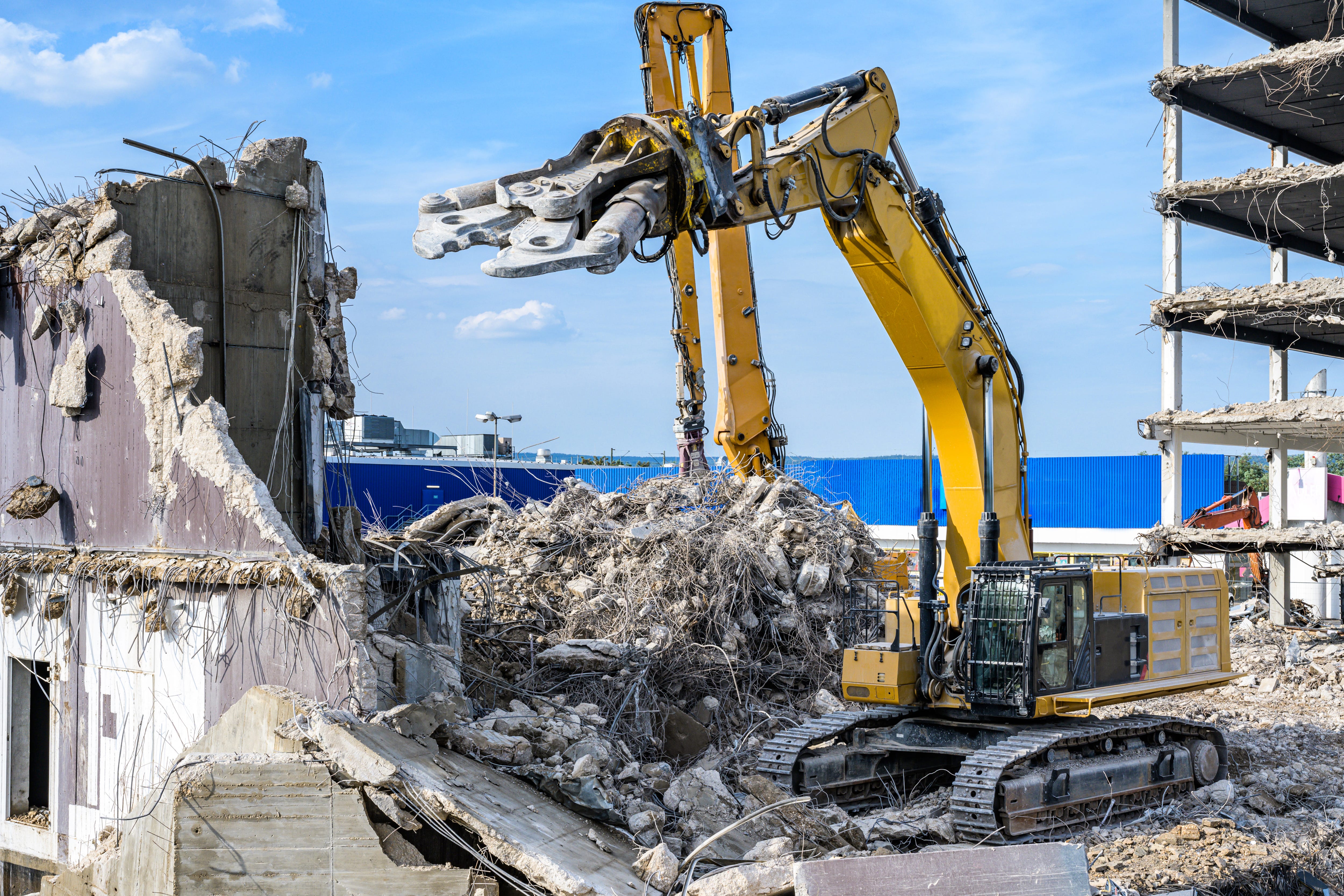
I watched them tearing a building down,
A gang of men in a busy town.
With a ho-heave-ho and a lusty yell,
They swung a beam and a sidewall fell.
I asked the foreman, “Are these men skilled,
The kind you’d hire if you had to build?”
He gave a laugh and said, “No indeed!
Just common labor is all I need.
I can easily wreck in a day or two
What builders have taken a year to do.”
And I thought to myself as I went my way,
Which of these roles have I tried to play?
Am I a builder who works with care,
Measuring life by the rule and square?
Am I shaping my deeds by a well-made plan,
Patiently doing the best I can?
Or am I a wrecker who walks the town,
Content with the labor of tearing down?
The line that haunts me: “I can easily wreck in a day or two what builders have taken a year to do.”
The JCPOA — the Iran nuclear deal that Trump tore up — was not a perfect agreement. I had real concerns about it, and I said so at the time. But it was the product of years of painstaking work by career diplomats from seven countries, built on a foundation of sanctions architecture that had taken a decade to construct and required the sustained cooperation of allies who were not naturally inclined to follow America’s lead. It capped Iran’s uranium enrichment. It established an inspection regime. It delayed, meaningfully, Iran’s path to a nuclear weapon. It took years to build.
And it took one signature to wreck.
I served in Congress with the people Boehner was quoting that poem about. I watched the Tea Party wave come in, watched members who had no interest in governing use the institution as a stage for performances that were never going to produce results. I watched Boehner try to hold together a conference that contained within it the seeds of its own destruction.
As with all politicians, John was not a perfect man and would readily tell you so himself if you gave him the chance. But he understood something fundamental: wrecking is easy. It requires no skill, no plan, no patience, no knowledge of what you are destroying or why it was built. You just swing the hammer and watch things shatter.
What none of us could not have fully anticipated just how completely the wreckers would win within the GOP. That Ted Cruz’s 2013 government shutdown, which Boehner knew was pointless and said so privately in terms that cannot be reprinted here, was not an aberration but a preview.
The people who thought tearing down was a governing philosophy eventually found their leader. And their leader tore up the Iran deal. And now we are here.
But the bigger truth of the matter is that the failure of the Iran deal is not simply a story about one man’s vanity or his administration’s incompetence, though both are real. It is a story about what happens when a political culture decides that destruction is strength.
When the loudest voices in a party spend years rewarding the people who blow things up and punishing the people who try to build things, you eventually get a president who only knows how to blows things up. And then you spend four months and $30 billion finding your way back to a place that is worse than where you started.
The foreman in the poem is not the villain. He is just honest. He knows what his crew is for. He knows that any fool can swing a hammer. What he is saying, implicitly, is that you would not hire these men to build anything — because building requires something that wrecking does not.
Building requires knowing what you are trying to create before you start. It requires patience with the parts that are not yet visible. It requires the willingness to measure twice, to do the unglamorous labor that nobody will ever see because it will be hidden inside the walls. It requires, above all, the humility to understand that the building you are constructing will outlast you, and to care about that.
The career diplomats who built the JCPOA cared about that. The ones who built NATO, the ones who spent decades constructing the architecture of American alliances that is now being dismantled base by base, understood that they were building for the people who would come after them. That understanding is what produced the world we inherited. It is not a small thing to wantonly break.
Boehner left Congress in 2015. He said he had no regrets. But I think he knew what was coming, because he had spent years trying to hold the walls up while the first crew of wreckers worked. He knew that the building could survive the shift he was managing. What he could not be certain of is what would happen when they found someone to put in charge of the whole operation.
Now we know.
The question the poem ends with is not rhetorical. It is a real and important questions for anyone who has ever held power or sought it.
Are you a builder or a wrecker?
It is worth putting to every person in Washington right now. And worth remembering, the next time we choose someone to lead, that the answer matters more than the swagger.
Video for paid subscribers (including a story about why I turned against the tea party one month after I was elected and why I spent 90 percent of my political efforts fighting them for 12 years)
