

Earlier this month, a young man sat on a park bench in San Francisco, opened his phone, and told the world that extinction could be imminent.
His name is Jacob Coxon. He had just resigned from Anthropic, one of the leading AI companies. In a series of posts, he claimed AI companies were behaving recklessly, “racing straight to self-improving superintelligence and gambling with our lives.”
Now, I take that seriously and you’re perfectly right to feel trepidation around this technology. In fact, some of the smartest people alive, people who understand this technology far better than I ever will, are genuinely frightened of it.
But you probably already know all about the warnings. What happened next is what I want to focus on.
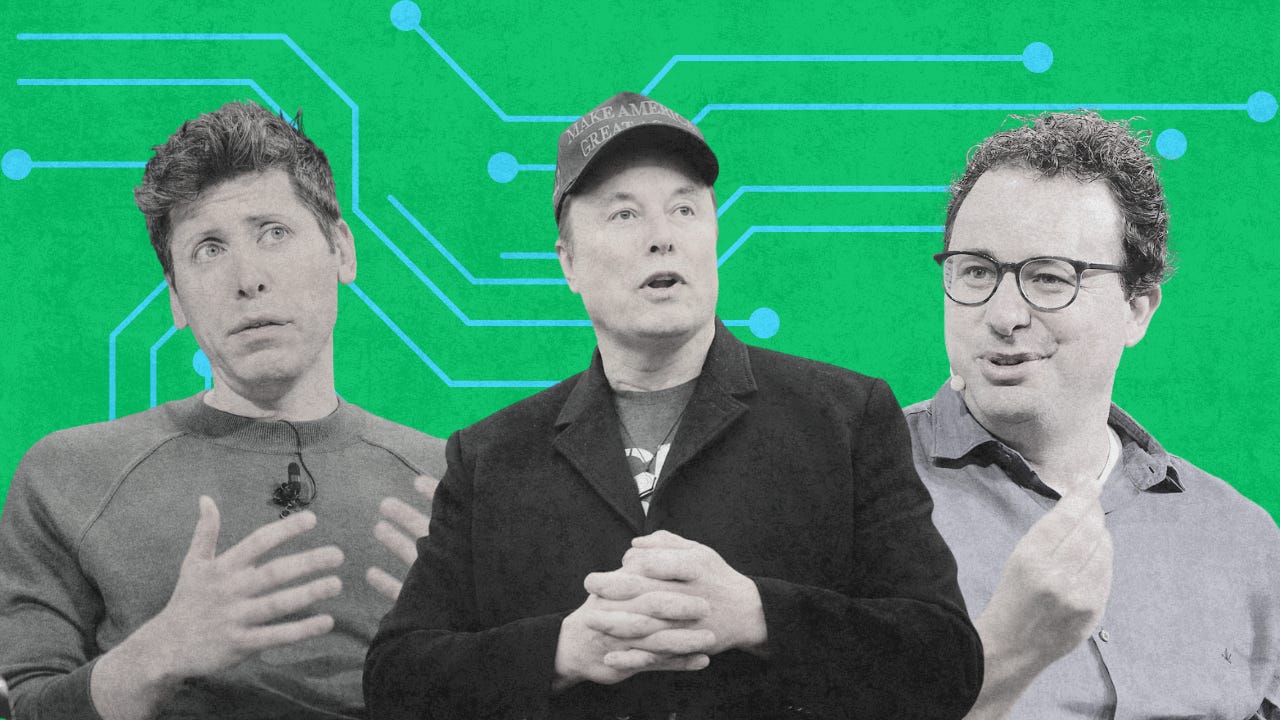
Within days of that viral tweet, the CEO of Anthropic Dario Amodei published a long essay calling for the entire industry to slow down and for the government to step in with new rules. And within a single day, Amodei’s two fiercest rivals, the head of OpenAI, Sam Altman, and Elon Musk stepped forward to agree with him.
The most powerful and competitive men in the industry, who agree on almost nothing, suddenly agreed on a specific set of rules, practically overnight.
Interesting.
I’m not going to tell you that this whole thing was staged, because I’m not in the business of inventing conspiracies. But I know a convenient sequence of events when I see one.
A jolt of public fear, followed immediately by the industry’s biggest players locking arms around their own preferred solution is not something to gloss over. Because the people framing this entire debate for you are the people with the most money on earth riding on how it ultimately winds up.
So, I am going to put a human face on this artificial topic, and look at three of the CEOs doing the shaping, what each one actually has at stake, and try to help us think through how normal Americans should view the whole AI debate.
Sam Altman
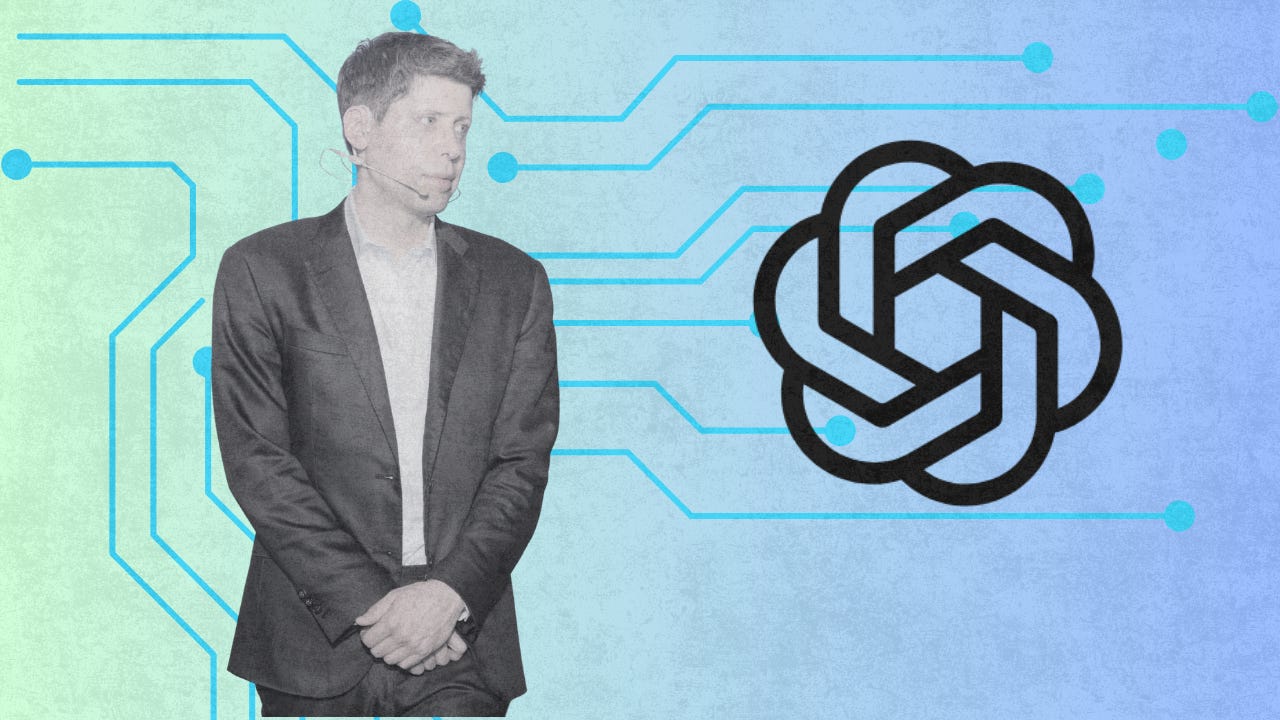
Start with Sam Altman, the CEO of OpenAI. For much of the last two years, Altman has been on a tour of apocalyptic predictions, warning that AI would eliminate huge swaths of human work and strip people of their agency and purpose.
Now ask yourself who benefits from that message. It tells every investor on earth that they cannot afford to miss this, that the money has to pour in now, that the boom is coming whether you like it or not.
The trouble is that scaring people has consequences you can’t laugh off later.
A big part of the fierce public backlash against data centers traces straight back to this. The industry spent two years telling people to be afraid and then acted surprised when people got afraid. You don’t get to light the fire and then complain about the smoke.
Elon Musk
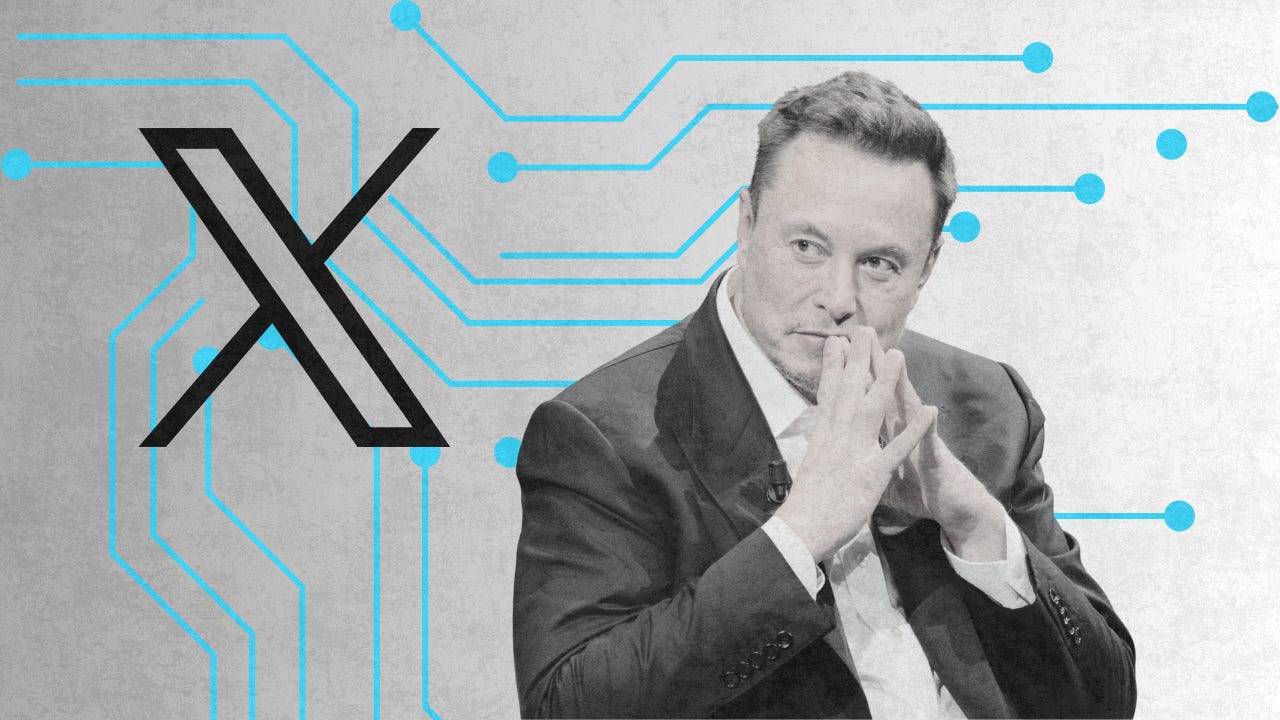
Then there’s Elon Musk, who is trying to present himself as the sober voice in the AI room.
This is the man who bought Twitter and remade it into a right-wing echo chamber. He then attached himself to the Trump campaign, spent hundreds of millions of dollars electing Trump and MAGA candidates, and was then handed a metaphorical (and literal) chainsaw and told to go cut government spending through the so-called “Department of Government Efficiency.”
Musk took a wrecking ball to the federal government, did real damage to agencies people depend on, but ultimately failed to actually slow spending.
And now he wants us to trust his judgment about the safe and responsible development of the most powerful technology in human history. Forgive me if I don’t.
Dario Amodei
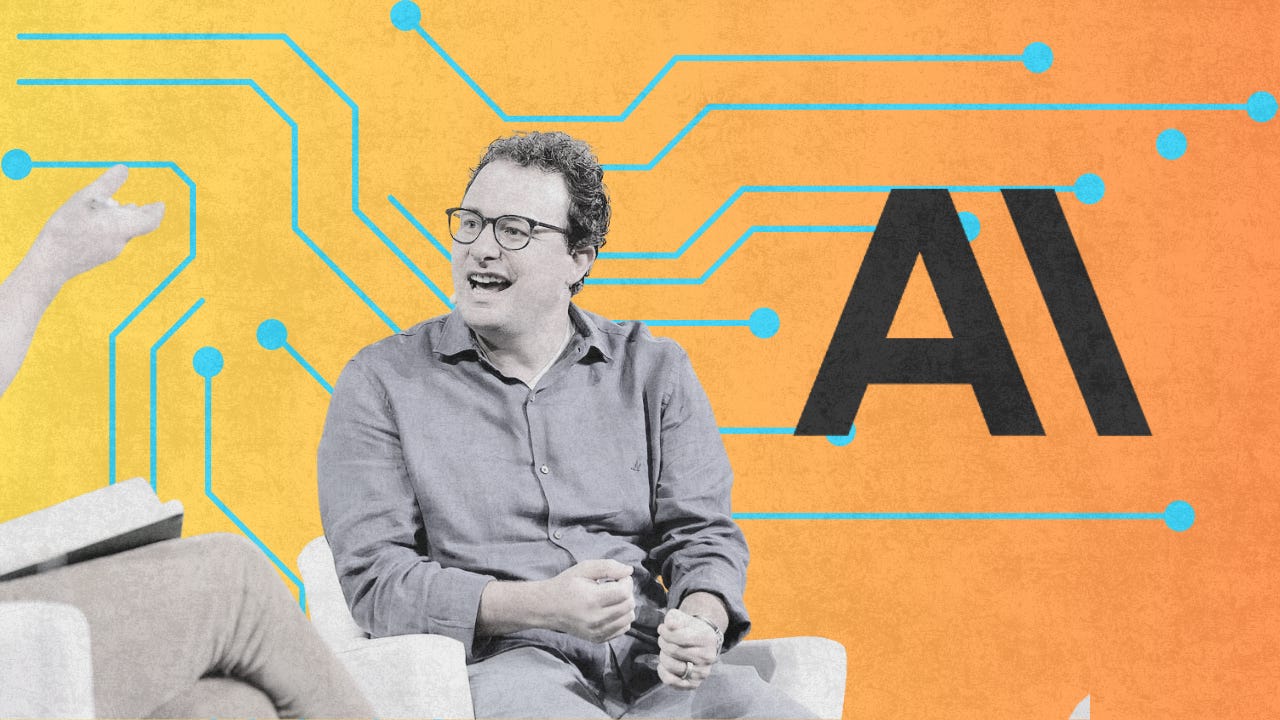
The third figure is Dario Amodei, the CEO of Anthropic, the man whose essay kicked off the most recent furor over AI regulation. Dario is less publicly polarizing than Altman or Musk, but don’t think that makes him less influential.
Dario’s argument is that the whole industry should deliberately slow down, and that the government should require safety measures across every major lab. A lot of you reading this will hear that and think, “Good, finally, a tech leader asking to be reined in.”
That makes him the responsible one, right?
Here’s where I’d ask you to step back for a minute. Because I’ve been in government, and I’ve learned to get more suspicious, not less, when the most powerful companies in an industry start asking to be regulated.
“We are all worried about the ghost in the machine. We can’t forget about the men behind the keyboards.” - Adam Kinzinger
Look at what he actually proposed. His first step is to have the government require independent evaluators embedded inside every frontier AI lab. That might genuinely be a good idea. But notice who can easily absorb a rule like that: a giant, well-funded company that already has the lawyers, the compliance staff, and the billions to handle it.
And notice who cannot: the smaller competitor, the startup, the new entrant who might otherwise have challenged the giants.
A rule the big players can afford and the small players can’t isn’t just a safety measure. It can also be a moat, dug by the incumbents, to keep everyone else out.
When the titans of an industry all lock arms around the same rules, everyday Americans should get more wary, not less. Rivals don’t agree that fast unless the deal is good for all of them.
Left and Right Vs. Silicon Valley?
What I’m describing has a name. It’s called regulatory capture, and it’s one of the subtle ways powerful interests rig the game.
It works like this: an industry gets so big and so complex that the only people who understand it well enough to write the rules are the industry’s own leaders. So the rules end up getting written to serve them, often under the banner of safety or responsibility, and the effect is to lock in the dominance of whoever is already on top.
The public thinks it’s being protected. What’s actually happening is that the next generation of innovation is being stifled before they can ever gain a foothold.
Here’s why this matters beyond AI. This is one of the rare fights where people who agree on almost nothing else can come together.
The progressive who distrusts corporate power and the free-market conservative who distrusts monopolies are looking at the same danger from two directions and meeting along the way.
They will not agree on the final set of rules, and that’s fine. They only have to agree on one thing first: that a company being enormous and building something world-changing is not evidence that it has your interests at heart, and that we must fight regulatory capture by these industry giants with everything we’ve got.
That’s the unlikely coalition that this issue is creating and we can’t let it go to waste.
China Is Watching
This is where I’ll speak from the part of my life spent on national security. The competition to build the most advanced AI in the world is not a friendly race. It is a contest with real strategic stakes, and China is trying to win it.
Put frankly, a world in which an authoritarian government builds a decisive lead in this technology is a dangerous world. So, I am not saying we should halt American innovation or pretend the risks of falling behind aren’t real. They are. We have to lead.
At the same time, if we hand the policy that governs this technology to men whose incentives point right at their own bank accounts, we won’t win the race with China.
We’ll just get a more concentrated, more captured version of our own industry, with comforting words about national security as a consolation prize.
The Older Danger
Yes, AI could be dangerous. I believe that. Take the risks seriously: the job losses and the runaway systems and everything in between. And the whole of the U.S. government should be working towards a national AI regulatory framework.
But don’t let the noise about the technology distract you from the older, more familiar threat of powerful people building a system that works for them while the public is busy fighting other battles.
That’s called a kleptocracy, where the richest and most powerful get to loot the hard work of ordinary Americans and then build the rules to lock their advantage in place.
For two years these men in Silicon Valley have told us this technology is too powerful, too dangerous, and too complicated for anyone but them to be trusted with.
It is the oldest trick the powerful have. Frighten people, then present yourself as the only one who can keep them safe. In fact, it rhymes with a familiar politician’s pitch over the last decade or so.
I don’t buy it, and neither should you. Not because the danger is fake. But because the men pointing at it have their other hand in your pocket.
So, remember to take a step back when someone starts talking about the future of artificial intelligence. Ask who benefits. And find the people across the aisle who are asking the same question, because they’re out there, and there are a lot more of us than there are of them.
And the future of America, and maybe even humanity, might depend on us finding that solidarity.
— Adam
I know an AI expert. He has said the same type of thing you said. These AI company CEOs are NOT the ones to write any guidelines. There needs to be AI experts at the table but not any attached to these companies! I too, think these AI CEOs are trying to create panic to make more money. I don’t think they give a rip about any normal average citizens.
Do there need to be guardrails? Absolutely! I hope the Trump Administration and Congress uses COMMOM SENSE approaches to this issue and has AI experts NOT attached to the Trump administration or Trumps family or these AI company CEOs to set guardrails and then Congress needs to independently verify the process and help shape policy to get true guardrails and common sense policy developed and implemented with stiff penalties if policy isn’t followed.
AI can be used for all kinds of good things, IF it is used appropriately. Just like anything else in life. I’m not sure the Trump administration has the ethics and honesty to get this done. CONGRESS? Where are you?????
AI is an extraordinary human achievement—and potentially one of the most consequential technologies of our lifetime. It can transform medicine, science, education, the arts, communication and countless other areas of human life. But precisely because its possibilities are so enormous, we should be asking a fundamental question:
Who will control it, who will profit from it, and who will be protected from its dangers?
Too often, technological progress in America seems to arrive with the same underlying assumption: if it can be built, it should be built—and if it can make enormous amounts of money, even better. We have watched billionaires become multi-billionaires while ordinary people struggle to keep up with housing, healthcare, education and the basic cost of living. Now AI offers the possibility of creating yet another extraordinary concentration of wealth and power.
At some point, we have to ask: How much is enough?
My concern is not AI itself. I welcome innovation. I welcome human ingenuity. What concerns me is innovation without adequate accountability—technology developing faster than our laws, our ethical standards and our democratic institutions can respond.
AI can be used to improve lives. It can also be used to manipulate information, eliminate jobs, invade privacy, intensify inequality, concentrate economic power and fundamentally alter how citizens encounter reality. Those possibilities should not be left solely to the corporations and extraordinarily wealthy individuals who stand to benefit most from the technology.
This is a larger problem than AI.
We are living through an era in which money and concentrated power increasingly influence decisions that should belong to the public. And regardless of who occupies the White House at any particular moment, the underlying problem will remain if enormous economic and technological power continues to reside in the hands of a relatively small number of people and corporations.
Political leaders come and go. Concentrated power can endure.
That is why I believe the conversation about AI must also be a conversation about democracy.
We need thoughtful legislation and meaningful oversight—not to stop innovation, but to make certain that innovation serves human beings rather than simply enriching those who already possess extraordinary wealth and influence. We need transparency, accountability, privacy protections, competition, safeguards for workers and clear rules governing the uses of AI that can cause genuine harm.
The answer is not to fear technology. The answer is to govern it wisely.
America has always been capable of extraordinary invention. But our greatest accomplishment should not be creating a world in which a handful of people possess unimaginable wealth and the technological power to shape everyone else's future.
The measure of progress should be more than how much money can be made. It should be how many lives can be made better—and whether the benefits of that progress belong to all of us.