

To win the fight over the future of our country, Donald Trump does not need every American, or even a majority of them, to support him. He needs enough of the pro-democracy coalition to become exhausted, decide their votes won’t matter and stay home. I understand how that feels. During my years-long fight against MAGA, there have been days when the lies and cowardice felt impossible to overcome. But each time, this community and Americans everywhere have picked ourselves up and kept fighting.
Now, when I look at how many of us are turning out to vote in recent primaries, I am feeling real hope that change is coming.
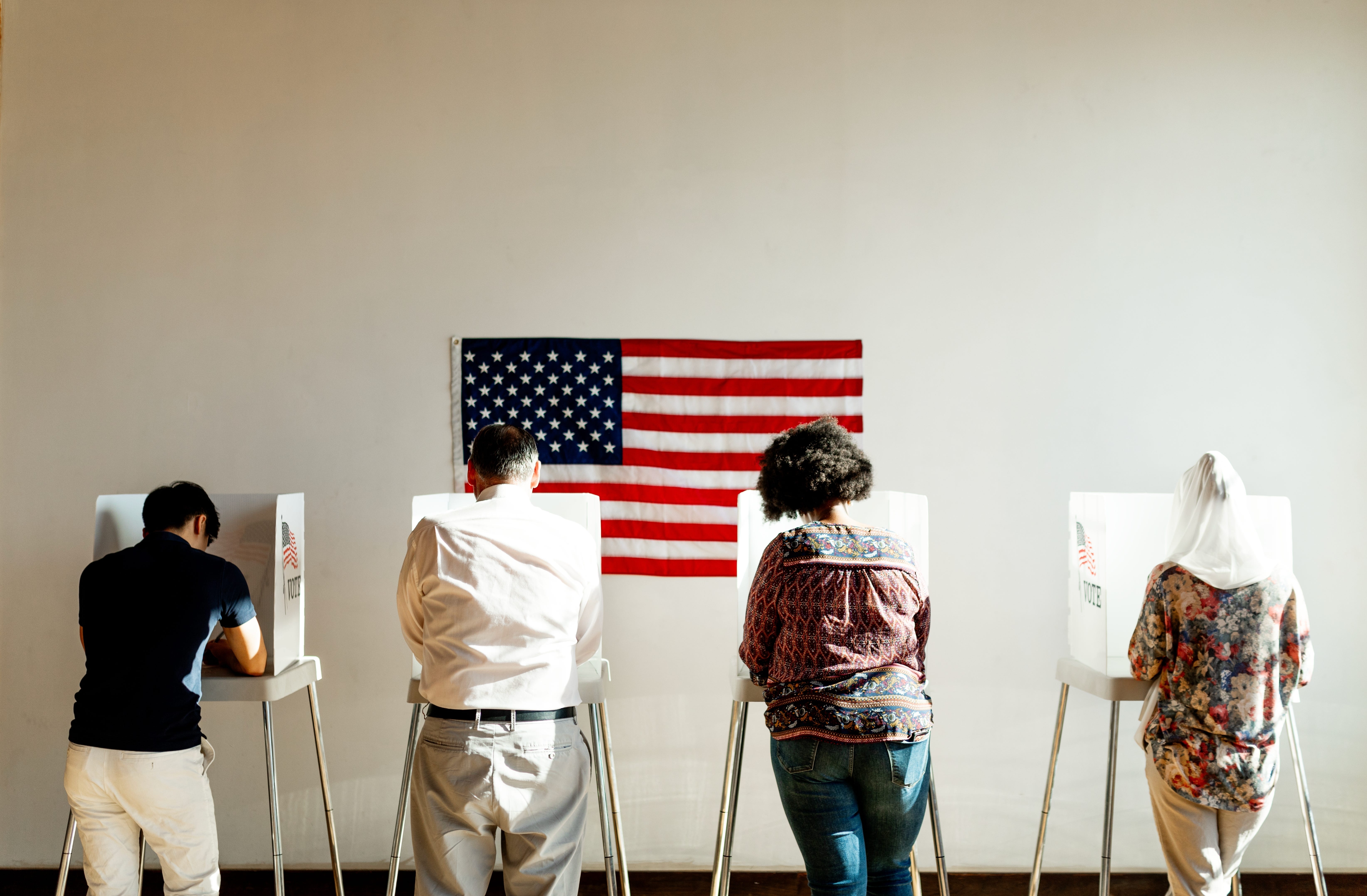
Last Tuesday, nearly 800,000 Democrats voted in Wisconsin’s primary for governor, the state’s highest midterm-primary turnout in more than 20 years. David Crowley won a close race, a result that is already becoming old news. The turnout should not be. There was no presidential candidate on the ballot and no national convention waiting at the end. It was the kind of election Americans usually ignore. This time, they showed up.
The same thing is happening across the country. More than 1.5 million Democrats voted in Michigan, a state record for a midterm primary. Georgia drew just over a million voters to its Democratic governor’s primary, while about 2.3 million Texans voted in the Democratic Senate primary. Both states recorded their highest Democratic midterm-primary turnout rates since at least 2002.
In Minnesota, Democratic turnout roughly matched 2018; those two years now stand as the state’s strongest Democratic midterm primaries of this century. By June, Democratic turnout was higher than in 2022 in nearly 93 percent of House primaries where more than one Democrat ran.
Republican turnout has not risen the same way. In Michigan and Wisconsin, GOP participation remained near its usual level for a midterm primary. That was true in Michigan even though Republicans had a competitive race for governor. Republican voters may still come out this fall, but so far the surge is happening on the Democratic side.
I want to be careful here because primary turnout doesn’t necessarily predict who will win a general election. Competitive races give people an extra reason to vote, Republican groups have more money to spend, and Donald Trump will do everything he can to drag his voters to the polls. Democrats are also running on a House map that Republicans spent the past year rewriting in their own favor.
That said, the numbers tell us something important about the country’s state of mind. For years, Americans worried about Trump have waited for somebody else to stop him: prosecutors, judges, military leaders or a band of heroic Republicans who would finally tell him no. I understand the impulse. I spent too long hoping more of my Republican colleagues would reach a red line, and I learned that waiting for rescue is a good way to surrender your own power. Liz Cheney and I could help uncover the truth about January 6. We could not choose the next Congress. That’s what citizens do.
That is why I find these primaries hopeful, including the messy fights between moderates and progressives. Michigan Democrats argued over Abdul El-Sayed and Haley Stevens. Wisconsin Democrats had a close contest between Crowley and Hong. Those disagreements will not disappear after a unity breakfast, and pretending otherwise would be foolish. But millions of people entered the argument, listened to the candidates, made a choice and accepted the count. The loser now gets behind the winner or makes the case for something different next time.
After Trump won in 2016, a lot of Americans were shaken and unsure whether any of their efforts would matter. Then they organized, attended town halls, volunteered in special elections and voted. In 2018, 53 percent of the voting-age population participated, the highest midterm turnout in four decades. Democrats gained 41 House seats. That year is remembered as a blue wave, but its real force came from millions of individual decisions by people who refused to stay home.
What followed mattered. The House majority elected in 2018 conducted serious oversight and built a public record around Trump’s effort to pressure Ukraine into helping his reelection. It impeached him. I voted no, a decision I now regret. I was wrong on that vote, but the House did its job—and eventually I had to admit that I had not done mine.
Voters preserved a Democratic House majority in 2020, which made the January 6 committee possible. I served on that committee, and I saw how much evidence would have remained buried without Congress using its constitutional authority. We interviewed more than a thousand witnesses and reviewed more than a million documents. That work did not begin in our committee room. It began when people voted in places like Wisconsin, Michigan, Georgia and Texas.
This year has the potential to be as strong for pro-democracy forces as 2018 was. If Democrats win the House, it will be even more impressive in one important respect. Trump urged Republican states to redraw their congressional districts in the middle of the decade specifically to protect his party’s majority. Republicans enacted advantageous maps in eight states; Democrats countered in two, but the new lines could give the GOP a net gain of about 10 seats. They tried to reduce the number of competitive districts before a single 2026 ballot was cast.
There are Democrats on the ballot whose politics I disagree with, sometimes by a lot. But our disagreements about policy pale in comparison to what is really at stake in the midterms. The central question this November is whether Congress will finally keep the president in check.
If Republicans keep control, Trump can expect two more years of a Congress that never tells him no. A Democratic House could subpoena administration officials, question them under oath in public hearings, investigate corruption and abuse, and reject bills or spending requests that give Trump more power. It could make him deal with an equal branch of government again.
The people who care most are often the most worn down, because they keep paying attention. Trump benefits when that exhaustion sends us home. Bad days are inevitable; what matters is coming back and doing the next useful thing, even before we feel optimistic again. A victory this November would show what happens when enough people refuse to let their worst days decide what they do next.
These primary voters have given us a reason to believe November can be different, but only if they return and persuade others to join them. Republicans changed the maps because they understand that voters still possess power. They spent a year protecting their majority on paper. Voters can still take it away in a day.
You highlight a point I have been trying to make since 2015. We can disagree and debate policy and remain friends. Morality, ethics and lawlessness are non- negotiable. I continue to be horrified at the number of people, old friends and family, who turn a blind eye, or justify, that behavior.
Thank you for the encouragement for 2026. We need a Blue Tsunami.
But I'm also interested in 2028. Kinzinger 2028?